AI Brand Photography for Beauty Brands: A Working Guide
Beauty brands in 2026 no longer wait weeks for a single hero image. On-model close-ups, in-hand product shots, and full lifestyle sets now land in hours, not months, and the quality bar has finally caught up. Absolutely AI works with founders and creative leads who need beauty imagery that respects skin, texture, and brand codes. This is a working guide to how it actually gets made, and where it still breaks.
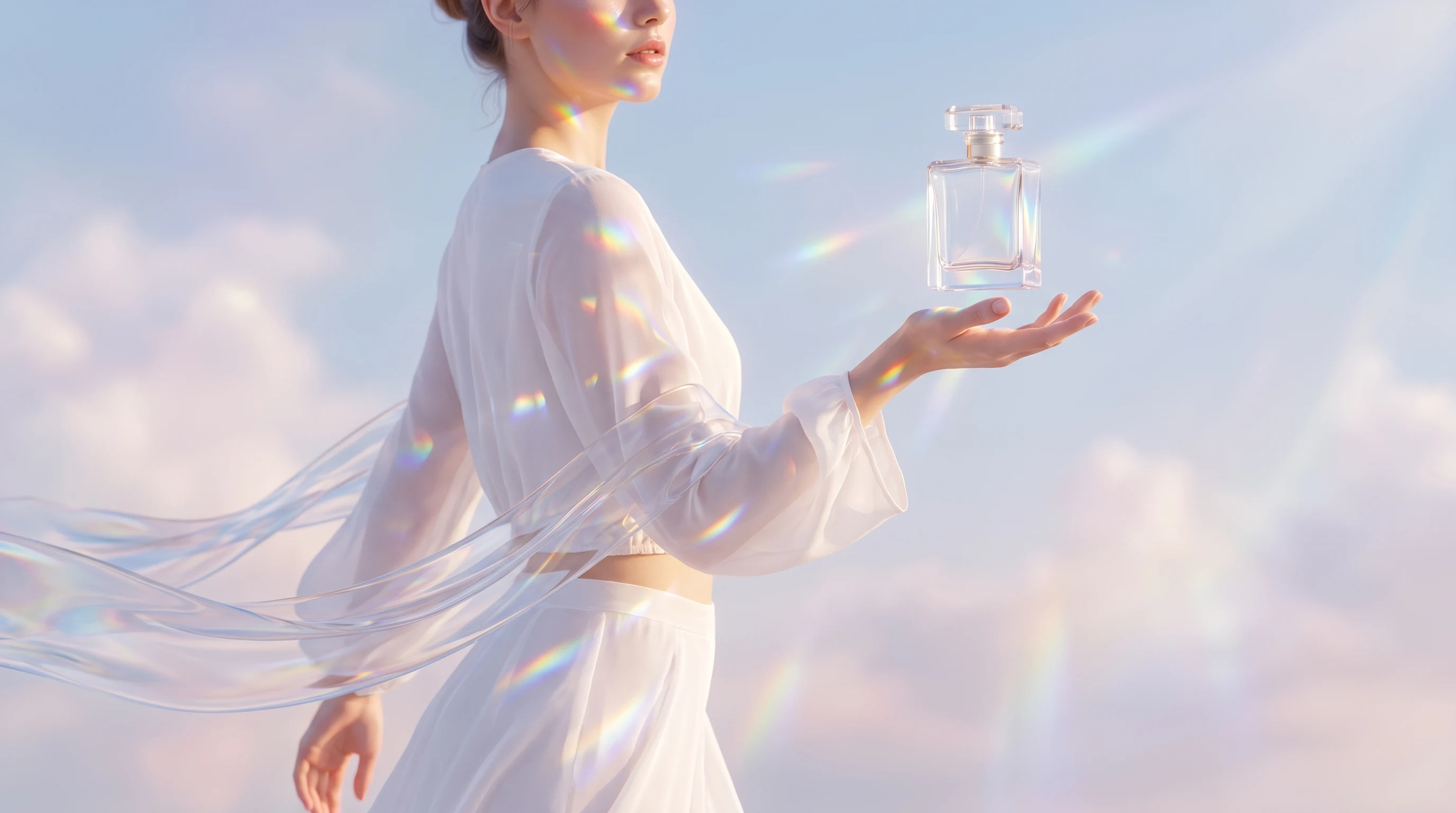
Beauty is the category where AI imagery gets judged hardest. Skin has to read as skin, gloss has to catch light without turning plastic, and a serum bottle held between two fingers cannot warp at the knuckles. The teams at Absolutely AI spend most of their beauty briefs solving those exact problems, because a beautiful concept that fails on texture or label legibility is not a shippable asset. This guide walks through the shot types, the workflow, and the honest failure modes, so founders and creative leads can brief better and know what to expect.
Why Beauty Is the Hardest Category for AI Photography
Most AI photography lookbooks lean on fashion, interiors, or food, because those categories forgive small distortions. Beauty does not. A viewer reads a skincare hero at arm's length and immediately clocks pore texture, specular highlights on a lip, the seam where a cream sits on a fingertip. Generic generators smooth all of that into a wax finish that reads as fake, even when the composition is strong. Our primer on AI lifestyle photography covers the baseline realism problem, but beauty compounds it.
The five hardest surfaces in a beauty brief are consistent across every studio we have compared. Reflective packaging (glass, chrome caps, foil labels) tends to invent light sources that do not exist in the scene. Cream and balm textures collapse into a single glossy blob unless the model has been shown enough real product macros. Powder finishes lose their matte grain. Cursive or serif label typography breaks into nonsense letters. And skin, the whole reason a beauty image exists, drifts into an airbrushed uncanny plane unless the pipeline is explicitly pushed toward pore-level detail.
Label legibility deserves its own line. Regulated ingredient claims, batch codes, and trademarked product names cannot be hallucinated. Any workflow that treats a bottle as just a shape, rather than a specific asset with fixed artwork, will produce imagery a brand cannot legally publish.
The Four Shot Types Every Beauty Brand Needs
Almost every beauty campaign resolves to four shot types, and each one asks a different thing from the pipeline. Getting the mix right up front saves an enormous amount of regeneration later. This is the same shot map we use when scoping a content programme for a new beauty client.
- Hero product on surface. The pack shot with atmosphere. AI is now excellent here, provided the product artwork is treated as a fixed asset composited onto a generated environment rather than dreamed from scratch.
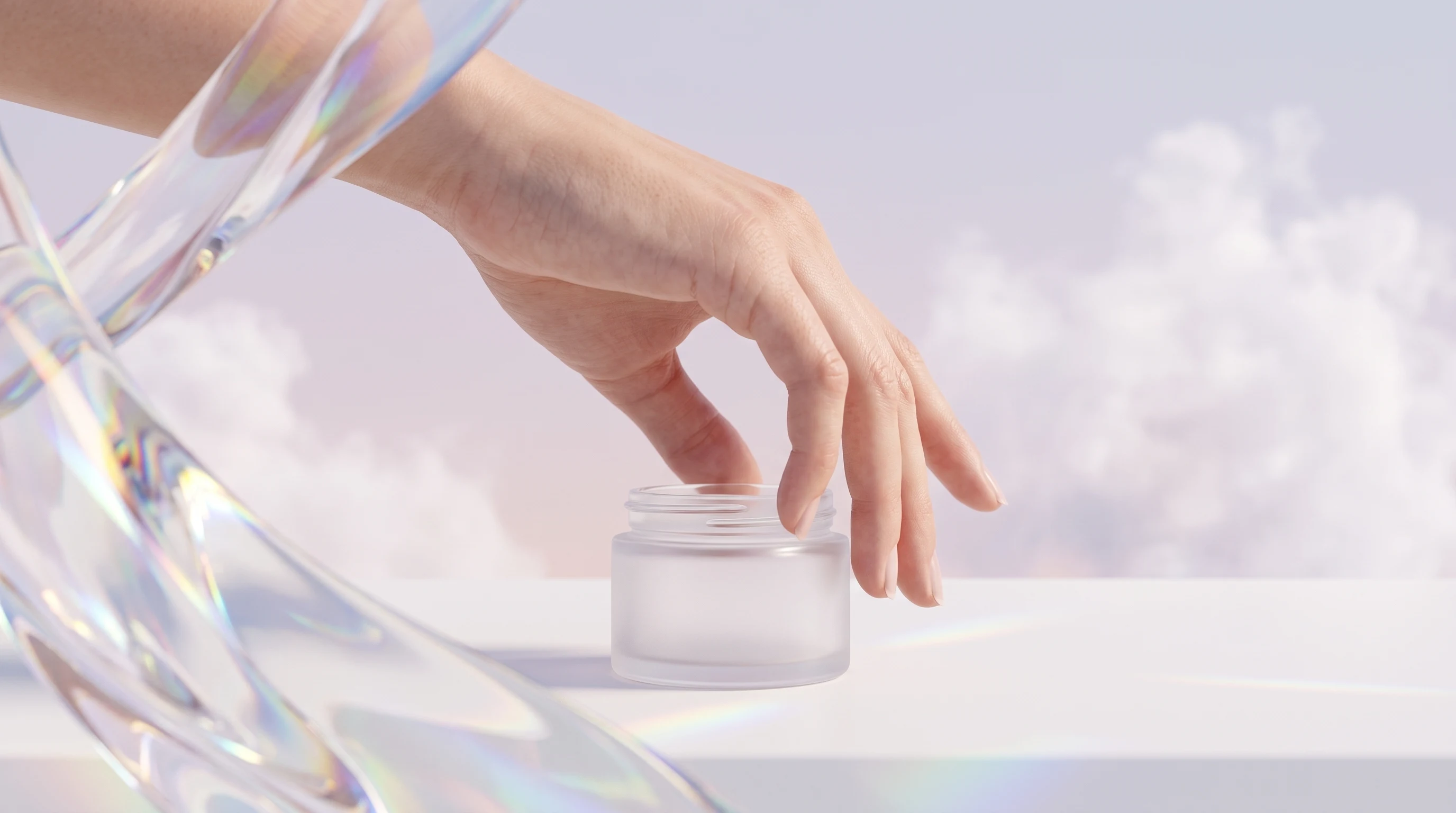
- Product-in-hand or on-model close-up. The hardest shot in beauty. Hands, nails, and the interaction between skin and packaging need reference conditioning and often a light retoucher pass to land.
- Full-body lifestyle. The model in a bathroom, on a beach, at a vanity. AI handles this well when the model is the focus and the product sits secondary. See how wellness brands are using lifestyle imagery for a parallel category playbook.
- Ingredient or texture macro. Droplets, swatches, cream swirls, botanical references. AI is stunning here, sometimes too stunning, and needs to be pulled back to feel physical rather than CGI.
A common mistake is briefing all four as one deliverable and expecting a single pipeline to handle them. In practice each shot type wants its own reference set, its own aspect ratio, and often its own model or workflow, which is why our brand photography service maps them separately from the first conversation.
How AI Brand Photography Actually Works
The step change in 2025 and 2026 was not raw generator quality. It was reference-image conditioning. Modern pipelines let a creative team lock a model's face, a product's artwork, a lighting signature, and a colour palette across an entire campaign, so every asset feels like it came from the same shoot day. Our explainer on how AI shoots work unpacks the mechanics for a general audience.
Brand consistency, not photorealism, is the KPI worth chasing. A slightly stylised image that matches the rest of the brand system outperforms a hyperreal image that feels orphaned. This is where generic tools and dedicated pipelines diverge sharply. Midjourney and DALL-E produce gorgeous one-offs but drift shot to shot. Beauty-adjacent tools like Photoroom and Blendnow handle pack shots and simple composites cleanly. Newer players such as Monoshoot and Nightjar push further into on-model work. Underneath many bespoke agency workflows sit Flux and Nano Banana for base generation, with seed control and reference locking layered on top.
The practical difference is workflow, not model. A tool gives you an image. A pipeline gives you a campaign. Our AI consulting engagements almost always start by auditing which of those a brand actually has in place.
A Repeatable Brief to Concepts to Hero Workflow
The workflow we run internally has five steps and it is deliberately boring, because boring is what makes it repeatable across dozens of SKUs. This is the same shape used across our commercial imagery work.
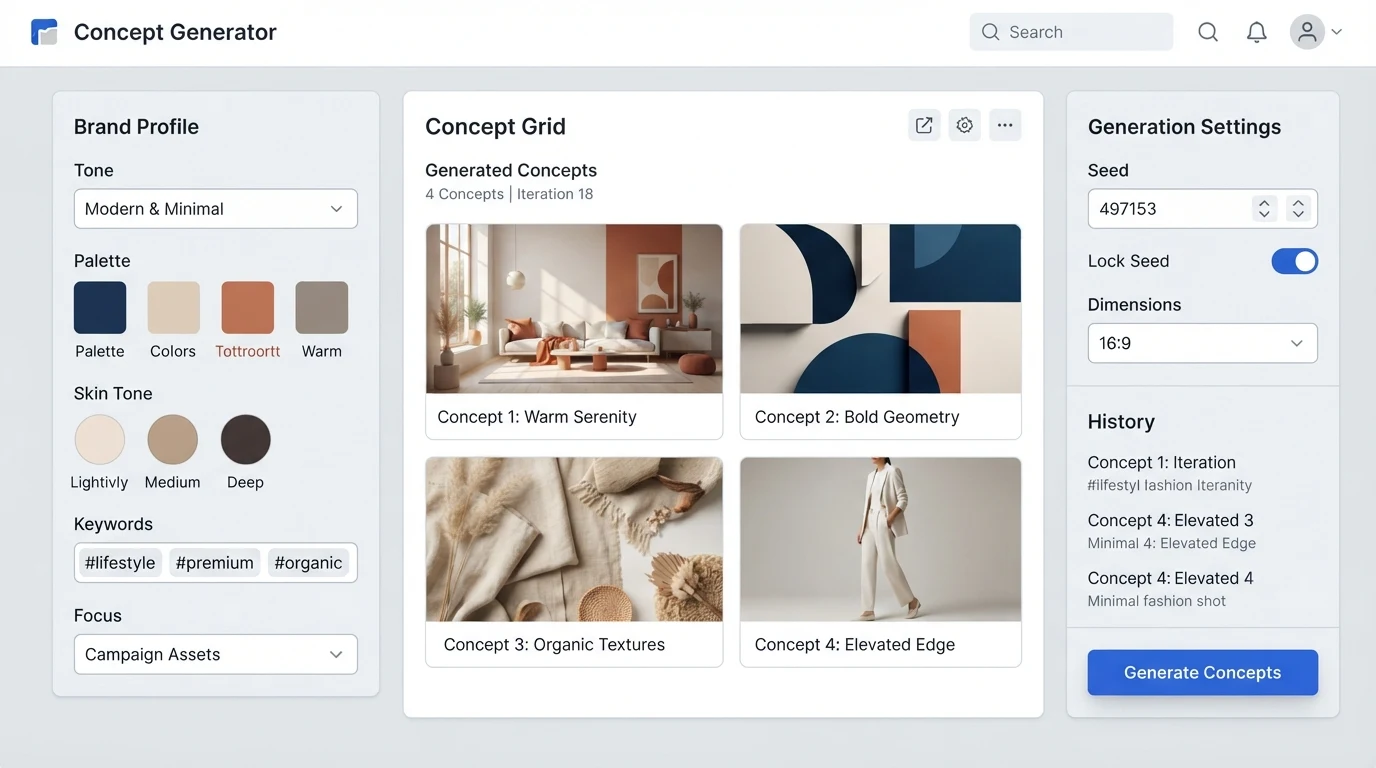
- Brand profile extraction. Pull the brand's visual codes, model references, palette, and restrictions into a structured document. This becomes the system prompt for every downstream generation.
- Deliverable map. List every asset the campaign needs by shot type and aspect ratio (1:1, 9:16, 16:9, 4:5). Beauty briefs usually run 20 to 60 assets per launch.
- Concept grids. Generate four grids per deliverable: two anchored tightly to references, two exploring alternate directions. This is where taste enters the loop.
- Selection and lock. Client picks winners. Seeds and prompts are archived so the same look can be reproduced months later for a follow-up drop.
- Upscale and retouch pass. Every selected hero gets a human retoucher on hands, label, and skin. This is non-negotiable for publish-ready beauty work.
Where AI Still Fails Beauty Briefs
Anyone selling AI beauty photography as fully autonomous is either not shipping to real brands or hiding the retouch bill. The honest comparison between AI and traditional shoots makes the same point. Here is the current failure list worth QA-ing every asset against.
- Hands holding tubes and bottles. Fingers drift, thumbs vanish, grip physics fails. Always inspect at 100 percent.
- Cursive and serif label script. Any non-block typography degrades. Composite real artwork onto the generated pack.
- Culturally specific model diversity. Under-represented skin tones and hair textures still need explicit reference sets to render authentically.
- Regulated ingredient claims. Percentages, actives, and certifications must be composited, never generated.
- Nail edges and cuticles. A frequent tell in in-hand shots.
- Product-to-skin contact points. Where a dropper meets a cheek, where a lipstick meets a lip, small distortions read as fake instantly.
Cost and Speed Benchmark
Numbers here are directional and depend on scope, region, and finish level. Pricing at Absolutely AI is quoted per scope after a brief review, so treat the below as a category map rather than a rate card.
| Approach | Turnaround | Pricing model | Best for |
|---|---|---|---|
| Traditional shoot | 3 to 6 weeks | Day rates plus talent, location, post | Flagship launches, tactile hero moments |
| AI-only pipeline | 3 to 7 days | Project-based, scoped by asset volume | High-SKU catalogues, always-on social, concept exploration |
| Hybrid (AI concept plus real hero reshoot) | 2 to 3 weeks | Blended, scoped per deliverable | Premium brands wanting AI speed with a real hero image |
The hybrid model is where most sophisticated beauty brands are landing in 2026. AI carries the volume, exploration, and secondary assets. A single real shoot day captures the flagship hero. Our deeper cost breakdown for lifestyle imagery covers the maths in more detail.
When to Hire an AI Creative Studio Versus DIY the Tool
The decision comes down to three variables: volume, SKU count, and campaign cadence. Low on all three and a founder with taste can absolutely run Photoroom or Midjourney themselves. High on any one and the coordination overhead swamps the tool savings. This is where an AI creative studio earns its keep.
- Under 10 SKUs, quarterly drops, single founder-led aesthetic. DIY. Learn one tool well.
- 10 to 50 SKUs, monthly content cadence, growing team. Hybrid. Bring in a studio for the system, run BAU internally.
- 50-plus SKUs, weekly launches, multi-channel campaigns. Hire a studio. The workflow, not the images, is the product.
Frequently Asked Questions
Can AI photography actually match a real beauty shoot?
For most shot types, yes, especially with a retouch pass. The gap has closed sharply through 2025 and 2026 on skin, texture, and lighting. The remaining edge cases are hands, cursive typography, and highly specific model casting.
Do I need to give the AI real product images?
Yes. Real product photography (even quick phone shots on white) as reference dramatically improves pack shot accuracy. For publish-ready hero shots, the actual product artwork is composited onto the generated scene, not generated from scratch.
What about model rights and likeness?
Reputable pipelines use either licensed model references, synthetic models with cleared training data, or the brand's own casting shot as reference. Ask any vendor to explain their model provenance in writing.
How consistent can AI keep a model across a campaign?
Very consistent, using face-lock references and shared seeds. A single synthetic or referenced model can carry an entire launch across 40 to 60 assets without drift, which is often better consistency than a real shoot spread over multiple days.
Which aspect ratios should I brief in?
At minimum 1:1 for social feed, 9:16 for stories and Reels, 4:5 for feed hero, and 16:9 for web and paid. Brief them together so the composition is planned for each frame rather than cropped after the fact.
Can AI handle ingredient macros and swatches?
This is one of AI's strongest categories in beauty. Cream swirls, droplets, powder scatter, and botanical references render beautifully and often outperform real macro photography for social use.
What is the retouch pass actually doing?
Fixing hands, replacing generated label artwork with real vector files, correcting skin transitions at product contact points, and colour-matching the pack shot to brand codes. Usually 15 to 45 minutes per hero image.
Is AI beauty photography safe for regulated markets?
Yes, if ingredient claims, percentages, and certifications are composited from real assets and never generated. Legal review of imagery should remain in the workflow exactly as it would for a traditional shoot.
The Takeaway
AI has not replaced the beauty shoot. It has replaced the calendar and the coordination tax around it. Founders who used to gate consistent, ongoing content behind an annual photography budget now sit within reach of always-on imagery, provided the workflow around the tools is real. If you want help mapping that workflow to your brand, Absolutely AI runs beauty-grade brand photography programmes that treat consistency, label integrity, and skin realism as first-class problems rather than afterthoughts.