AI Lifestyle Photography for Wellness Brands: A Founder's Guide
Wellness founders need more than clean packshots. They need aspirational lifestyle scenes that sell transformation without crossing regulatory lines. This is Absolutely AI's playbook for building a wellness-safe AI lifestyle system: scene archetypes, inclusivity, compliance guardrails, tools, and the briefed studio workflow behind campaigns that actually convert.
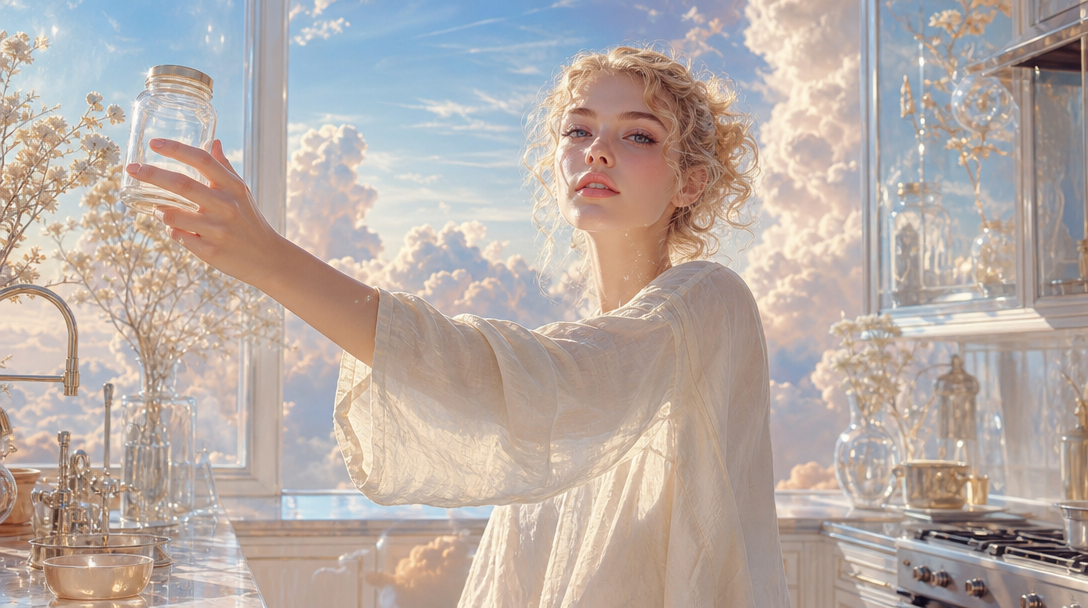
Wellness is a category built on feeling. A supplement bottle on white background tells a shopper what the product is, but a sunlit kitchen ritual tells them who they become. For founders scaling supplements, skincare, functional foods or recovery devices, the lifestyle imagery layer is where conversion actually happens, and it is also where budgets get eaten by traditional shoots that cannot keep pace with weekly campaign cycles. AI lifestyle photography closes that gap, but only if the workflow respects the vertical's regulatory and human sensitivities.
Why Wellness Brands Need Lifestyle Imagery, Not Just Packshots
Every consumer study on wellness ecommerce points the same way: lifestyle imagery outperforms product-only imagery on click-through, add-to-cart and sell-through, particularly for categories where the outcome is emotional rather than functional. Shoppers do not buy the collagen powder, they buy the version of themselves who drinks it every morning in soft window light. For a deeper primer on the format itself, see our explainer on what AI lifestyle photography is and how it works.
The commercial pressure is that a wellness brand needs dozens of these scenes per launch: hero banner, PDP gallery, paid social carousels, email headers, retail decks, influencer seeding kits, and enough seasonal refreshes to keep the feed alive. Traditional shoots deliver five to ten hero frames per day at a five-figure day rate. Modern founders need fifty variants in a week, which is where a briefed AI workflow becomes the operational unlock rather than a novelty.
What AI Lifestyle Photography Actually Is
The term has become loose, so it is worth being precise. Prompt-only text-to-image tools like Midjourney or Flux can produce beautiful frames, but they do not know what your product looks like, and they invent a new hero every time you press generate. That is fine for mood exploration, but it is not campaign-grade. Reference-anchored generation is the more useful category, where a model is conditioned on your actual product renders, an identity locked model, and a curated reference pack that carries your brand's visual language. For the technical underpinning, our guide to how AI product photography works covers the same generation stack applied to hero product imagery.
Model consistency is the other technical piece. A wellness campaign usually revolves around one or two hero talent identities across many scenes. Consistent-character workflows using identity locks, LoRAs or hybrid retouch pipelines keep that talent recognisable across kitchen, bathroom, yoga and outdoor scenes so the campaign reads as a system rather than a collage of AI stock.
The Five Wellness Lifestyle Scene Archetypes
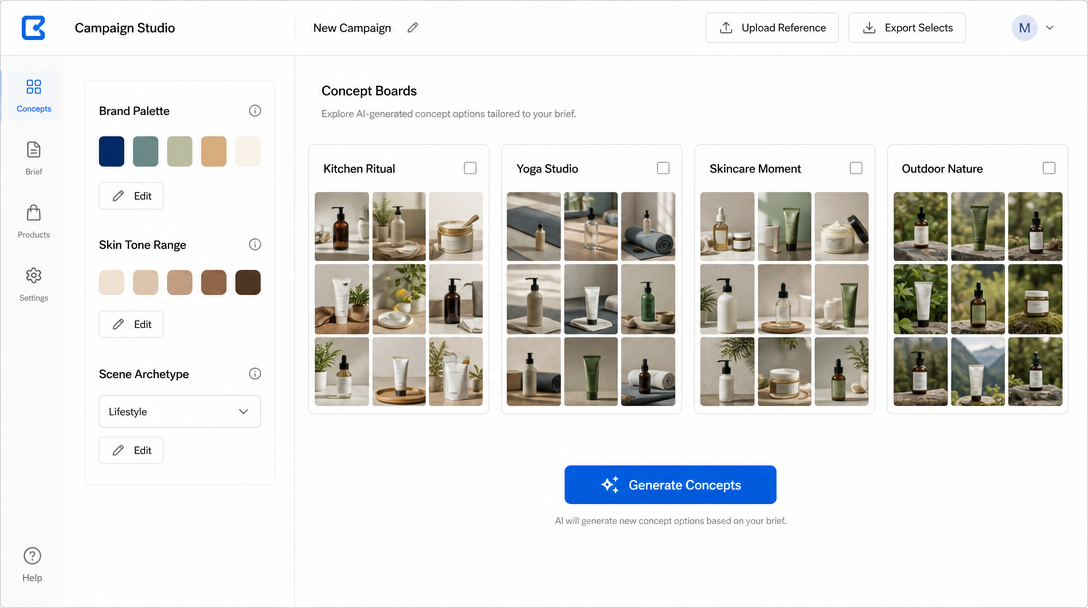
Almost every wellness campaign we build for founders resolves down to five archetypal scenes. Nailing all five gives you a matched hero, PDP, social and email set from a single brief, and it is the fastest way to move from prompt-fishing to a coherent visual system. Our product photography solution pairs these lifestyle scenes with matched packshots so PDPs feel like one shoot.
- Sunlit kitchen ritual. Morning window light, linen texture, ceramic mug, half-eaten fruit, product placed as if genuinely in use. Best for supplements, functional foods, hydration, gut health.
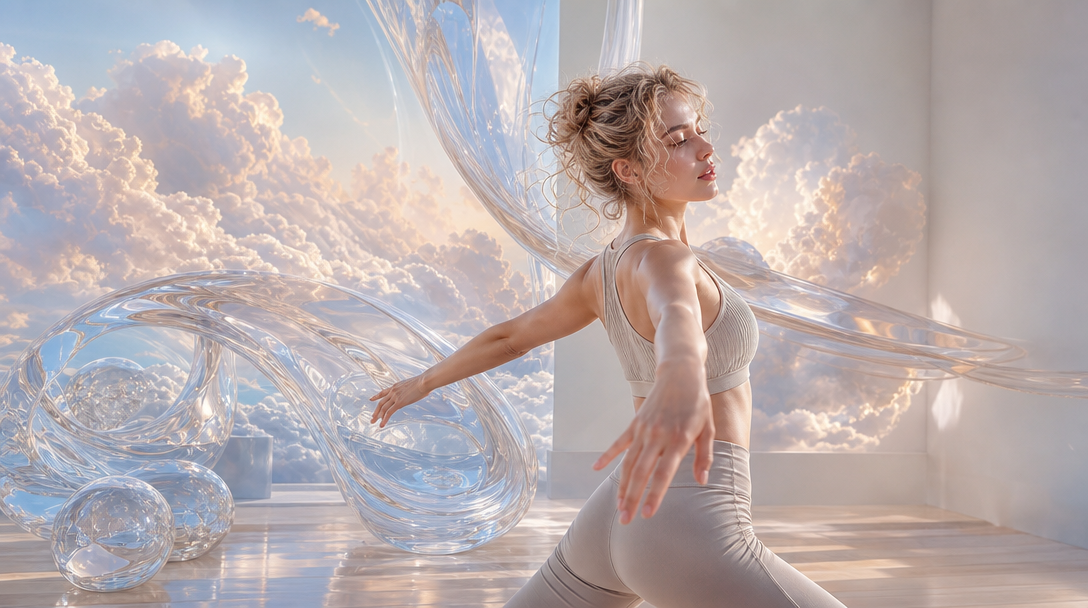
- Yoga or movement studio. Neutral timber floor, softbox key, mid-flow pose, subtle sweat highlights on skin. Best for recovery, protein, mobility, mind-body brands.
- Bathroom skincare moment. Warm marble, backlit steam, hand-to-face motion, product in glass shelf reflection. Best for skincare, haircare, oral care, dermocosmetics.
- Outdoor nature or adventure. Coastal cliff, forest trail, cold-water plunge, low-angle golden hour. Best for adaptogens, immunity, energy, outdoor performance.
- Meditation or bedroom calm. Diffused evening light, layered bed linen, journal and tea, product on side table. Best for sleep, magnesium, anxiety, hormone support.
Building a Wellness-Safe Visual System
The visual system that ties those five scenes together is a codified palette, a lighting language, and a set of realism rules that stop the campaign feeling synthetic. Palette usually means three warm neutrals, one hero accent and one deep tone for text overlays. Lighting language means committing to a direction of light, a typical time of day, and a softness value that runs across every scene. This is the same brand-system work our AI branding practice does on identity engagements, extended into moving imagery.
Wellness carries specific realism obligations that beauty or fashion do not. Skin must render with visible pores, fine hair and natural asymmetry, not the plastic sheen that gives cheap AI imagery away. Hands must have five fingers, believable joints and product-scale accuracy where they touch a bottle or tub. And crucially, no implied therapeutic claims can be baked into the image. Under the TGA advertising code in Australia and equivalent FDA guidance in the US, a synthetic before-and-after, an exaggerated glow, or an implied medical benefit can carry the same regulatory weight as a written claim. The safest rule is that AI lifestyle imagery for wellness never depicts a transformation arc within a single frame or a pair of frames, and any results-adjacent copy overlay is legal-reviewed exactly as it would be for a live shoot.
Inclusivity and Representation Done Right
Wellness sells across body types, ages, ethnicities and abilities, and the audience is quick to spot tokenism, especially the synthetic variant where a brand appears to have added diversity via a slider rather than a casting brief. The credible workflow starts with a written casting brief, exactly as a traditional shoot would: two to three specific skin tones on the Fitzpatrick scale, an age range with a specific decade split, body types described in real-world terms rather than sizes, and cultural cues that make sense for the product's actual customer base.
From there, reference-anchored generation lets you lock those identities and carry them consistently across the five scene archetypes, so a 55-year-old woman in the kitchen scene is the same woman in the meditation scene. This turns representation from a compliance checkbox into an actual campaign character, which is what audiences respond to. The same principle underpins our content creation workflow for social-first wellness brands.
The Production Pipeline: Brief to Retouch
A briefed AI lifestyle production runs through five stages, and skipping any one of them is where most founders get burned when they try to self-serve. Our AI commercial production practice uses this same pipeline for wellness, beverage and beauty clients.
- Creative brief. Product truth, audience, scene archetypes, palette, casting, banned visual cues, regulatory notes. One page.
- Reference pack. Ten to twenty curated frames that carry the lighting, palette and mood you actually want. This is where a studio adds the most value over prompt-only tools.
- Concept grids. Four to eight grid variations per scene, generated with anchored refs plus two exploratory alternates so the client sees range without losing the brand centre.
- Selects and refine. Client picks per scene, tight prompt and reference iterations to lock hero frames.
- Retouch and finish. Human retouch on hands, skin, product labels and typography. This is the step that separates campaign-grade from AI-stock.
AI Versus Traditional Shoot: The Honest Comparison
The AI-versus-traditional debate is often framed as a binary, but the honest answer for wellness founders is that the two are complementary. Our long-form breakdown of the AI lifestyle shoot versus traditional shoot tradeoff goes deeper, but the short version is in the table below.
| Criterion | Traditional shoot | Briefed AI workflow |
|---|---|---|
| Turnaround | 4 to 8 weeks | 5 to 10 business days |
| Frames per campaign | 10 to 30 hero-quality | 50 to 200 hero-quality variants |
| Aspect ratios | Reshoot or crop | Native regeneration per ratio |
| Talent consistency | Guaranteed on the day, hard to revisit | Locked via identity models, revisitable indefinitely |
| Best for | Founder portraits, brand films, hero product truth | Lifestyle scale, seasonal refresh, always-on social |
Tools Stack for Wellness Teams
The tool stack matters less than the workflow around it, but for teams building capability in-house, the current best-in-class picks are Midjourney for mood and reference generation, Flux for photoreal lifestyle bases, Nano Banana in Gemini for tight edits and character consistency, Stable Diffusion for open-source finetuning, and Photoroom, Nightjar or Claid for background and packshot automation. Our roundup of the best AI product photography tools covers the finer distinctions and where each one sits in a real production stack.
The reason a briefed studio workflow still beats a prompt-only tool for wellness campaigns is not the models, it is the layer around them: a creative director translating founder ambition into a reference pack, a regulatory pass on every hero, a retoucher fixing hands and labels, and a delivery format that matches every channel's ratio and file spec. Tools automate pixels; the workflow automates outcomes.
Common Failure Modes and How to Fix Them
Almost every unusable AI wellness image fails in one of four ways, and each has a specific fix. Our comparison of Pebblely versus Photoroom versus an agency walks through where self-serve tools hit their ceiling on these exact issues.
- Uncanny hands. Fix with inpaint passes on hand regions using hand-specific reference sets, then a light human retouch. Never publish a frame where a hand touches the product without a fingernail-level check.
- Plastic skin. Fix by adjusting the prompt away from beauty-retouched language, adding grain and pore texture references, and finishing with a subtle film emulation in post.
- Generic AI-stock feel. Fix by anchoring every generation to your reference pack, banning generic prompt tokens like beautiful woman and cosy home, and forcing scene-specific detail from the brief.
- Illegal implied claims. Fix at the brief stage by explicitly banning transformation cues, before-and-after framing, and any medical iconography. Regulatory review is a pipeline stage, not an afterthought.
Case Snapshot: One Hero, Four Lifestyle Variants, One Week
A representative engagement for a functional beverage brand runs like this. Day one, brief and reference pack. Days two and three, concept grids across the five scene archetypes, client review. Days four and five, refined selects on two hero identities across kitchen, yoga, outdoor and bedroom scenes. Days six and seven, retouch, ratio delivery for Meta, TikTok, Amazon and email, plus a short motion cutdown handled through our AI films practice. One brief, one week, a full campaign system in place of a single hero.
Frequently Asked Questions
Is AI lifestyle photography legal to use in ads for wellness products?
Yes, in every major market including Australia, the US, the UK and the EU. The regulatory question is not whether the image is AI-generated, it is whether the image, taken as a whole with any accompanying copy, makes a claim the brand cannot substantiate. The same TGA and FDA rules that apply to a photographed model apply to a generated one.
Do I need to disclose that the imagery is AI-generated?
There is no universal disclosure requirement for AI lifestyle imagery in advertising as of writing, but the direction of travel in the EU AI Act and various state-level US bills is toward disclosure where synthetic media could mislead a consumer about a person or a product outcome. Best practice is to disclose in brand FAQ or a media-usage statement, and to avoid any imagery that a reasonable consumer would interpret as a real customer testimonial unless it actually is one.
Can AI lifestyle photography match my existing brand guidelines?
Yes, provided the workflow is briefed and reference-anchored rather than prompt-only. The reference pack is the mechanism that carries palette, lighting, casting and mood from your guidelines into every generated frame. If a studio cannot show you their reference-pack process, they are running a prompt shop, not a brand system.
How does AI lifestyle photography handle diverse body types and skin tones?
Better than most stock libraries and, done right, comparably to a well-cast traditional shoot. The trick is to specify casting in the brief rather than leaving it to the model's defaults, and to lock those identities so the same person appears across scenes. Generic AI defaults tend to overrepresent a narrow set of features, which is exactly the tokenism trap wellness brands cannot afford.
Can I use AI lifestyle imagery on Amazon, Meta and TikTok ads?
All three platforms currently allow AI-generated advertising imagery. Meta requires disclosure for political and social-issue ads that use AI, not for standard product advertising. TikTok requires a synthetic media label for content depicting real people or events. Amazon has no AI-specific policy but enforces its normal accuracy and claims rules strictly, so the same regulatory pass applies.
How much does an AI wellness lifestyle campaign cost compared with a traditional shoot?
Costs vary by scope, but a briefed AI lifestyle campaign typically delivers a full multi-scene system, matched aspect ratios and hundreds of variants at a small fraction of the equivalent traditional day-rate plus talent plus location plus post budget. The more useful comparison is not cost, it is capability: the AI workflow does things a single-day shoot structurally cannot, like same-week seasonal refreshes and personalised variants at channel scale.
Can we shoot the founder and combine that with AI lifestyle scenes?
Yes, and this hybrid is often the best answer for wellness brands. A short live shoot captures the founder and one or two hero talents at high fidelity, and those identities are then extended into the full scene system via reference-anchored generation. The result reads as one campaign, not two disconnected asset sets.
Where to From Here
Wellness is a category where imagery is not decoration, it is the product experience before the product arrives. A briefed AI lifestyle workflow gives founders a way to build a full scene system that respects the vertical's realism, inclusivity and regulatory obligations while operating at the speed the channels demand. If you want to see what a briefed AI lifestyle system looks like against your brand, Absolutely AI's lifestyle imagery practice is the fastest way in.