What Is AI Lifestyle Photography? A Creative Director's Guide
AI lifestyle photography is generative imagery of a product, person or scene rendered inside a believable human context: casting, wardrobe, light, mood and moment. This guide, written from the creative agency chair at Absolutely AI, covers what it is, how the pipeline actually runs, the craft layer most tools skip, and where the format still gets it wrong in 2026.
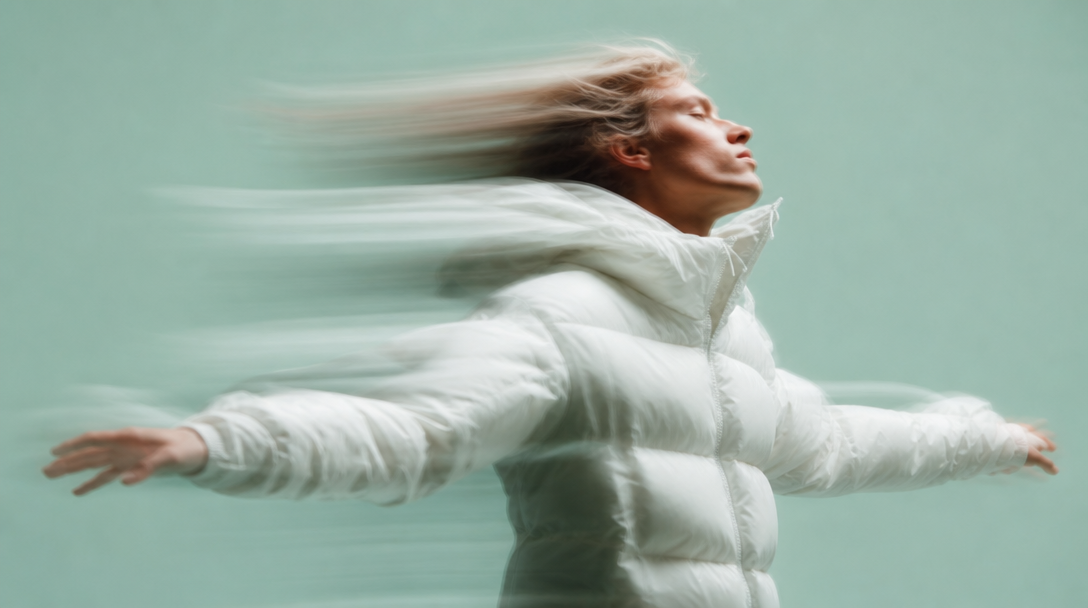
Ask ten brand teams what AI lifestyle photography is and you will get ten different answers, most of them wrong. It is not a white-background packshot with a fake shadow. It is not a Midjourney render of a model holding a bottle. It is a fully art-directed lifestyle scene, built generatively, that reads as a real editorial or commercial photograph. This guide, from the creative director's chair at Absolutely AI, covers the definition, the workflow, the craft, the tools and the ethics that most ranking pages leave out.
What AI lifestyle photography actually is
AI lifestyle photography sits between two things people already understand. On one side is traditional lifestyle photography: a photographer, a stylist, a cast, a location, a full crew. On the other is AI product photography, which is largely the packshot problem solved generatively: clean backgrounds, controlled reflections, product fidelity. Lifestyle sits in the harder middle. It is the product, or the person, placed inside a believable human moment.
That means casting, wardrobe, environment, time of day, weather, prop language and emotional tone all have to be resolved before a single pixel gets generated. If any of those layers is missing the image looks generic, and generic is the failure mode that has haunted AI imagery since 2023. Our breakdown of AI versus traditional product photography covers where the two disciplines converge and where they still diverge sharply.
Why brands moved here in 2026
The headline numbers are familiar. Seventy to ninety percent lower production cost, twenty to thirty percent lift on product detail page conversion when lifestyle imagery replaces packshots, seasonal turnarounds compressed from six weeks to six days. Those figures are true, and they are also table stakes. Every serious tool vendor quotes them.
The real reason brands moved is localisation and cadence. A single hero concept can be re-cast for six markets, re-styled for four seasons, and re-cut into three aspect ratios inside a working week. That is not a cost story. It is a category story, and it is why we treat lifestyle work as part of a broader AI content creation programme rather than a one-off shoot replacement.
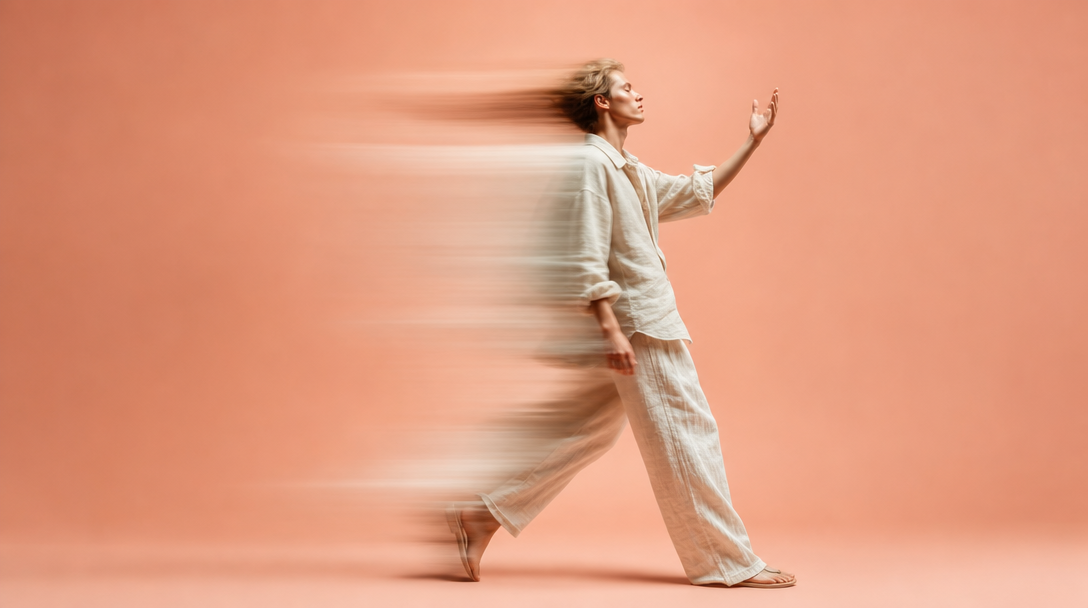
How the pipeline works, end to end
A well-run AI lifestyle project is not a prompt sprint. It is a structured pipeline with seven stages, and the quality of the output is almost entirely decided in the first three.
- Creative brief. Product truth, audience, tone, restrictions, deliverables, aspect ratios.
- Brand profile. A distilled reference document that any generator, human or model, can read.
- Reference and product ingest. Real product photography, existing campaign frames, moodboard imagery, competitor bookmarks.
- Concept generation. Four to eight anchored directions per deliverable, plus two alternate-world exploration lanes.
- Art-direction pass. Refinements on casting, light, wardrobe, environment, product fidelity.
- Quality control. The checklist in the section further down.
- Export. Aspect-ratio variants, colour-graded stills, motion cutdowns.
The stage almost every SaaS tool skips is the brief-to-concept handoff. That is the layer we build for on every project, and it is walked through in more depth in our piece on how AI product photography works end to end.
Types of AI lifestyle shots
Lifestyle imagery is not one format. When we scope a brief we usually plan across eight archetypes, because the visual grammar of each is different and the model settings shift accordingly.
- In-use. Product being held, worn, poured, applied. The most literal PDP lifestyle format.
- Aspirational. Product in the world the customer wants to live in. Slower, quieter, more editorial.
- Seasonal. The same hero re-styled for summer, autumn, holiday and gifting windows.
- Localised. Casting, interiors and landscape shifted per market.
- Editorial. Magazine language: negative space, unresolved narrative, a named-photographer feel.
- UGC-style. Phone-camera aesthetic, natural window light, mild imperfection.
- Flatlay. Overhead compositions where scene styling replaces environment.
- Motion. Short lifestyle clips generated in Sora, Runway, Kling or Veo, sitting alongside the stills.
Motion is the format most competitor guides ignore, and it is where the market is moving fastest. Lifestyle video generation is now good enough for social-first cutdowns, and it slots naturally into an AI film workflow when the same concept needs to run as a fifteen-second spot.
The craft layer most tools skip
Prompting advice on the rest of the internet is thin. Soft window light. Fifty millimetre lens. Warm tones. That is not craft, that is a preset. Real lifestyle work needs film-stock emulation choices, editorial versus commercial versus UGC visual language, casting direction, wardrobe styling, and a colour grade that reads intentional rather than incidental.
Film stock is a shortcut into mood. Portra 400 for warm skin and gentle contrast. Cinestill 800T for tungsten-lit interiors with a specific halation. Fuji Pro 400H for editorial calm before it was discontinued and its look was baked into every model. Getting these references right early stops a project drifting into the generic pastel look that flags an image as AI at a glance. This is the same craft we bring to our AI branding work, where visual consistency across a campaign matters more than any single frame.
Lens and lighting notes have to mean something. A twenty-four millimetre wide-open in a small interior reads intimate. A hundred and thirty-five millimetre with a soft rim on a beach reads campaign. If the brief says fifty millimetre and does not say why, the brief is not finished.
How to write a brief for AI lifestyle work
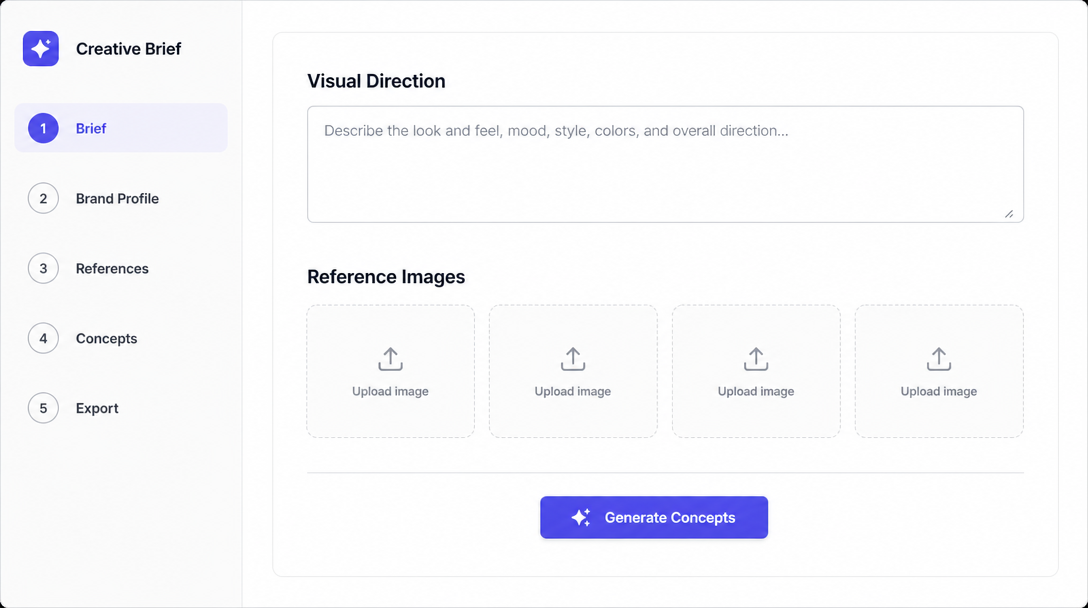
The strongest AI lifestyle briefs look almost identical to strong traditional briefs, with one addition: they resolve the visual direction to a level a model can act on. A traditional photographer will interpret ambiguity through experience. A generator will interpret it by reaching for the mean of its training data, which is where genericness comes from.
A working brief covers product truth, audience, visual direction, key messages, deliverables and restrictions. The visual direction section is where most briefs are underweight. It needs film stock, lens language, palette anchors, casting notes and two or three specific reference frames, not a Pinterest board. Any client working with us on an AI commercial project sees this brief structure in the first meeting.
Tools worth knowing
No single tool wins every job. We use combinations depending on the deliverable, and the honest characterisation of each matters more than a feature table.
- Midjourney. Still the strongest general aesthetic sensibility. Weak on product fidelity, strong on editorial mood.
- Flux. Best-in-class for photorealistic humans and controllable composition.
- Nano Banana / Gemini image. Fast iteration, strong at prompt-following, useful for concept exploration.
- Ideogram. The typography-in-frame tool, useful when packaging with legible copy has to appear in scene.
- Higgsfield. Camera-move control for lifestyle motion.
- Claid, Flair AI, Photoroom, Pebblely, Raspberry, Nightjar. Commerce-first tools that lean hardest into PDP-ready output.
Our full commerce-tool breakdown, including where each of these stops being useful, sits in Pebblely vs Photoroom vs agency and the broader best AI product photography tools guide.
Quality control, the checklist nobody publishes
Most guides stop at generation. That is where the work actually starts. Every frame we ship goes through the same QC pass, and rejection at this stage is normal.
| Check | Common failure | Fix |
|---|---|---|
| Hands and fingers | Extra digits, fused joints, wrong scale | Regenerate with pose reference or crop out |
| Product fidelity | Logo drift, label warp, colour shift | Composite real product back in |
| Scale | Product too large or small for the hand or scene | Reference-based regeneration |
| Character consistency | Same model reading differently across a set | Locked identity reference across generations |
| Series drift | Palette, wardrobe or grade slipping between frames | Enforce a shared style reference at export |
Character consistency is the hardest of these, and it is the one that separates a real campaign from a generated moodboard. When we run a lifestyle series across ten frames the same model has to hold across every frame, or the whole set collapses into stock.
Ethics, disclosure and licensing in 2026
The regulatory picture changed sharply in 2025. The EU AI Act now requires clear disclosure of synthetic imagery used in commercial advertising in-market. The UK ASA has aligned guidance, particularly around health, beauty and finance categories where AI-generated models must be disclosed. Australia has not legislated as hard, but the ACCC has flagged undisclosed AI likeness as a misleading-conduct risk.
Practical rules we work to: never generate a likeness of a real named person without a written release, disclose synthetic models in-copy when the category demands it, and keep provenance metadata attached to every export. Our full treatment of licensing and ownership is in the AI product photography rights and IP piece.
When AI lifestyle photography is the wrong answer
Three cases where we still recommend a traditional shoot. Hero campaigns with named talent, because the value is in the person and the negotiation. Food that has to be visibly tasted-real, because texture cues still trip most models. Editorial with a named photographer's signature, because you are buying the signature, not the frame.
Everything else, from PDP lifestyle to seasonal social to localised paid social to always-on organic, is inside the sweet spot. Our take on food specifically is in AI food photography for brands, which covers the categories where the format works and the ones where it does not.
Frequently Asked Questions
Is AI lifestyle photography legal for commercial use?
Yes, in every major market, provided you disclose where required, hold rights to any reference imagery, and do not depict a real named person without a written release.
How much does AI lifestyle photography cost compared to a traditional shoot?
Typically seventy to ninety percent less on a like-for-like brief, though the meaningful saving is in cadence and localisation, not the sticker price. Full breakdown in our AI product photography cost in Australia guide.
Can AI lifestyle photography match a professional photographer's quality?
For editorial-grade PDP, social and paid media, yes, when the pipeline is run properly. For hero campaigns with a signature photographer, no, because you are buying the signature.
How long does a project take?
A concept round runs two to three days. A full campaign with revisions, variants and motion cutdowns runs one to two weeks depending on scope.
What file formats and aspect ratios can we deliver?
PNG, JPG and WebP for stills, MP4 and MOV for motion, across every aspect ratio required for paid, organic, PDP and print.
Can you match our existing brand photography style?
Yes. Style-matching is a separate ingest stage using your existing frames as anchor references, and it is standard on every retainer.
Do we need to disclose AI-generated lifestyle imagery in Australia?
Not mandated across the board, but strongly recommended for health, beauty, finance and any category with vulnerable audiences. The ACCC treats undisclosed synthetic likeness as a misleading-conduct risk.
What is the difference between AI lifestyle photography and AI product photography?
AI product photography is largely the packshot problem: clean, product-first, minimal context. AI lifestyle photography places that same product inside a human scene with casting, wardrobe, environment and mood.
Where this leaves us
AI lifestyle photography in 2026 is not a cheaper packshot. It is a full creative discipline with a real pipeline, a real craft layer and real regulatory obligations. Run properly it compresses seasonal cadences, unlocks localisation and produces PDP-grade imagery that lifts conversion. Run as a prompt sprint it produces the generic pastel look every brand team can now spot at a glance. If you want to see how we scope, brief and deliver lifestyle programmes end to end, Absolutely AI's lifestyle imagery service is the place to start, or reach out via the studio directly.