AI Brand Photography Review Cycles: From Weeks to Hours
Brand photography rarely stalls on the shoot day. It stalls in the review cycle: proofs bouncing between art directors, brand managers, and legal for weeks. At Absolutely AI we treat the review cycle itself as the deliverable, not an afterthought. Get the rounds, roles, and checklists right and a six-week approval slog collapses into a three-day sprint without losing brand truth.
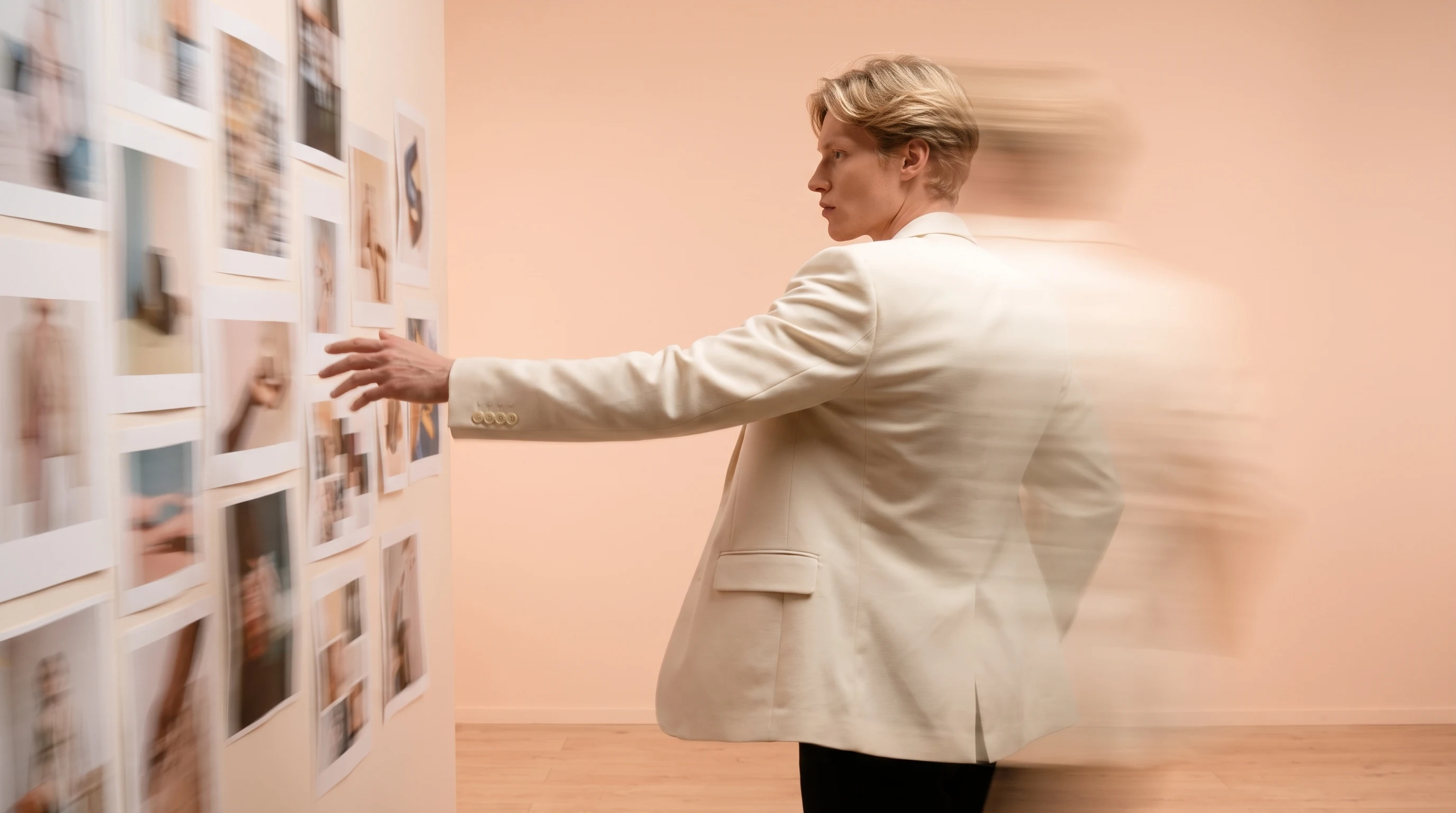
Most brands measure photography timelines from kickoff to shoot day, but the real drag sits after the camera stops. Rounds of proofs, batched feedback, legal sign-off, and reshoot requests can stretch a campaign across six weeks or more. When the imagery is generated rather than captured, the bottleneck shifts entirely. This piece maps the review cycle we use at Absolutely AI for brand photography work, with named rounds, role ownership, and checklists you can lift into your own process.
Why Traditional Brand Photography Review Cycles Break Down
A conventional brand shoot compresses risk into a single day on set. Everything before it is planning, everything after it is negotiation. Once the shutter closes, the images you have are the images you have, and every note becomes either a retouch request or a reshoot conversation. Comparing this against a generated shoot workflow makes the structural difference obvious.
The review cycle then becomes a slow relay. Art director reviews proofs, sends notes to the photographer, retouch bounces back three days later. Brand manager loops in legal, legal flags a background element, retoucher recuts. Client sees round two, changes their mind on hero angle. Each handoff adds days, and each round of feedback is capped by the frames actually captured on the day.
Reshoots are the failure mode nobody budgets for. When feedback surfaces a gap that retouching cannot fix, a new half-day shoot has to be booked, talent rebooked, location secured. The review cycle stops being a review cycle and becomes a second project.
What Changes When the Image Is AI Generated
The linear create-then-review model collapses into a spiral. Each round of feedback becomes a re-prompt or a targeted edit rather than a reshoot request. The cost of one more variation is minutes and cents, not talent day rates and studio bookings. Fashion and product pipelines that used to run six to eight weeks are landing at three to four days when the review process is structured properly.
The catch is that the compression only holds when the review process is designed. Ad hoc Slack threads with vague notes actively make AI generation worse, because the model drifts further from brand truth with every unstructured iteration. A disciplined review cycle is what turns speed into quality, not a nice-to-have layered on top.
The Four Stage AI Brand Photography Review Cycle
We run every brand photography engagement through four named rounds. Each round has a purpose, a deliverable, and a stop condition. Skipping a round or blurring the boundary between two is the fastest way to lose the time savings you came for.
Round 1: Brief Lock
Before any generation happens, the brand profile is written and signed off. Product, audience, visual direction, key messages, deliverables list, restrictions, and reference imagery all live in one document. Nothing goes into the generator until the client has read it back and confirmed. This is the round that determines whether you spend three days or three weeks downstream, and it maps closely to how we approach ecommerce lifestyle imagery.
Round 2: Concept
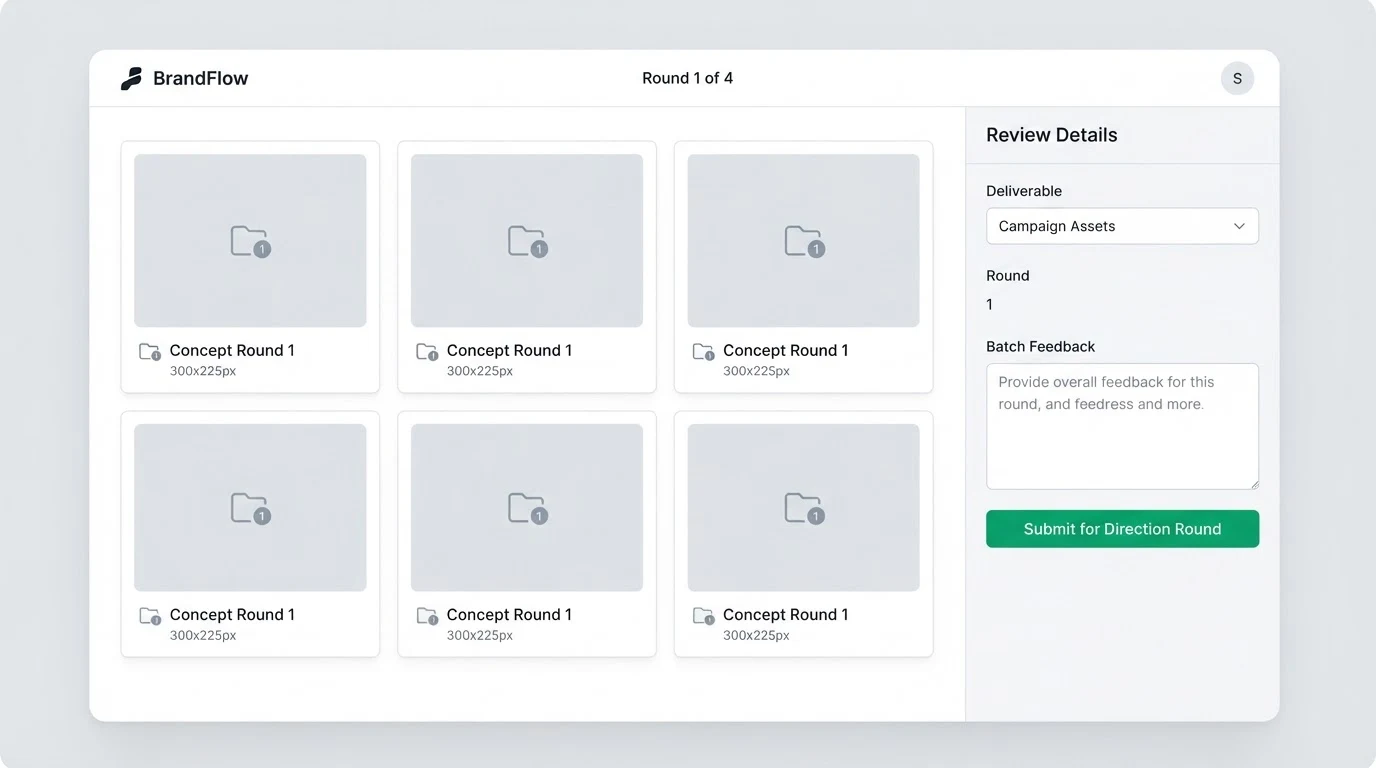
Four grids per deliverable, deliberately wide. Two anchored to the reference imagery, two exploring adjacent worlds. The goal is direction, not selection. The client is asked which territory feels right, not which final image they want.
Round 3: Direction
The chosen territory is refined. Subject fidelity, product accuracy, aspect ratio, and composition all get locked. Feedback is batched per deliverable so the operator can generate a full round rather than firing single edits.
Round 4: Final QA
Human review for brand truth, anatomy, colour accuracy, and legal clearance. Nothing is retouched or delivered until this pass is complete and signed. This is the round most teams underweight, and it is where AI-specific failure modes get caught before they ship.
What to Review at Each Round
Round-specific checklists stop reviewers from giving Round 4 notes on a Round 2 concept. This is the single biggest source of wasted iteration in AI brand photography, and enforcing it saves days on every campaign. See how these checklists play out on real lifestyle photography examples.
| Round | What to check | What to ignore |
|---|---|---|
| Concept | Composition, mood, on-brand feel, direction | Fine detail, product accuracy, hands, colour |
| Direction | Subject fidelity, product likeness, aspect ratio, framing | Micro-retouch, pantone match |
| Final QA | Pantone accuracy, artefacts, anatomy, IP clearance, alt text | Direction changes, new concepts |
How to Give AI Feedback That Actually Converges
Vague feedback drifts AI generation away from brand truth. "Make it pop" is a coin flip. "Warmer key light, drop the background saturation ten percent, keep the pose" is a converging instruction. Prompt-shaped feedback treats the generator like a collaborator who needs concrete direction, not a designer who can read a mood.
Reference-anchored notes work better than adjectives. Point at the reference image, name what you want carried across, name what you want changed. The rule we teach every client is one verdict per image before retouching starts: either this frame is the direction and we refine it, or it is not and we restart. Halfway feedback produces halfway output.

Roles in an AI Review Cycle
Compression only works when handoffs are clean, and clean handoffs require named roles. Four roles cover most brand photography engagements.
- Creative lead owns the brief, the concept direction, and the final aesthetic call. They chair Rounds 2 and 3.
- Brand guardian owns brand truth: colour, typography adjacency, product likeness, positioning. They have veto in Round 4.
- Client approver owns commercial sign-off. They see Rounds 2, 3, and 4 with clear questions attached, not open-ended "thoughts?" prompts.
- Prompt operator owns the generation loop. They translate feedback into prompts, manage version control, and flag when a note is unachievable so it goes back to the creative lead rather than into the generator.
Tooling for a Structured Review Cycle
The tooling matters less than the process, but three categories carry real weight. Brief-to-concept generators like Wireflow turn a locked brand profile into a full concept round without a human sitting in the middle. Review handlers that thread feedback per image (rather than per campaign) stop notes from getting lost. Version control on prompts, so every generated image can be traced back to the exact instruction that produced it, is what makes the approval trail defensible for legal.
A Realistic Timeline
A six-deliverable campaign under this process runs three working days end to end. Day one covers the brief lock and Round 2 concept generation. Day two is the direction round with batched feedback and refinement. Day three is Final QA, legal review, and delivery. The traditional equivalent runs four to six weeks: two weeks pre-production, one shoot day, two to three weeks of retouch and approval rounds.
The time compression is not the whole story. Because iteration is cheap, the number of variations delivered typically triples. Every deliverable ships in every aspect ratio the channel plan requires, without a second shoot. This is the practical case for how AI lifestyle shoots actually work at scale.
When to Still Book a Human Photographer
AI review cycles are the wrong tool for a specific set of jobs. Founder portraits carry authenticity signals that AI still fails on subtle levels: eye contact, micro-expression, the trust cue of a real photograph. Tactile hero shots where texture is the story (fabric weave, food surface, jewellery) still reward a physical shoot. Anything with a legal requirement that the image depict a specific real person or real place obviously cannot be generated.
The honest test is trust. If the viewer needs to believe a specific human took this photograph of a specific real moment, book the photographer. For every other brand photography use case, the AI review cycle wins on speed, cost, and variation count.
Frequently Asked Questions
How long does an AI brand photography review cycle take?
Three to four working days for a typical six-deliverable campaign, compared to four to six weeks for a traditional shoot with equivalent variation count.
How many rounds of revisions are normal?
Two structured rounds (Direction and Final QA) after the initial concept round. More than three total rounds usually signals that the brief lock was not properly signed off.
Who owns final sign-off on AI generated brand imagery?The brand guardian has veto on brand truth issues, the client approver signs commercial release. Both must clear Round 4 before delivery.Can we give feedback the same way we would to a photographer?
Partially. Directional feedback works well. Vague emotional feedback does not converge. The prompt operator translates ambiguous notes into concrete parameters, which is why the role exists.
What happens if the client rejects everything in Round 2?
The brief gets reopened, not the generator. Rejection in Round 2 almost always traces to an assumption that was not captured in the brief lock. Fix the brief, regenerate concepts.
How do we handle legal and IP review?
Legal reviews at Round 4 with a full approval trail: every image traceable to the prompt and references that produced it. Restrictions flagged in the brief (competitor references, protected marks, talent likeness) are checked before that stage.
Does this process work for product photography as well as lifestyle?
Yes, though product work adds a stricter accuracy pass in Round 3. Lifestyle and editorial imagery have more latitude for interpretation, product hero shots do not.
What if we need a mix of AI and photographed imagery?
Common and sensible. Run the AI review cycle for the scaled deliverables (variations, channel cuts, editorial context shots) and book a targeted shoot for the hero moments that need it.
Closing Thought
The compression from weeks to hours is real, but it is a consequence of structure, not a property of the tools. Named rounds, clear role ownership, checklists that stay in their lane, and feedback that converges rather than drifts are what turn AI brand photography into a reliable production pipeline. If you want to see this process applied to your next campaign, Absolutely AI runs it end to end, from brief lock through legal sign-off.