How Brands Use AI Short Films to Win Attention in 2026
AI short films have moved from novelty to core brand storytelling in 2026, with the world's biggest fashion, tech and FMCG brands shipping fully generated or hybrid campaigns in days instead of months. Absolutely AI breaks down how brands are actually using the format, the five deployment patterns that work, the production stack behind the hero films of the year, and the pitfalls that still trip up first-time briefs.
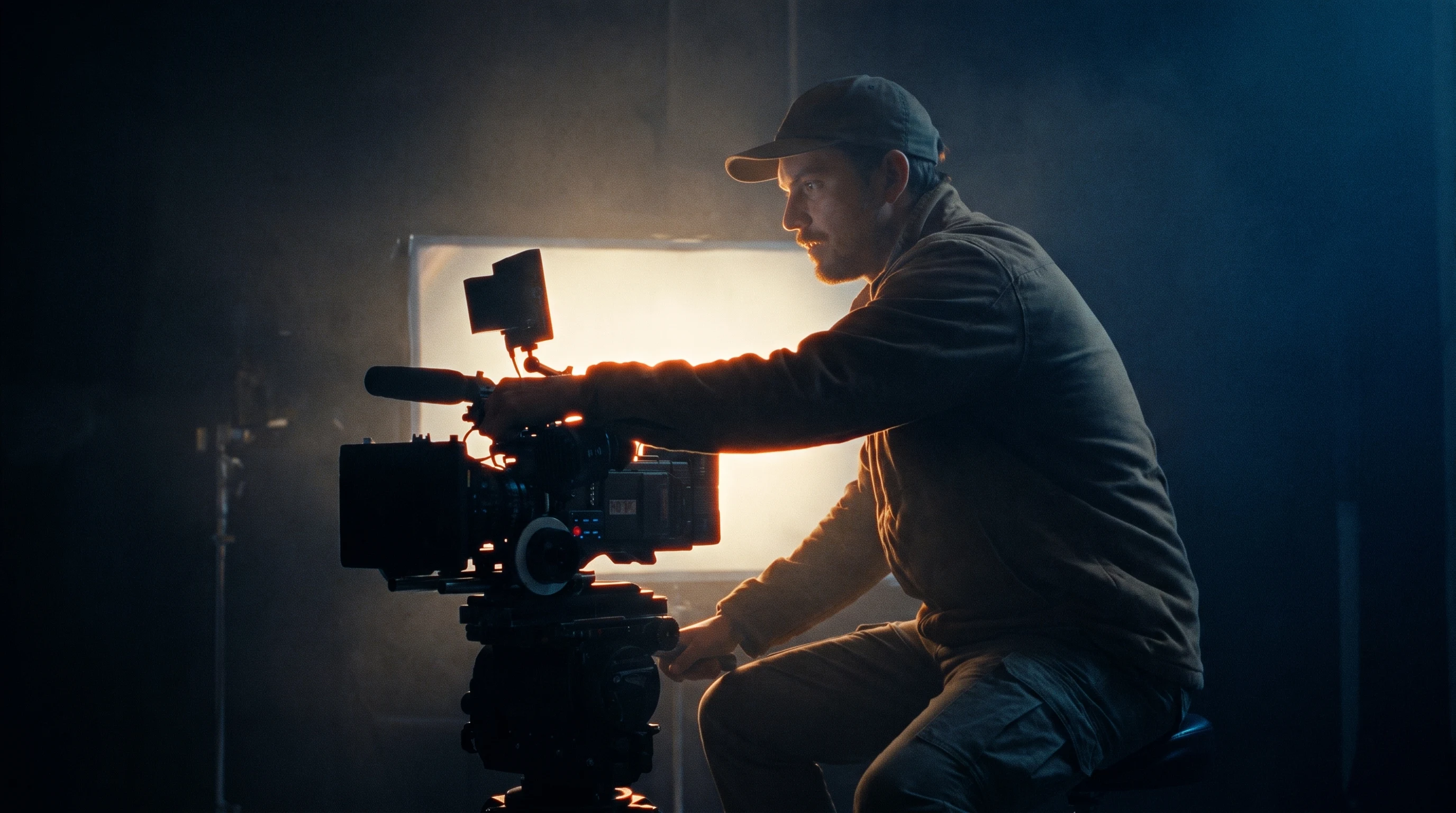
AI short films have crossed from novelty into core brand infrastructure. In 2026 marketing teams at Mango, Motorola, Ajio and Coca-Cola have shipped fully generated or hybrid campaigns in days rather than months, and the quality bar has risen far enough that audiences no longer need a "made with AI" caveat to engage. The question for brand and marketing directors is no longer whether to experiment with the format, but how to deploy AI short films without diluting the brand or landing in the uncanny valley. This piece covers how the format actually works at a studio level, including the production stack behind modern brand films, the use cases that convert, and the pitfalls that trip up first-time briefs.
Why brands are turning to AI short films in 2026
The push into AI short films is being driven by three forces at once. Production timelines have compressed from weeks to days because iteration happens in a model prompt rather than a location shoot. Narrative risk is lower because concepts can be fully visualised before approval. And channels like TikTok Shop and Reels now reward brands that can produce enough variants to feed an algorithm, which traditional production economics cannot support. Marketing leaders are reading the format less as a cost play and more as a creative capability play: it lets them reach worlds and scenarios that a studio build cannot touch, from Mars to the 1700s to surreal product dreamscapes.
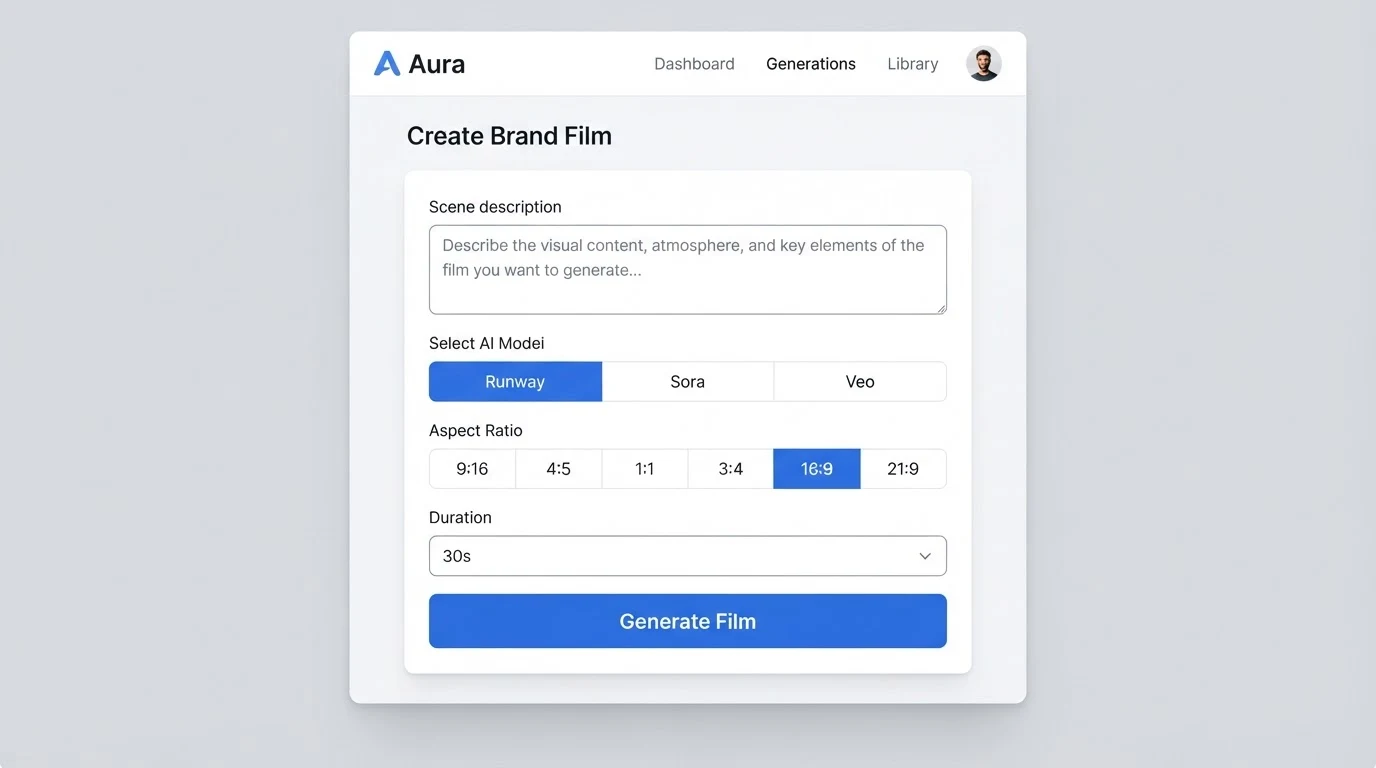
The toolset has also matured. Sora 2 handles cinematic motion and dialogue coherence, Runway Gen-4 has become the editor's workhorse for shot-to-shot continuity, Google Veo 3 brings strong physics and crowd scenes, and Kling AI has emerged as the go-to for lifestyle and fashion motion. Midjourney still anchors the stills and moodboard layer, and ElevenLabs covers voiceover and dialogue. The point is not any single model, it is the stack: senior creative directors now assemble a pipeline per project rather than defaulting to one vendor.
The five ways brands actually deploy AI short films
Walk through enough 2026 brand work and five distinct use cases appear, each with its own creative logic. Treating them as one undifferentiated format is the fastest way to brief a campaign that misses the mark.
- Hero brand films. Fashion house Mango's "Sunset Dream" and Motorola's "Styled With Moto" campaigns use AI to extend identity storytelling into locations and moods that would be prohibitive to shoot. The craft here is cinematic, and the role of AI is to unlock scale, not to signal novelty.
- Performance-led shoppable shorts. TikTok Shop and Reels product tags reward tight loops of generated or hybrid product footage with voiceover and on-screen typography. The volume required, dozens of variants per SKU per week, is where AI pipelines beat live production outright.
- Reactive and real-time campaigns. Ajio's "Great Fashion Price Crash" is the headline example: the Indian fashion retailer publicly described generating around 2,000 visuals and 200 videos in roughly four days to react to a market moment. That cadence rewrites what "real-time marketing" means.
- Surreal and attention-grabbing creative. The "unhinged AI" aesthetic (physics-defying product scenes, dream logic, scale distortion) performs on paid social because the thumbnail wins the scroll. Used sparingly and on-brand, it is a performance lever. Used generically, it reads as prompt slop.
- Personalisation at scale. Variant films per audience segment, geography, or product line, generated from a single master concept. This is where ecommerce brands pull the most measurable value, because every segment gets a film that previously would not have been built at all.
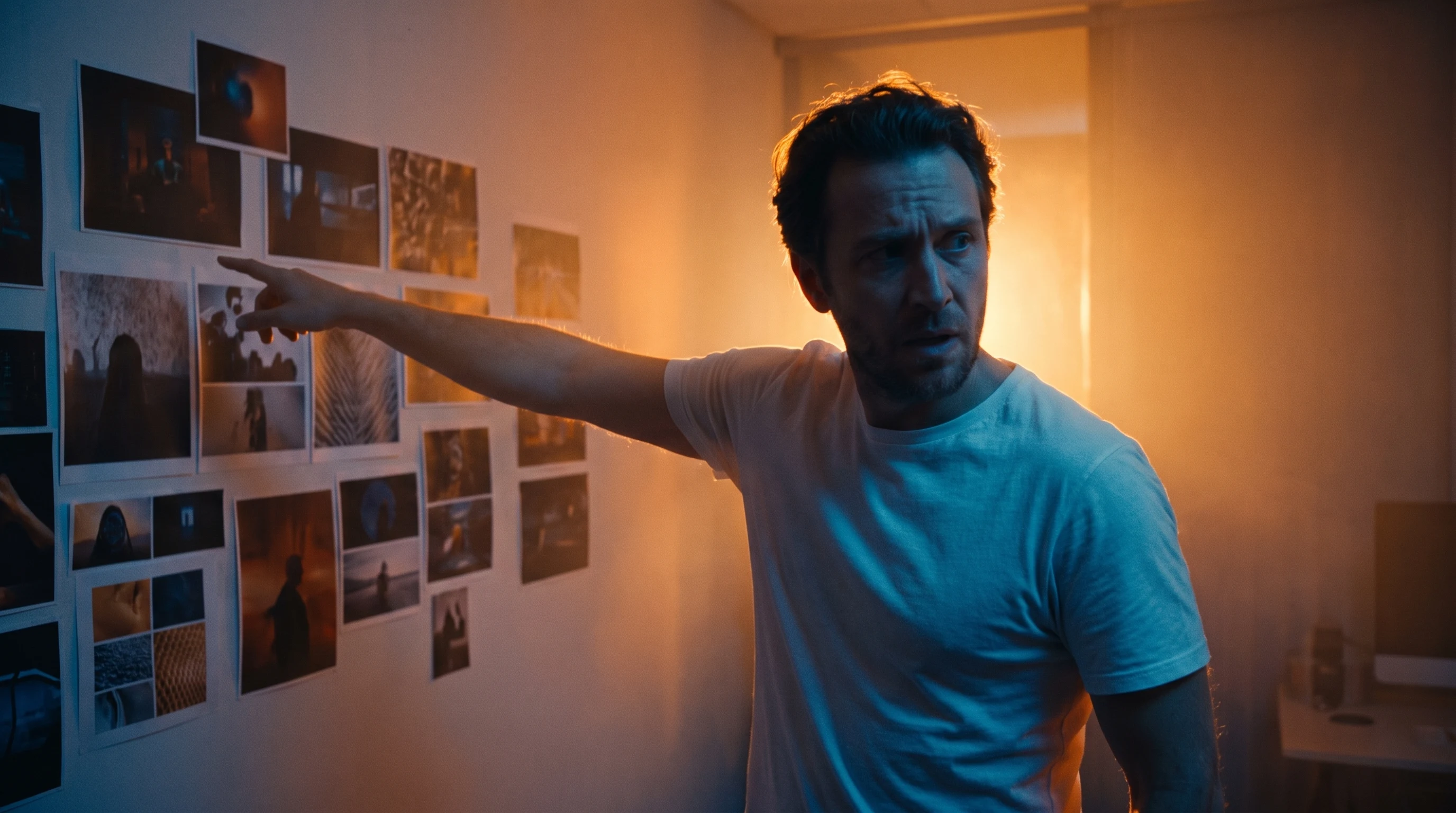
Anatomy of a successful AI brand short film
Underneath every strong AI brand film is a repeatable creative structure: concept, prompt architecture, model stack, edit, and sound. Concept is still the heaviest lift and still happens on paper or in a room, not in a model. A brief that says "cinematic fragrance film in a surreal desert" is not a concept, it is a mood. A concept defines the brand truth the film is proving, the single visual idea the viewer walks away with, and the emotional beats across 15 to 60 seconds. Everything downstream fails without that spine, which is why script-to-storyboard discipline matters more in an AI pipeline, not less.
Prompt architecture is where studios earn their fee. Each shot gets a structured prompt with locked variables for character, wardrobe, lighting direction, lens, and motion, and those variables carry across shots so the protagonist in frame 2 is recognisably the same person as in frame 8. The model stack is then chosen per shot: a Kling pass for soft fashion motion, a Veo pass for physics-heavy action, a Runway pass for seamless transitions, a Midjourney still upscaled and then animated for a hero frame. The edit and sound design finish the illusion. Senior editors tune pacing, cut on action, and lay in bespoke sound design or a licensed track to carry the emotional arc. This is where the "AI short film" stops reading as AI and starts reading as a film.
Case studies worth learning from
The clearest way to understand the format is to look at how brands have actually used it. The examples below are drawn from public coverage of each campaign and are useful because the briefs, tools, and creative decisions are visible from the outside.
Mango's "Sunset Dream." The Spanish fashion house's AI-generated campaign for its teen line used generative models to produce a magazine-style fashion story with a fully synthetic model, a first for the brand's main channels. The creative decision worth stealing is tonal: the campaign leaned into fashion-editorial conventions rather than hiding the AI, which neutralised a lot of the "is this AI" distraction and let the clothes be the hero.
Motorola Razr 50 "Styled With Moto." Motorola paired AI-generated fashion worlds with its foldable device to position the phone as a style object. The campaign ran across short-form social and OOH stills generated from the same prompt set, which is a useful lesson in treating AI as a cross-format production system rather than a video-only tool.
Ajio's "Great Fashion Price Crash." The retailer publicly described compressing a campaign that would normally take weeks into roughly four days by generating thousands of visuals and hundreds of videos through an AI pipeline. The strategic insight is that AI short films changed what calendar their marketing team could run against, not just what their average CPM looked like.
Coca-Cola's generative holiday work. Coca-Cola's 2024 holiday film and its 2025 and 2026 successors are now the most publicly debated AI brand films, which is itself the lesson: scale brands using AI at this level attract scrutiny, and the brands that handle disclosure cleanly take less of a hit. Super Bowl 2026 saw a visible increase in AI-assisted spots on the broadcast and in the surrounding social beat, which is a useful signal of where mainstream advertisers now sit on the format.
The trust problem and how smart brands handle it
Audiences in 2026 can usually tell when something is AI, and the brands that get hurt are the ones that pretend otherwise. The pattern that works is quiet confidence: name the tools in a credit line, publish a short behind-the-scenes cut showing the human creative team at work, and avoid uncanny depictions of real people. Likeness is the sharpest edge. Any brand using an AI representation of a known talent or an employee has to clear a SAG-AFTRA-compliant likeness agreement in the US, and Australian productions should assume similar talent-side obligations will tighten through 2027. Brands also need to think about training-data provenance for the models in their stack and have a clear position on which models they will and will not use for commercial work. For a studio-side view of how these questions get worked through on a live project, see our note on storyboard-stage decisions that pre-empt most trust problems before a single frame is generated.
A practical seven-step workflow for marketers
Teams working with an AI-first studio or building the capability in-house tend to converge on a similar production flow. The steps below are tool-agnostic and can be run against any model stack.
- Brief. Define the brand truth, the single viewer takeaway, the format and duration, and the channel. Treat the AI pipeline as a production method, not the idea.
- Moodboard. Pull reference stills and film clips. Lock colour palette, lighting direction, lens language, and pace.
- Storyboard. Shot-by-shot visualisation with the same character and wardrobe variables carried through. This is where most briefs are won or lost.
- Model selection. Choose the right model per shot type: Kling for soft motion, Veo for physics and crowds, Runway for continuity and transitions, Sora for cinematic hero shots.
- Generation. Produce multiple candidates per shot. Expect to throw out most of them. Keep version control tight.
- Human polish. Senior editor passes for pacing, cut points, grade, VFX cleanup, and sound design. This step is non-negotiable.
- Distribution. Cut aspect ratios, variants per channel, and a disclosure line in credits. Measure against campaign KPIs, not novelty metrics.
What to avoid
The most common failure modes are also the most avoidable. Generic prompt-slop (dreamy girl runs through flowers at golden hour) wins no one's scroll. Over-reliance on a single templated look signals to the viewer that no human made a decision. Skipping brand voice means the film could belong to any competitor. Skipping legal review on likeness, trademarks, or training-data provenance introduces risk the saved production budget will not cover. A brief that would be rejected for a traditional shoot should be rejected for an AI pipeline, and senior creative direction is what makes that filter work.
Where this format goes next in 2026 and 2027
Three trends are already visible. Real-time personalised films will become standard in paid social, with the same hero concept rendered against audience signals at ad-serve time. Interactive AI narratives will show up first in branded entertainment and gaming-adjacent work before moving into mainstream advertising. And agentic creative pipelines, where an AI system assembles shot lists, generates candidates, and routes them to human reviewers, will reshape studio org charts rather than replace them. For brands running paid social at scale, the next 18 months will reward teams that treat the AI pipeline as creative infrastructure rather than a one-off novelty budget line.
Frequently asked questions
How long does an AI short film take to produce?
Timelines vary with concept complexity and the number of shots. A single-location hero short can move through concept to final in a notably compressed window compared with live-action equivalents, while an episodic or character-heavy piece sits closer to a traditional edit timeline. Any specific delivery promise should be scoped against the brief.
Which AI video models are brands actually using?
The current working stack in commercial work includes Sora 2 and Runway Gen-4 for cinematic motion, Google Veo 3 for physics and complex scenes, Kling AI for fashion and lifestyle motion, Midjourney for stills, and ElevenLabs for voice. Most studios blend outputs across models rather than commit to a single vendor.
Do AI short films need disclosure to the audience?
Advertising standards and platform rules vary by region, and the direction of travel is toward clearer disclosure where synthetic humans or real-person likenesses appear. Brands should align with their legal counsel and the latest guidance from each ad platform rather than rely on a blanket rule.
How do AI short films compare with live-action for brand work?
They are not a replacement for every brief. Live-action remains stronger for grounded, real-person storytelling and documentary-style work. AI short films win on worlds that cannot be shot, on volume and personalisation, and on fast reactive campaigns. The right answer is often a hybrid where AI and live-action share the same campaign.
How is pricing structured for AI short-film work?
Studios typically quote per project scope rather than by day rate because the cost structure sits in creative direction and senior editorial rather than crew and location. Pricing is agreed after a brief review and a scoping conversation. For a tailored quote get in touch.
What is the biggest mistake brands make with AI short films?
Treating the format as a cheaper way to make the same film they would have shot anyway. The format rewards briefs that could not have been made in live action at all, and punishes briefs that use AI to cut corners on an idea that was already thin.
Can AI short films integrate with the rest of a campaign?
Yes, and this is where most brands get the biggest return. The same prompt system that produces a hero film can produce stills, OOH frames, social cutdowns, and shoppable variants in a unified visual language, which keeps a campaign recognisable across every surface it lands on.
Who owns the output of an AI brand film?
Ownership and usage rights depend on the models used, the contracts between the brand, the studio, and any third-party talent, and the jurisdiction. These are live legal questions and should be handled with specialist counsel at the briefing stage, not after delivery.
The bottom line
AI short films are no longer an experiment. They are a production system that lets brands reach places live action cannot, iterate at the pace of their media calendar, and personalise at scale, provided the creative direction behind the pipeline is senior enough to protect the brand. Absolutely AI builds this capability for brands and agencies as a studio practice rather than a tool play, pairing cinematic craft with the model stack described above so the output reads as film, not as output.