Hybrid AI Production: Live Action and AI Together
Real actors step into a real studio. The world around them is built with AI. That is hybrid AI production, the approach brands are picking over both fully live-action and fully AI shoots. Here is what the method means on a set, why it is winning right now, and where it still has edges to brief around.
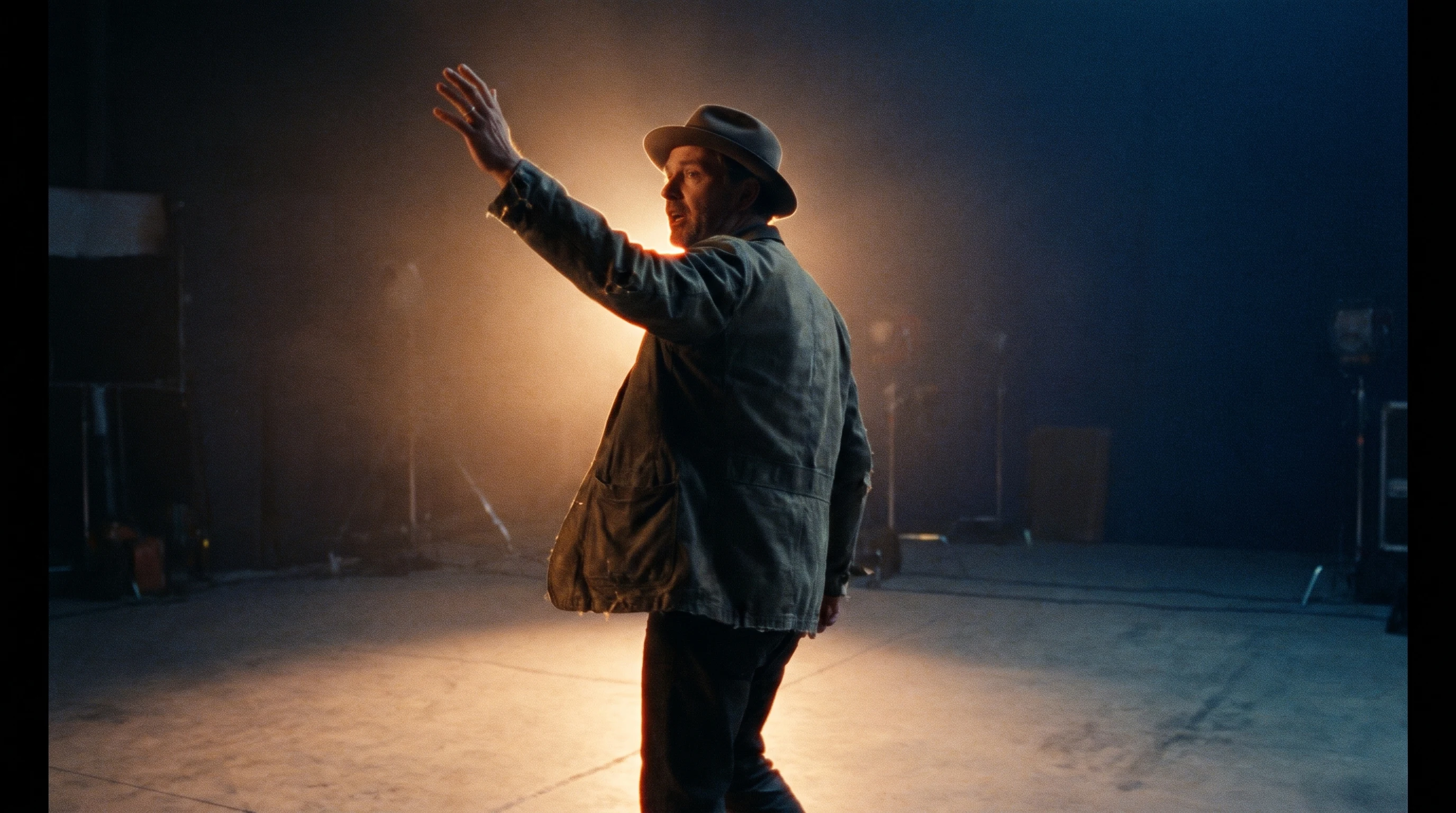
Hybrid AI production is a shoot that captures the people live and generates the world around them. Real cast, real director, real DP, with the backdrops made in post. Fooh, writing up Kaufland's recent hybrid spot, summed it up as shoot the humans, generate the worlds, composite the truth.
That is a long way from a fully AI commercial. Mumbrella reported in June 2025 that Amaysim launched its first television commercial entirely generated by AI, developed by a two-person in-house creative team. Hybrid work does the opposite thing. It keeps the parts of a shoot that cameras do best, and uses generative tools for the parts that would otherwise cost a plane ticket, a location fee or a set build. Brands and studios are choosing it over both extremes for three reasons that keep showing up across named campaigns: the craft stays intact, the performers stay on camera, and the environments become cheaper to make than to travel to. This is where our AI video services sit.
What hybrid actually means on the day
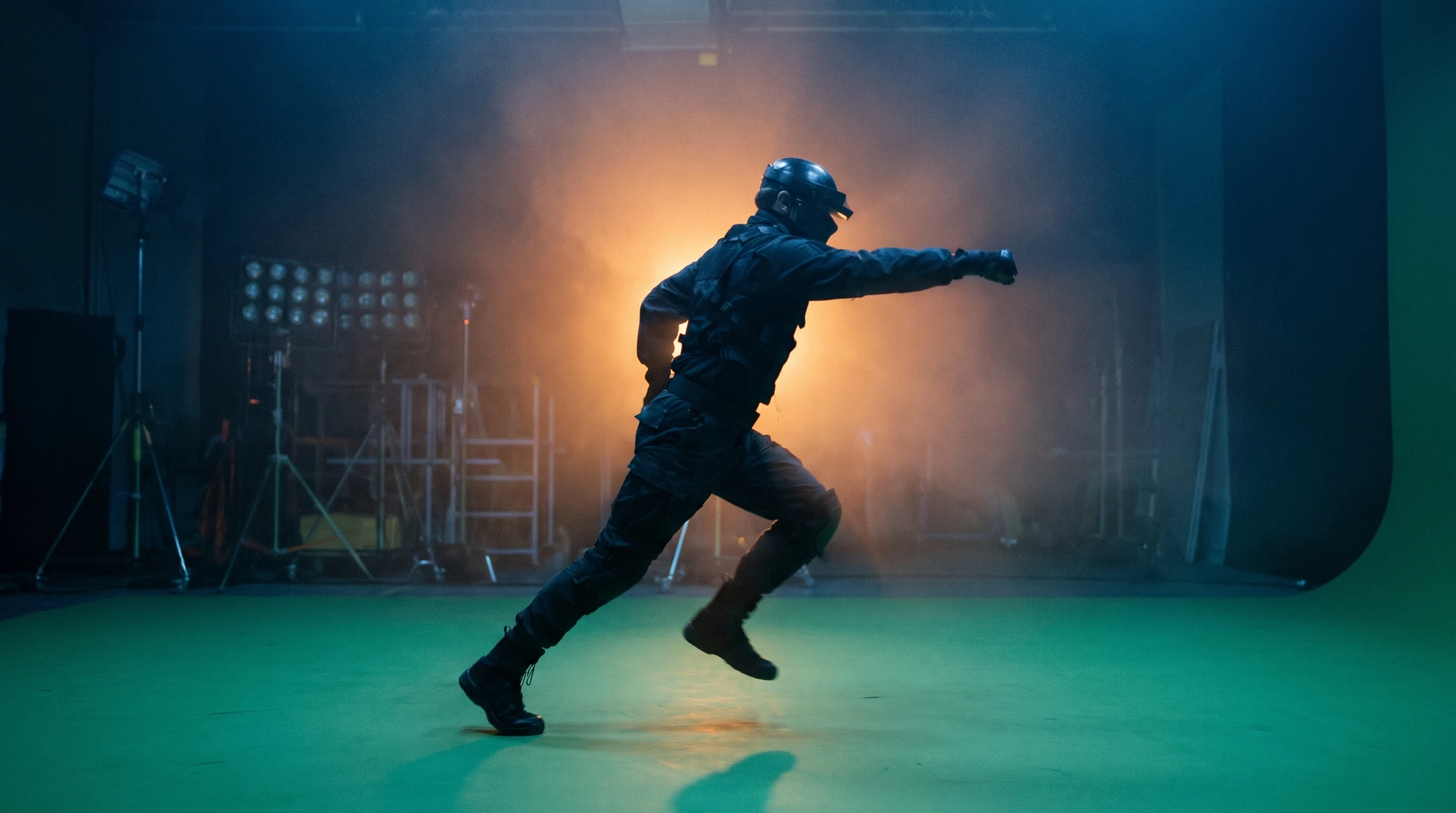
On a hybrid shoot the performance is captured the way it always was. For Salomon's campaign tied to the Milan Olympic Games, Unveil proposed a hybrid approach: a human protagonist shot in live action, with environments generated in AI. The protagonist was shot on a green screen, Runway reports, and the resulting film launched during the opening of the Milan Olympic Games and has since been rolled out worldwide.
Fooh writes that the production started with twelve real actors and three physical signature tracksuits made by stylist Marianka Benesch; every other suit was generated with AI and fitted onto the actors in post. The team also built 23 different worlds in advance, first as still images, then translated into motion. On the day, the generated environments were shown live on the VTR, so the gaffer could match the real lighting to locations that only existed as digital files.
That is the shape of a hybrid shoot: a real cast, a real DP, a real grade, and a plate workflow instead of a location scout.
The craft that stays
The first reason brands are landing on hybrid is that nothing about performance direction changes. For PZ Cussons' Original Source shower gel advert, The Grocer reports that live-action footage of a real human actor on real-life sets was filmed, showing the character in the shower for the beginning of the ad and arriving at his work desk at the end. The 37-second commercial, which first aired in late February, features 70% AI created content, and PZ Cussons has said the ad helped boost the brand's value sales by 4.5%.
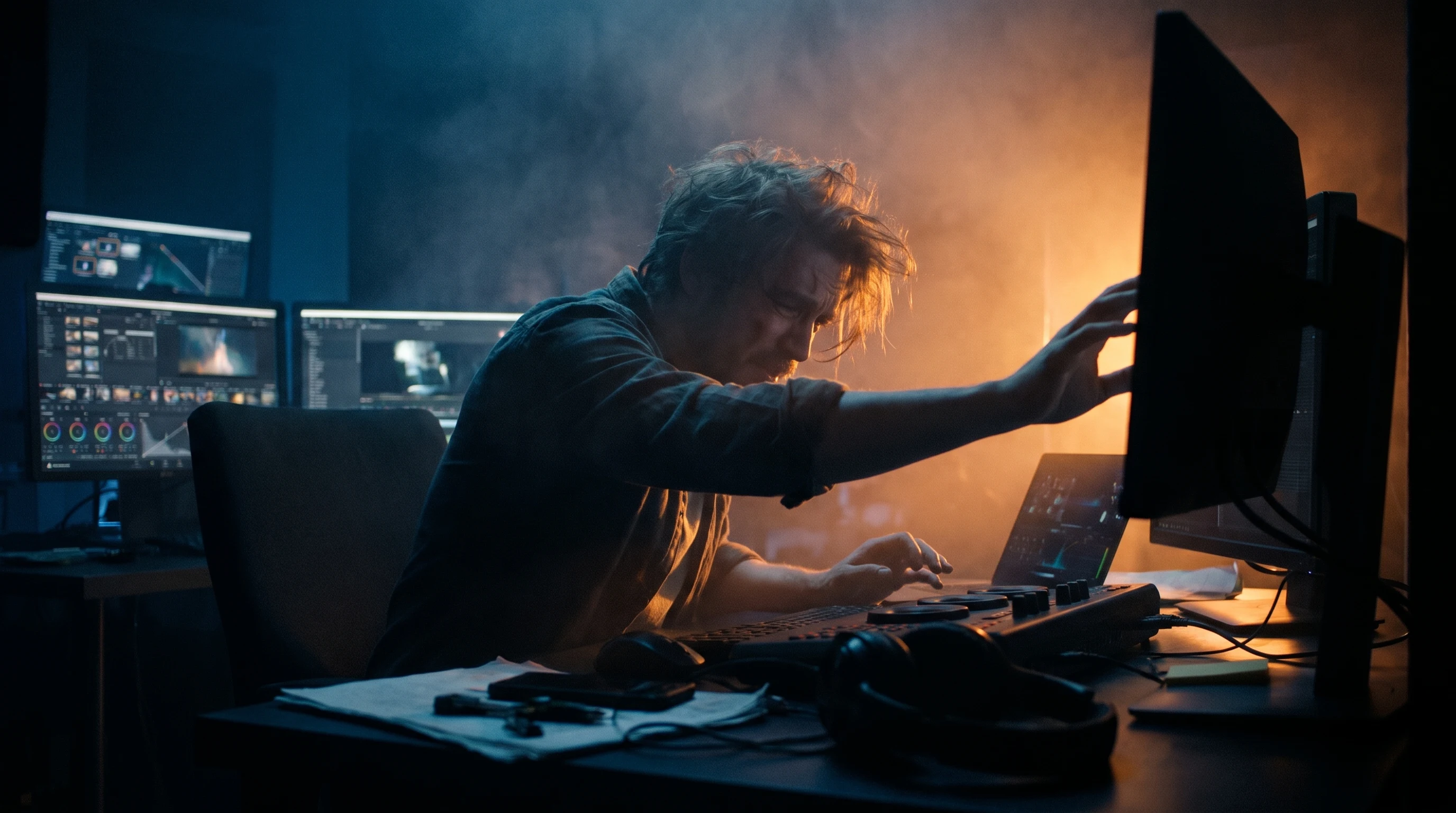
The post approach inverted the usual order. The team told Shots: "Initially, someone floated the idea of using conventional VFX to imitate AI, but we flipped it: we'd generate the actual images using AI, then tidy up with more traditional post-production." Editors and colourists still ran the finish. The director still ran the performance.
The studio MC&V put it plainly to Mediaweek: "I think one thing that we see very clearly is that it's less about either full AI or a traditional production. It's becoming much more hybrid." MC&V expects the label itself to fade: "It's just production, and AI is just like VFX or CGI."
Performers stay on camera
The second reason hybrid is winning is that it keeps real people in frame. In the United States, performer protections now sit explicitly on top of that choice. Variety reported in June 2026 that SAG-AFTRA members have ratified a four-year contract with the major studios, which includes new provisions on synthetic actors. The contract allows producers to use AI performers only if they bring "significant additional value" compared to a live actor or that actor's digital avatar. A hybrid shoot sits comfortably inside that rule, because the performance on screen is the live actor.
Australian shoots are not covered by that contract, and the sources used here do not state what the Australian unions have said about synthetic performers. The commercial logic travels anyway. Kaufland cast twelve real performers. Salomon shot a real human protagonist. Original Source opened and closed on a live-action actor. In every case the camera recorded a face. The budget that moved to AI moved to the backdrop, not the talent.
Worlds too far, too dear or too slow to build
The third reason is the one agencies talk about most. A hybrid shoot can place the same performer in a run of environments that no location van could reach inside a single day.
Unveil told Runway that a CGI approach or a fully live-action equivalent of the Salomon film would have taken twice as long, and that the team would have needed a CGI team of 10 or 15 people. XPLOR at Production Park in West Yorkshire created what it believes was the first fashion campaign shot in virtual production with AI-generated locations; TVB Europe reports the team chose AI because it meant they did not need to send a photography crew to a marble quarry to source the backdrop.
On a conventional stage the speed shows up differently. Definition Magazine quoted one producer: "We could jump from a beach environment to a suburban street very quickly because the backgrounds were generated digitally." The cast walked between setups. The locations did the travelling.
What that looks like in Australia
The pattern lands here too. Bhuja's 2026 relaunch TVC was the brand's first ever above-the-line campaign. Actors were filmed in a single day on a controlled set in Sydney; every cinema, beach, laneway and backyard around them was built with AI. TVC production was by CRATER; the studio's role was the AI environments and the out-of-home motion.
Australian Unity's Worth Doing Well out-of-home run used the same approach at a different scale: four regional environments, a country show, a regional gig, the Parkes Elvis event and a colour run, built around eleven real people photographed in one eight-hour studio session. The Australian Unity case study records 10 to 20% saved across total production time, including pre-production.
Neither project was fully AI, and neither was fully traditional. The talent is real. The schedule and the budget moved around the talent.
Where hybrid has edges you should brief around
Two edges are worth naming. The first is the legal position of AI-generated environments. Definition Magazine writes that the legal framework surrounding AI-generated environments is uncertain and likens it to a "wild west"; when scanning real locations, the existing rules still apply. That is not a reason to avoid hybrid work. It is a reason to brief it the way you would any other post-production task, with named references and a clear source list. This article is general information, not legal advice; take your own advice on rights, releases and clearances before signing off.
The second is match discipline. The AI environments Kaufland built in advance were played on the VTR so the gaffer could light the room to the plate. Where that match work is skipped, hybrid shoots look pasted. Light direction, lens choice and grain matter the same way they always did.
When to pick hybrid, and when not to
Pick hybrid when the ad has a human at its centre, a face, a hand, a body in motion, and the world around that human is either too expensive to build or too far to visit. The economics are at their clearest on a single studio day in Sydney feeding a run of environments that would otherwise be a week of travel, with a finish that still runs through an editor and a colourist.
Pick fully live action when the environment is the story and it is close, affordable and controllable. Pick fully AI when there is no human performance to carry; even there, MC&V's reading is that production is becoming much more hybrid. If you are weighing it against a traditional TVC, there is more on AI commercial vs traditional TVC cost.
Next step
If you are shaping a hybrid shoot, get in touch with a one-line brief of what you are shipping and the environments you need around it, and we will tell you which parts belong on camera and which belong in post.