AI Animation Studio vs Traditional Animation Studio: 2026
AI animation studios ship finished commercial work in 2026, and traditional pipelines still lead the character-driven ceiling. The useful question is which fits which brief. This guide names the tradeoffs directly, gives per-format verdicts across explainers, hero films, character work, and social variants, and closes with the hybrid model most brands have quietly settled on.
The choice between an AI animation studio and a traditional animation studio has stopped being about experimentation. In 2026 both approaches ship finished commercial work, and the honest question is no longer which is better in the abstract, but which fits the deliverable, the timeline, and the brand. This comparison from Absolutely AI names the tradeoffs directly and gives per-format verdicts so you can decide inside a brief rather than a strategy deck.
The short answer:
- Traditional animation studio: character-driven storytelling and premium hero campaigns where directorial control across every frame is non-negotiable.
- AI animation studio: volume, speed, per-market variants, and visual worlds that live-action or hand-craft cannot reach at pace.
- Hybrid pipeline: the default for most brands in 2026, using AI for exploration and variants while a traditional team locks the hero frames.
Why this comparison changed in 2026
Two years ago the debate was whether AI animation was good enough to ship. That debate is over. Runway Gen-4, OpenAI Sora, Google Veo 3, and Kling AI now render coherent motion, physically plausible camera moves, and character-locked scenes that clear the bar for social ad rotations and full AI-led brand films. Traditional studios did not disappear either. They still deliver the acting nuance and frame-level polish that hero campaigns and IP-led series require. The useful question is which studio type fits which brief, and where the boundary sits between them.
What a traditional animation studio actually does
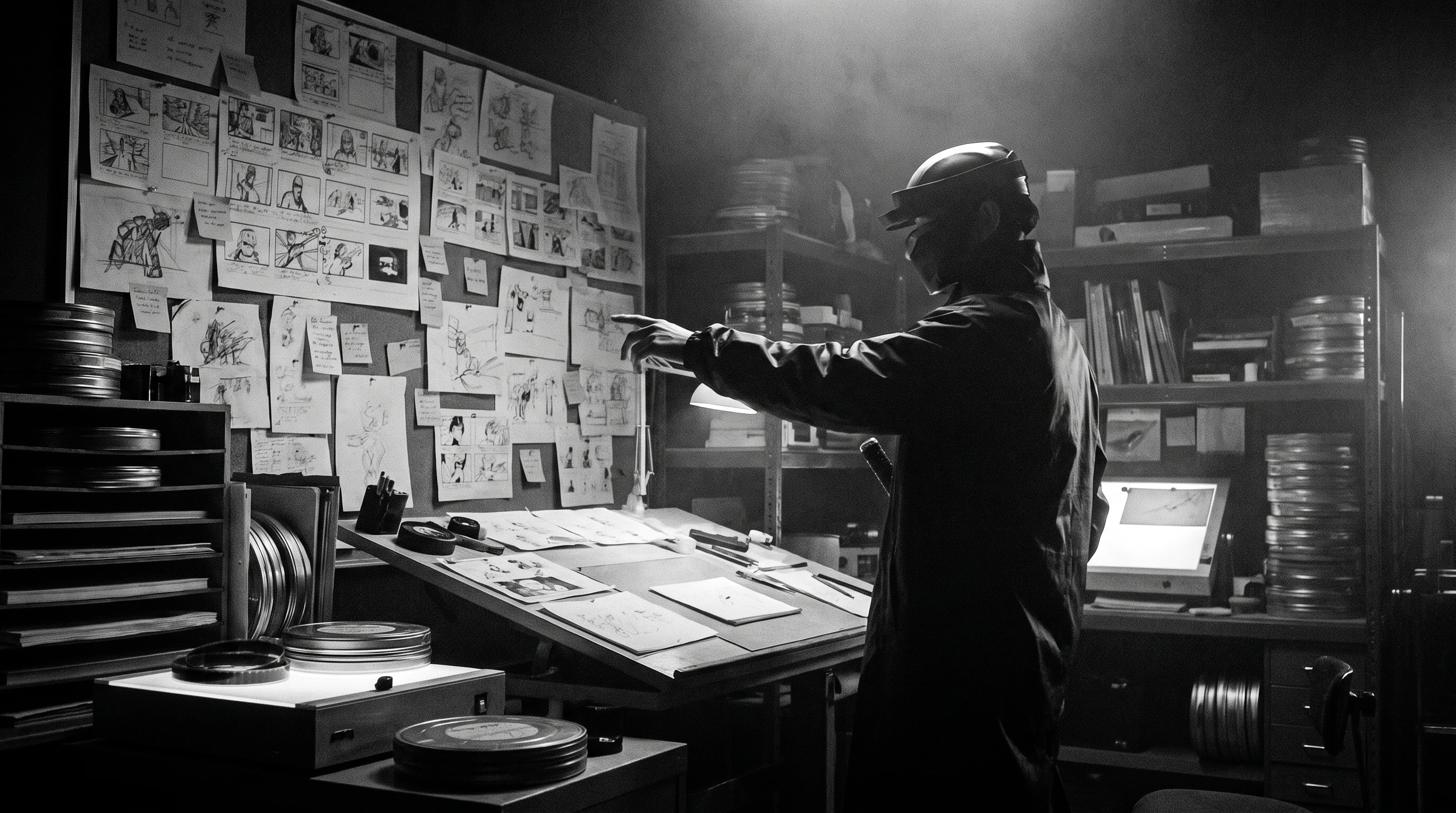
A traditional animation studio runs a linear pipeline that has barely changed shape in twenty years. Pre-production covers scripting, character design, and colour scripts. Storyboards translate the script into panels, then an animatic sets timing against a scratch voice track. Animation itself, whether 2D frame-by-frame, rigged puppet, or 3D CG, is where the majority of hours live. Compositing layers everything together, and sound design and grading finish the piece.
The team is bigger than most brand marketers expect. A short brand film typically involves a director, an art director, a storyboard artist, one or more animators, a compositor, a sound designer, and a producer coordinating them all. That team structure is why turnaround is measured in weeks rather than days. What you get in return is control at every stage, character consistency baked in through rigs and model sheets, and revision rounds that fold cleanly back into a version-controlled shot list. The same production logic sits behind the AI versus traditional debate in product photography, and the answer generalises: linear craft still wins the moments the audience remembers.
What an AI animation studio actually does
An AI animation studio inverts the pipeline. Instead of a large linear team, a small operator group directs a stack of generative models: Runway Gen-4 for controllable video, Sora for longer coherent scenes, Veo 3 for cinematic camera language, Kling AI for stylised motion, and Midjourney or reference LoRAs for locked character and world design. Adobe After Effects and traditional comp software still sit at the end of the chain for grading, titles, and cleanup.
The senior craft has moved rather than disappeared. Directors still write the brief, art directors still lock the look, and editors still shape the final cut. What has collapsed is the middle: instead of a compositor rotoscoping a mask for three days, an operator regenerates a shot with a different reference sheet in fifteen minutes. That is where the speed comes from, and it is also where the quality risk lives, because a badly briefed operator with good tools produces fluent-looking work that is subtly off-brand. Studios that ship at commercial standard put a human at every hand-off point, which is the operating logic behind modern AI content production.
The comparison at a glance
| Criterion | Traditional animation studio | AI animation studio |
|---|---|---|
| Approach | Linear pipeline, senior artist per craft | Operator-led, model stack with human review at each hand-off |
| Strongest capability | Character acting, frame-level polish, IP consistency | Volume, style variety, world-building, per-channel variants |
| Typical turnaround | Weeks to months per finished minute | Hours to days per cut with a briefed operator |
| Revision workflow | Contracted rounds folded into shot list | Cheap regeneration, style drift is the risk |
| Best for | Hero brand films, character series, premium campaigns | Explainers, product visualisation, ad variants, unreachable worlds |
| Pricing model | Project-based, quoted per scope | Project-based, quoted per scope |
| Watch-out | Slow iteration, budget-heavy fixes | Style drift, IP provenance, briefing quality |
Cost realism without the marketing spin
Rather than pretend either model has a fixed per-minute number, the useful frame is what you actually pay for. Traditional studios sell hours of senior craft: the director's time, the animator's frames, the compositor's shots. Longer scripts and higher character counts compound linearly. AI studios sell direction, brand calibration, and operator time on top of model access, and the compounding is much softer. One variant or ten variants often cost roughly the same to direct once the master is locked.
The break-even usually sits somewhere around the second or third variant, or the fifth market cutdown of the same hero. That is why the honest cost story is not a per-minute figure but a curve. Both AI-native studios and serious traditional studios will quote per scope after reading the brief, because anything else is a guess.
Turnaround is hours versus weeks, with one honest caveat
AI compresses turnaround from weeks to days, and in some cases from days to hours. That is real. The caveat is that afternoon delivery assumes an operator who already knows which model handles which shot, how to prompt for camera language, and how to lock a character across cuts. In practice a brand film that a traditional team would deliver in four to six weeks lands from an AI studio in three to seven working days, including revisions and grading. Rush cuts for reactive social ad rotations can land inside a day. Where traditional wins on time is scheduled series work, because a running pipeline is often more predictable than a queued generation.
Creative control and brand consistency
This is the section most competitor pages hedge on, so here is the direct read. Traditional animation still wins on subtle character acting, hand-tuned lip-sync, and any moment where a specific facial expression carries the storytelling. Modern AI studios have closed most of the brand-consistency gap using reference sheets, custom LoRAs trained on brand assets, character bibles held as image sets, and shot-level style locks. What that means in practice is that an AI studio which invests in a proper style-lock front-end can hold a character, a colour palette, and a lighting language across a dozen cuts without drift.
A studio that treats every generation as a one-off cannot. This is the single biggest quality separator inside the AI category, and it is where disciplined brand calibration shows up in the finished work. When comparing AI studios, ask about the style-lock workflow before asking about the model stack.
Quality by deliverable type
The best answer to the vs question is different for every format. Here is a per-deliverable read.
1. Explainer videos
AI wins clearly. Explainers reward speed, iteration on script, and clean stylised visuals over character nuance. An AI studio can turn a script into an animatic in a day and a finished cut in three. Traditional is overkill unless the brand needs a bespoke illustrated house style tied to an existing identity system.
2. Hero brand ads
Split verdict. If the hero is character-driven acting, traditional or a hybrid with traditional finishing still wins. If the hero is a cinematic world, a product hero, or a stylised sequence that live-action cannot reach, AI is now the sharper tool, and often the only route to the concept. This is where most modern AI commercial work earns its brief.
3. Character-driven series and IP animation
Traditional wins for now. Long-form character consistency, subtle performance, and IP protection all sit more cleanly inside a traditional pipeline. AI is used inside these productions for concept art, previs, and background plates, not for hero character work.
4. Product visualisation and CGI
AI wins for exploration, hero shots, and variants, and the same production shift is well documented in how AI product photography works. Traditional CG still leads for engineering-accurate visualisation and configurator-driven output where geometry must match a real product SKU exactly.
5. Motion graphics and titles
Traditional or hybrid. After Effects work, kinetic type, and information design remain faster and cleaner in a designer's hands. AI contributes background plates, textures, and generative transitions rather than the whole piece.
6. Social cutdowns and per-market variants
AI wins decisively. Once a master is directed, generating fifteen aspect ratios or twelve localisations from the same lock is where the AI cost curve pays back hardest.
Revisions and IP ownership
Two topics competitor pages skip. On revisions, traditional contracts typically bundle two or three rounds, and anything beyond is billed as variation. AI regeneration is technically cheap, but each regeneration risks style drift, which is why a mature AI studio treats revisions as directed adjustments against a locked reference set rather than free-form re-prompts. Ask any studio how they handle round four, not round two.
On IP, the picture is genuinely messier in the AI category. Traditional animation IP transfers cleanly under standard commissioned-work contracts. AI-generated animation raises three real questions: training data provenance for the underlying model, whether the output is copyrightable in your jurisdiction, and whether the studio can indemnify you against a third-party claim. Serious AI studios have answers written into their contracts, including model choice, reference asset ownership, and indemnification scope, which is precisely the ground AI consulting engagements should be surfacing before a project starts. If a studio waves this away, walk.
How to choose in five real scenarios
- A ninety-second character-driven brand film for one flagship campaign. Traditional, or hybrid with traditional finishing.
- One hero brand film plus twelve social cutdowns across five markets. AI studio, or hybrid with AI-led variant generation and a briefed marketing partner holding the campaign calendar.
- A monthly explainer series for a SaaS product. AI studio, with a locked style guide from month one.
- Product visualisation for a launch, hero film plus configurator-style variants. AI for the hero and variants; traditional CG if a configurator must match SKU geometry exactly.
- A returning animated character for a long-running campaign. Traditional, or AI only if the studio can prove a locked LoRA character workflow across previous work.
The hybrid model most brands actually use in 2026
Very few brands sit purely at either end. The pattern that has settled in this year uses AI for exploration, previs, world-building, variants, and coverage, then hands hero moments to traditional finishing or in-house craft. The financial logic is that AI absorbs the linear compounding cost of variants, while traditional preserves the moments the audience actually remembers. Studios that offer both, or partner cleanly with each other, tend to deliver the best commercial outcomes for brands whose work spans hero campaigns and always-on content.
Frequently Asked Questions
Is AI animation actually cheaper than traditional animation?
Usually yes for volume work and variants, and often for one-off pieces too, but the gap narrows on character-driven hero films where senior craft is doing most of the value work. The bigger cost lever is variants: once the master is locked, AI absorbs additional cuts far more efficiently than a traditional pipeline can.
Can an AI animation studio hold a character consistent across cuts?
Yes, if the studio uses locked reference sheets, custom LoRAs, and shot-level style locks. A studio that generates every shot from scratch cannot. Ask to see character consistency across at least three previous projects before committing.
Who owns the IP of AI-generated animation?
It depends on the contract and the jurisdiction. Serious AI studios write ownership, model provenance, and indemnification into the master services agreement. If a studio cannot answer the IP question in one sentence, treat it as a red flag.
How long does an AI animation studio take to deliver a brand film?
Three to seven working days is typical for a briefed hero film with revisions and grading. Rush social cuts can land in a day. Long-form series work is scheduled in weeks, but still faster than traditional equivalents.
What can traditional animation still do that AI cannot?
Subtle character acting, hand-tuned lip-sync, frame-perfect brand character IP work, and the specific look of hand-drawn or stop-motion craft. Traditional also has the edge on engineering-accurate CG where geometry must match real specifications.
Do I need to choose one studio or can I run a hybrid pipeline?
Most brands run hybrid in 2026. AI handles exploration, variants, and unreachable worlds; traditional handles character moments and hero finishing. The decision is per deliverable, not per agency relationship.
The bottom line
The right answer is scenario-driven, not ideological. For character-driven hero work and premium IP, traditional animation still sets the ceiling. For volume, speed, world-building, and per-market variants, an AI animation studio delivers work that a traditional pipeline cannot match at pace. Most brands land on a hybrid, and the studios worth hiring, Absolutely AI included, will tell you which parts of your brief belong on which side of the line before quoting.