Kalshi AI commercial: how it was made
On 11 June an AI-generated ad for Kalshi aired on the YouTube TV stream of Game 3 of the NBA Finals. The filmmaker, PJ Accetturo, then published his workflow. The story is not the price tag, it is the selection ratio and the prompt discipline behind a small handful of keepers.
PJ Accetturo made the Kalshi commercial in about two days using AI tools, according to NPR. That figure is the one most launch coverage led with. For a brand team, the more useful number is 300 to 400: the generations Accetturo told reporters he ran to end up with 15 usable clips. The hit rate and the editorial taste behind it, not the speed, are the lesson.
This is a campaign commentary, written for a marketing director or creative director weighing an AI spot of their own. It treats the Kalshi ad as a craft story. Kalshi gave the brief, Accetturo did the work, Veo 3 generated the frames, and a human editor arranged what landed. Each of those steps carries a decision a brand team would need to make in the same order.
The brief and the division of labour
Kalshi gave Accetturo a list of themes, ideas and bits of dialogue, according to NPR's reporting republished on OPB. He turned those into a script and AI prompts. A Kalshi spokesperson confirmed, in reporting published on AOL, that the company hired Accetturo and that the finished ad was generated entirely in Veo 3.
Accetturo described the first step plainly. He co-writes with Gemini or ChatGPT, asks for ideas, picks the best ones and shapes them into a simple script. From there he uses Gemini to convert the script into a detailed, shot-by-shot prompt for Veo 3. The brand supplies the strategic raw material. The filmmaker supplies the taste and the pacing.
That division matters for anyone commissioning an AI commercial. If the team cannot write a sharp brief, no amount of model time will fix the output. If the filmmaker cannot edit, no number of generations will land. The brief and the final cut are the two decisions least improved by the model.

The prompt discipline
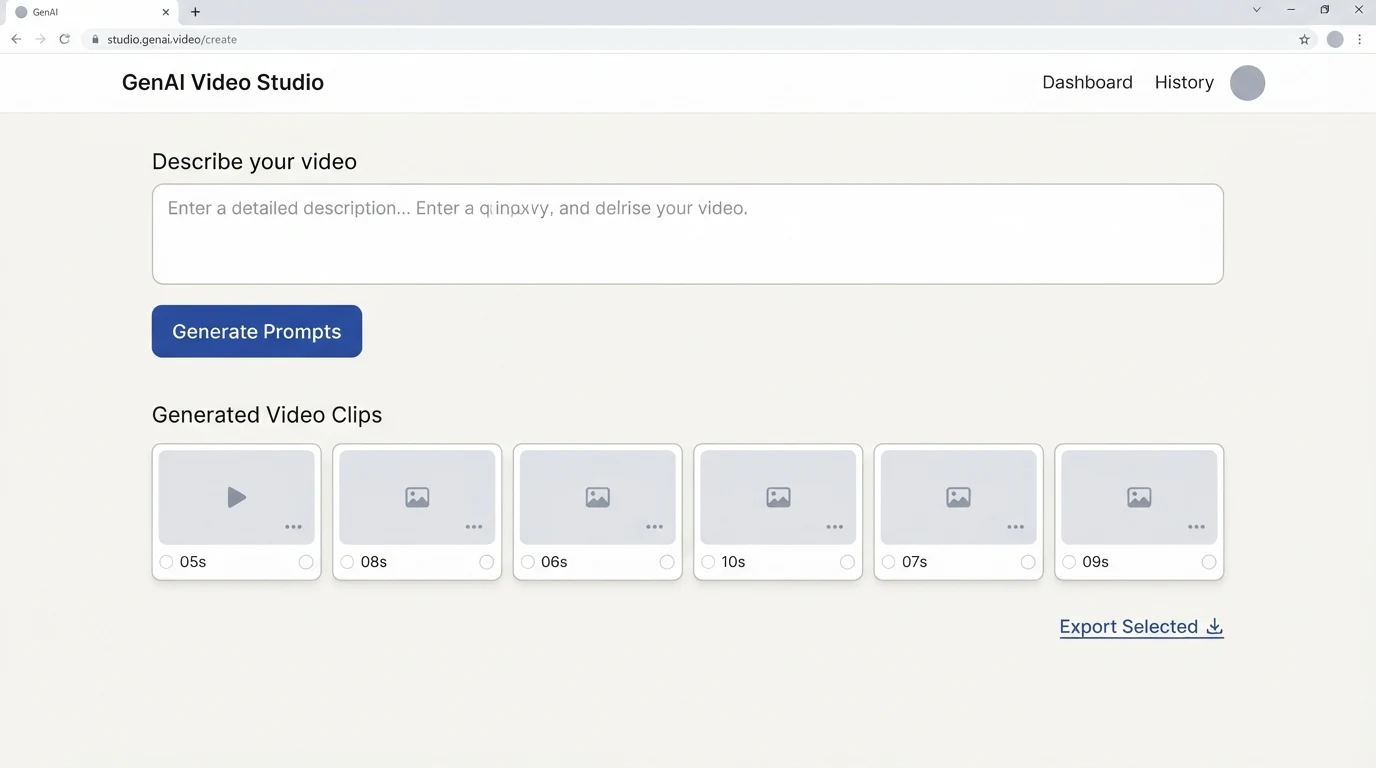
The most useful detail in Accetturo's thread, as reported on AOL, is how he keeps the model honest. He tells Gemini to return five prompts at a time, because quality slips above that. Each prompt fully describes the scene as if Veo 3 has no context of the shot before or after. The setting, the character and the tone are re-described every time, to maintain consistency across cuts.
This is not how a writer-director would describe a shot list to a human crew. On a traditional set the costume supervisor remembers the costume from the last scene. A generative model does not. Accetturo's rule is a workaround built on top of that specific limitation.
For brand teams, the implication is that a prompt is not a line of script. It is a self-contained scene description. Templating a prompt library around that rule, with tone, lighting, character and setting fields repeated in every row, does more for consistency than any single clever phrase.
The selection ratio
About 300 to 400 generations produced 15 usable clips, Accetturo told NPR. He added, pointedly, that being cheap does not mean anyone can do it. The clips were then assembled in video editing software with music, according to MPR News: when a generation missed, he fed the prompt back into Gemini and asked for changes until he was satisfied with the footage.
Fifteen keepers from 300 to 400 tries is a very low hit rate. For a brand team used to tightly storyboarded production this feels wasteful. For the model, it is close to how directors have always worked with first takes in any medium: many attempts, a small shortlist, one final cut. The difference is that the shortlist is now assembled from material the model has only just made, with no crew to blame if a frame is wrong.
The structural constraint
Kalshi described the ad's theme as the world going mad, and said Veo 3's 8-second clip length meant the commercial had to cut between scenes quickly, in comments reported by Mashable via Yahoo. Google DeepMind's page on Veo uses 8-second videos in its stated comparisons, and notes that creating videos with natural and consistent spoken audio, particularly for shorter speech segments, remains an area of active development.
The editorial lesson is that the model's limits shaped the finished creative. A slower, dialogue-heavy ad is harder on the current tool, so the team wrote a chaotic, cut-fast spot that plays to what the tool can do well. Gizmodo noted that each scene is very short because Veo 3 still has trouble with continuity. Whether that reads as kinetic or as haste depends on the viewer.
How it landed
One week after its streaming debut the video had more than 3 million views on Kalshi's X account, NPR reported. Marketing analyst Debra Aho Williamson told NPR the ad's tone and placement made sense to her, although she admitted it took multiple views to decipher what was being advertised. She said a similar video featuring human actors could have captured the same energy, "but because they did it with AI, they're getting a lot of attention".
That is a sharper note than most launch coverage carried. It separates the response to the craft from the response to the method. Kalshi's spokesperson said the spot went from idea to live ad in three days and projected that it was on track to finish with 20 million impressions across mediums. That projection, rather than a verified final tally, should be read as the company's own figure.
Williamson also applauded Accetturo for being open about his methodology, telling OPB that "everybody can learn from that". That openness is the reason this ad has become a reference point. Many brands have shipped AI-assisted work this year. Few have published the step count.
What brands can learn
Five takeaways for a brand team considering a similar workflow:
- Treat the brief as the creative input. Kalshi gave themes, ideas and dialogue. If a team cannot articulate tone and idea in a page of notes, the model cannot save them.
- Budget for generation volume, not finished seconds. On this ad about 300 to 400 generations produced 15 usable clips. Plan compute and reviewer time around that kind of ratio, not around the finished runtime.
- Re-describe every shot. Accetturo's rule, that each prompt restates setting, character and tone because the model holds no memory between clips, is the single most actionable technique in his thread.
- Edit in a conventional app. The clips were arranged in video editing software, with music. The finish is a human craft decision about rhythm and sound, not a model output.
- Design to the tool's limits. Veo 3 clips are short and dialogue is a known soft spot. A chaotic, cut-fast ad is a creative response to those constraints.
Kalshi said the company wants to use AI in future campaigns but will not completely abandon more traditional forms, as reported by MPR News. Accetturo made a similar point in Mashable's coverage: some brands will still pay a premium for taste, and he described a future of small teams making viral, brand-adjacent content weekly. Neither man is calling the end of production companies. They are describing a split.
Kalshi also said it had received production quotes and timelines from traditional production companies that did not fit the campaign. eWeek reported that Kalshi's Tarek Mansour posted on X that a comparable commercial would typically take months to produce. Those are the company's own comparisons, not a general rule. For a brand with a slower calendar and a different tone, a conventional shoot may still be the right answer.
Absolutely AI is an award-winning creative AI studio in Brisbane. For the studio's projects see the case studies, or the related pieces on how AI commercials are made and what the best AI commercials can teach brands.
Frequently Asked Questions
Who made the Kalshi NBA Finals ad?
PJ Accetturo made the ad. A Kalshi spokesperson confirmed, in reporting on AOL, that the company hired him and that the finished ad was generated entirely in Veo 3.
How many Veo 3 generations did it take?
About 300 to 400 generations produced 15 usable clips, Accetturo told NPR. He added that being cheap does not mean anyone can do it.
How long did the ad take to make?
Accetturo told NPR the ad took about two days using AI tools. Kalshi's spokesperson said the spot went from idea to live ad in three days.
What AI tools were used?
According to reporting on NPR, OPB and AOL, Accetturo co-writes scripts with Gemini or ChatGPT, uses Gemini to produce shot-by-shot prompts, generates clips in Veo 3, and arranges clips with music in video editing software. Kalshi confirmed the finished ad was generated entirely in Veo 3.
Is AI replacing traditional ad production?
Not according to the people who made this one. Kalshi told MPR News it wants to use AI in future campaigns but will not completely abandon more traditional forms. Accetturo told Mashable via Yahoo that some brands will still pay a premium for taste.
Where to go next
If you are considering an AI commercial for your own brand, the useful question is not whether to use AI. It is which parts of the work your team wants to keep human: the brief, the editorial selection, the edit, the sound. Start there, then tell us about the project.