How AI Commercials Are Made in 2026: The Real Production Pipeline
AI commercials are having their moment, but the reality behind the headline spots is more craft than magic. At Absolutely AI we build these projects every week, and the honest version of the pipeline looks nothing like the one-click demos on social. Here is how a modern AI commercial actually gets made in 2026, stage by stage, tool by tool, and where human creative direction is still doing the heavy lifting.
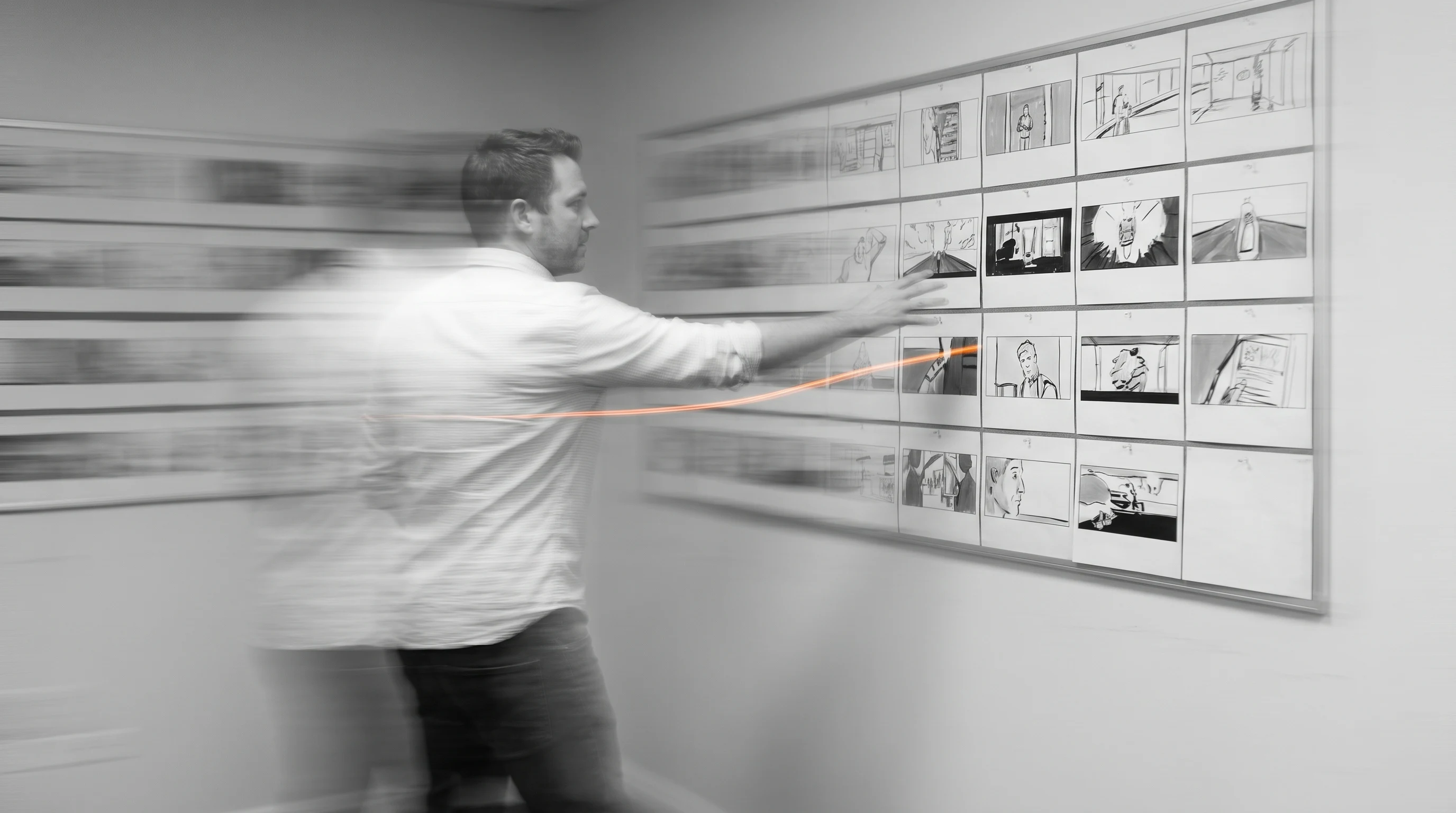
The phrase "AI commercial" now covers a spectrum, not a single technique, and understanding that spectrum is the first step to briefing one well. On one end sit fully generated spots like the Kalshi Super Bowl ad, the Toys R Us origin-story piece, or Coca-Cola's AI-assisted holiday film, where every frame is synthesised. On the other end sit hybrid pipelines where AI handles concepting, storyboards, or localisation and humans shoot and direct the hero footage. Most of the work that wins awards, including the campaigns coming out of studios like Absolutely AI, lives in that hybrid middle, not the one-click extreme.
What counts as an AI commercial in 2026
A useful working definition: an AI commercial is any commercial where generative models materially author part of the finished frame, not just accelerate a mundane task in post. That includes fully generated spots, image-to-video sequences intercut with live plates, AI-driven localisation swaps for cast and language, and AI-generated environments that would be uneconomical to build or travel to. The technique matters less than the creative outcome, which is why serious AI film work is still briefed the way any commercial is briefed.
What has genuinely changed is the range of ideas a brand can now afford to entertain. Worlds that would have needed a build, a location scout, or a VFX vendor are now on the table for a mid-tier budget. That widened aperture, more than any single model release, is the reason clients are commissioning this work.
The six-stage production pipeline
Behind almost every credible AI commercial is a recognisable production spine. The stages map cleanly onto traditional advertising production, which is why creative directors from a film background adapt to this workflow quickly. The tooling changes; the discipline does not.
- Brief and strategy. A human creative director defines the message, the audience, the tone, and the mandatories. No model does this well without a strong brief, and the strongest AI consulting engagements start here.
- Concepting and moodboards. Image models such as Midjourney, gpt-image, and Flux are pushed hard, generating one hundred plus stills to lock the visual world before a single motion clip is rendered.
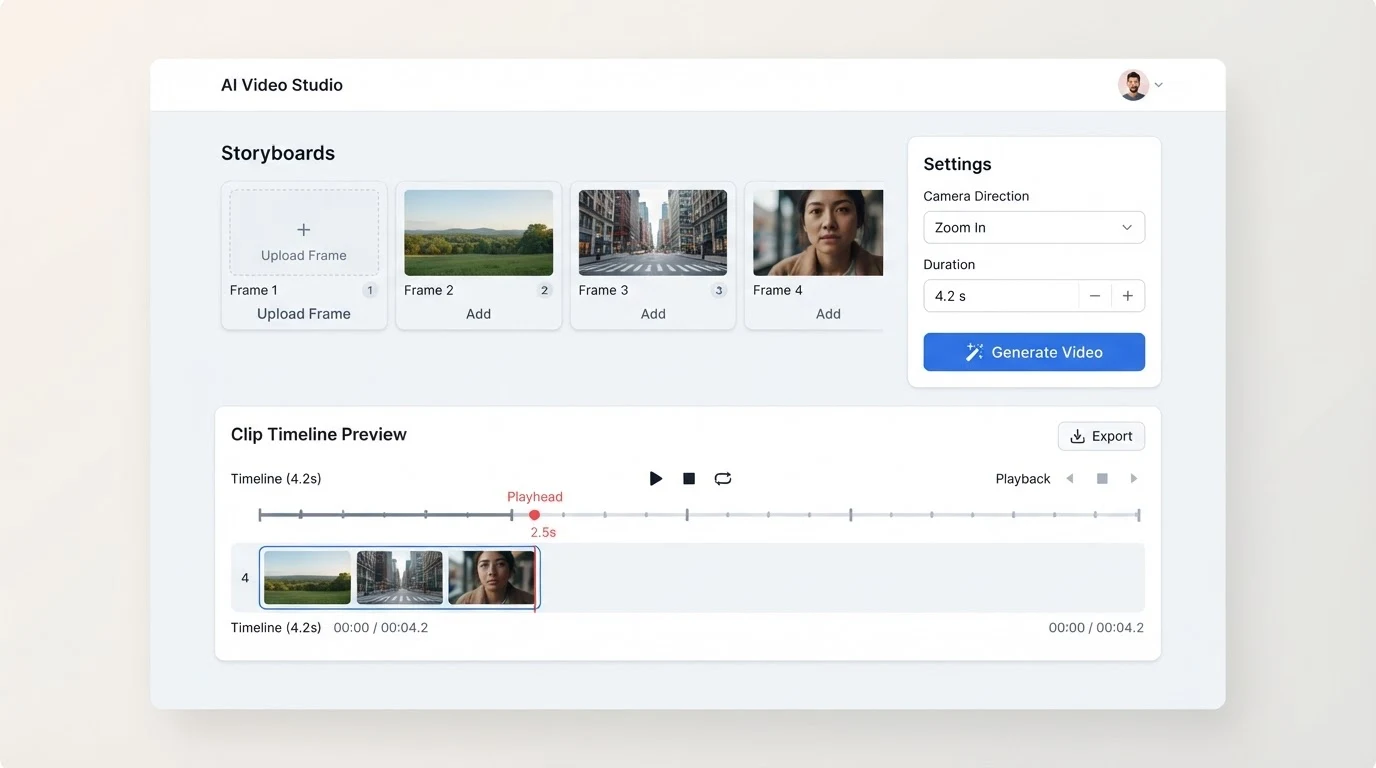
- Scripting and storyboards. Language models draft copy variants; image models illustrate the boards frame by frame so the director can approve composition before spending video credits.
- Shot generation. Veo 3, Runway Gen-4, Kling 2.0, and Sora 2 turn each approved storyboard frame into a five to ten second clip using image-to-video with explicit camera direction.
- Audio. ElevenLabs handles voice, Suno produces music beds, and Veo 3's native lip-sync closes the gap on dialogue that previously demanded a live shoot.
- Assembly and finishing. Premiere, Resolve, or CapCut edit the cut, Topaz upscales, colour is graded properly, sound is mixed, and the spot is delivered in every aspect ratio the channel plan calls for.
The tool stack most agencies actually use
The 2024 tool lists floating around are already misleading. Sora's product shape has changed, Veo 3 shipped native audio, and Kling and Runway have both leapt forward on motion. A working stack for a social ad creative pipeline in 2026 looks closer to the table below than to anything you will find in an evergreen listicle.
| Tool | Best for | Where it slots in |
|---|---|---|
| Veo 3 | Photoreal action, native audio, lip-sync dialogue | Hero shots, talent-driven scenes |
| Sora 2 | Physics-aware and surreal worlds | Stylised spots, transitions, dream sequences |
| Runway Gen-4 | Fine motion control, in-tool editing | Precision shots, iterative refinement |
| Kling 2.0 | Long, coherent motion | Establishing shots and character movement |
| Pika | Stylised, animated looks | Non-photoreal segments |
| Midjourney and Flux | Storyboard stills, reference plates | Concepting and image-to-video inputs |
| ElevenLabs | Voice-over, character voice | VO, dialogue, localisation |
| Suno | Original music beds | Score and stings |
| Topaz Video AI | Upscale, denoise, frame interpolation | Finishing before delivery |
No single model does everything well, and pretending otherwise is how amateur spots end up feeling like a slideshow. The craft is in choosing the right generator for each shot, which is a decision a director makes, not a preset. A studio pattern that works reliably is to sketch the whole board first, then cast each frame to the model best suited to that camera move.
Prompting, seeds, and consistency: the real skill
The gap between a striking one-off frame and a broadcast-ready thirty seconds is consistency. A character has to look like the same person across ten shots. A product has to hold its label, its silhouette, and its finish across every angle. This is where roughly eighty percent of amateur AI ads collapse, and it is not a problem you solve by writing longer prompts. Our approach to product-centric work leans hard on the same principles.
The techniques that actually work are unglamorous. Reference images pinned to every generation. Seed reuse across a scene so lighting and mood carry. Character LoRAs or fine-tuned reference sets for talent. Style anchors that lock palette and lens language shot to shot. And, honestly, a lot of regeneration until continuity holds, which is why the workflows we publish about product imagery apply almost line for line to commercial video.
Cost and timeline vs traditional production
The commercial that used to cost a quarter of a million dollars and take six weeks now often takes five to ten days and lands in a bracket a mid-market brand can approve without a board meeting. The savings are real, but the more valuable delta is the number of variants and the number of markets a single budget covers. For a deeper breakdown of that maths, our AI commercial vs traditional TVC cost article unpacks a specific comparison.
| Line | Traditional TVC | AI commercial |
|---|---|---|
| Timeline | 4 to 8 weeks | 5 to 10 days typical |
| Crew | Full unit, cast, location, catering | Small creative team plus generative pipeline |
| Iteration cost | Reshoot required | Regenerate in hours |
| Variants and cutdowns | Priced per version in edit | Built into the pipeline from brief |
| Aspect ratios | Reframed in post from a hero master | Native to every channel from generation |
| Rights and residuals | Talent, music, location fees | Different clearance profile; brief-dependent |
Pricing for a specific spot is quoted per scope after a brief review. The right number depends on shot count, level of realism, dialogue, and delivery matrix, which is why a two-minute conversation with a producer beats a rate card. If you want to sanity-check a specific brief, our team is happy to walk through it.
Case studies worth knowing
The public reference points matter because they show the range. Kalshi's Super Bowl spot demonstrated that fully generated comedy at broadcast scale is now viable and, crucially, that a small team can turn one around in the window a live shoot could not. Coca-Cola's AI-assisted Christmas film showed the opposite lesson, that even a giant brand can face a rougher reception when the craft bar slips. Toys R Us used Sora to tell an origin story that would have been prohibitively expensive to shoot, and it worked because the story suited the medium.
The pattern across the credible spots is that a strong creative concept came first, the model was chosen to serve that concept, and human directors sat over every shot. Nothing about the shift changes the fundamentals of brand-led creative; it just changes the toolkit.
Where humans still win
Anyone selling you fully autonomous commercial production in 2026 is either misinformed or misleading. The parts of this job that still belong squarely to humans are the parts that always did: framing a strategy, judging a take, editing for feeling, and clearing rights. A generative model can render a hundred versions of a hero shot, but only a creative director can tell you which one the brand should live behind, and that judgement is where an actual agency earns its keep.
Casting the final take is the moment amateurs and professionals separate. The best-selected frame from a mediocre generation set will still outperform the least-worst frame from a brilliant one. Taste compounds, and it is not something a prompt library replaces.
How Absolutely AI runs the pipeline
Our own workflow follows the six-stage spine above, with two additions that make the difference on client work. First, a brief-to-concept pass that produces four grids of exploratory concepts per deliverable so the client sees the full aperture of the idea before we commit to a direction. Second, human creative direction on every shot, not just the hero, because consistency across a spot is a directorial problem before it is a technical one. Our content creation service is built around that pattern.
The result is spots that read as commercials first and AI second. That order matters. The clients we do our best work for do not want an AI ad; they want an ad, and AI is the production method.
Frequently Asked Questions
How long does an AI commercial actually take to make?
Most projects in this space run five to ten working days from approved brief to delivered masters, depending on shot count, dialogue, and how many aspect ratios and cutdowns the media plan demands. Complex hero spots can run longer; simple social pieces can be faster.
Can an AI commercial hold up on broadcast?
Yes, when it is finished properly. Broadcast delivery requires deliberate upscaling, colour grading, sound mixing, and QC against the same specs as live-action work. A raw generation is not a broadcast master, and treating it as one is where most failures happen.
Which model is the best for AI commercials right now?
There is no single winner. Veo 3 leads on photoreal action and native audio. Sora 2 leads on stylised and physics-heavy work. Runway offers the best fine control. Kling handles motion length well. A serious production uses several of them in the same spot.
How is character and product consistency actually solved?
Through reference images, seed control, style anchors, and fine-tuned reference sets for recurring characters or hero SKUs. It is a discipline, not a switch, and it is the single biggest craft difference between amateur and agency output.
Do we still need a human director?
Yes. Strategy, casting the final take, editing for feeling, brand judgement, and rights clearance all sit with humans. The models render; the director decides.
Can we mix AI with live-action footage?
Absolutely, and this is often the strongest route. A hybrid pipeline lets you shoot the moments that need real performance and generate the moments that would be expensive or impossible to capture, blending both in the edit.
What about music and voice?
ElevenLabs is the current default for voice across languages, and Suno is widely used for original music beds. Bespoke composition and union voice talent are still options when the brief calls for them.
What deliverables come out at the end?
A finished master, per-channel cutdowns, every aspect ratio the plan requires, versioned copy variants where relevant, and localised edits if you are running the campaign in multiple markets. Delivery is designed into the pipeline from stage one, not retrofitted at the end.
Bringing it together
AI commercials in 2026 are not one-click and they are not magic. They are a disciplined production pipeline with new tools slotted into familiar stages, and the studios producing work that clients are proud of are the ones treating them that way. If you are weighing an AI-led spot for an upcoming campaign, Absolutely AI can walk you through what the pipeline looks like for your specific brief, which models fit which shots, and what a realistic timeline and scope look like from here.