AI Brand Photography for DTC Brands: The 2026 Playbook
DTC brands ship colourways faster than any studio calendar can service. This playbook from Absolutely AI covers the real budget math, the models under each tool, campaign-level character consistency, vertical failure modes, and the 2026 disclosure rules every founder needs on the wall.
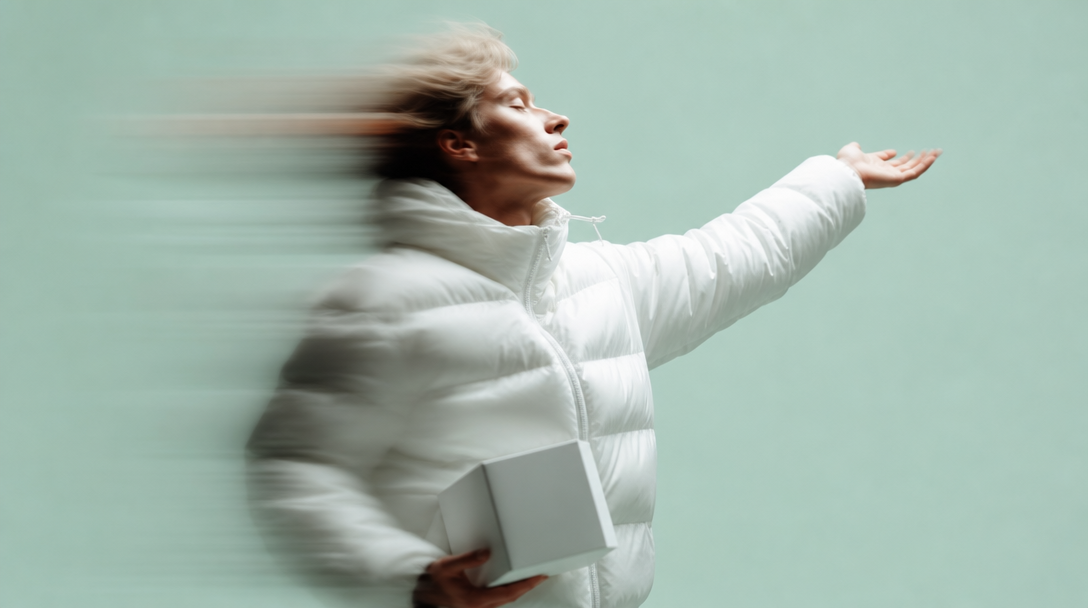
Direct-to-consumer brands live and die on content velocity. A 200-SKU apparel label ships five colourways a month, runs eight creator collabs a quarter, and burns through campaign assets faster than any single studio calendar can service. That is the real reason AI brand photography has moved from novelty to core operation: it is the only production model that keeps pace with drop cadence, paid social variant testing, and localisation. The team at Absolutely AI has spent the last twelve months building this stack for DTC founders, and the patterns below are what actually work in market.
Why DTC brands specifically need AI brand photography now
The economics have shifted. Meta CPMs are up, hero campaign budgets are down, and the number of creative variants required to feed a modern paid social account has quietly tripled. A brand running Advantage+ shopping campaigns needs at least twelve creative angles per SKU to avoid ad fatigue, and each angle needs three aspect ratios. That is thirty-six assets before you have shot a single hero. Traditional production simply cannot amortise across that surface area.
AI brand photography also solves the localisation tax. A supplements brand launching in Australia, the US, and the UK previously needed three separate shoots to match casting, seasonality, and interior styling. Generative pipelines let you regionalise a single campaign into ten markets in an afternoon. The same logic applies to ecommerce lifestyle imagery across gifting, back-to-school, and end-of-financial-year moments that used to force awkward calendar compromises.
Brand photography vs product photography: what AI actually changes
Most tool roundups conflate the two, which is where founders get burned. Product photography is catalog work: clean cutouts, ghost mannequin shots, PDP hero on white, colourway variants. AI has already flattened that category and every serious brand is using it. See our deeper breakdown of AI product photography workflows for the mechanics.
Brand photography is a different animal. It is editorial, it is emotional, and it carries the world the brand wants customers to step into. Historically this was the untouchable half of the budget because it demanded a director, a stylist, and a location. What changed in 2026 is that models like Seedream 4.5, Flux Pro, and GPT Image 2 crossed the threshold where their editorial output holds up next to a mid-tier studio shoot, provided the direction is sharp. That is the shift: brand photography is now automatable, but only with senior creative direction behind it.
The real cost math for a 200-SKU brand
Founders keep asking for the numbers, so here is a defensible twelve-month comparison. This assumes twelve hero drops a year, four lifestyle variants per drop, and dynamic paid social variants across three aspect ratios. We break down the underlying inputs in our full AI lifestyle imagery cost breakdown.
| Line item | Traditional studio stack | AI-led stack |
|---|---|---|
| Hero editorial shoots (4/yr) | $120k | $40k (retained in-studio) |
| Lifestyle variants (48/yr) | $180k | $18k |
| Paid social cut-downs | $60k | $8k |
| Localisation (3 markets) | $90k | $6k |
| Tool subscriptions and operator time | n/a | $36k |
| 12-month total | $450k | $108k |
The AI-led column keeps a hero editorial shoot in the mix, because founders who cut that entirely lose the brand anchor that everything else references. The savings come from variants, cut-downs, and localisation, which is where traditional production was always structurally inefficient anyway.
The tool landscape in 2026
The market has consolidated around a handful of platforms, each powered by a different underlying model. Understanding what is running under the hood matters because it dictates the visual character of your output.
| Tool | Underlying model | Best for | Starting price |
|---|---|---|---|
| Flair.ai | Flux Pro + SDXL | Brand mood boards and quick lifestyle staging | $48/mo |
| Pebblely | SDXL fine-tuned | Ecommerce PDP variants at volume | $29/mo |
| Photoroom | Proprietary + SDXL | Mobile-first cutouts and shadow work | $19/mo |
| Claid | SDXL + custom | Marketplace catalog automation | $41/mo |
| Booth.ai | Flux + Nano Banana | On-model apparel with pose control | $99/mo |
| Sellerpic | SDXL | Amazon-specific PDP compliance | $25/mo |
| Nightjar | Seedream 4.5 + GPT Image 2 | Editorial brand campaigns | $120/mo |
None of these tools alone will run a serious brand. What works is a stack: a Flux-powered platform for editorial hero shots, a Seedream layer for painterly campaign imagery, an SDXL workhorse for PDP variants, and GPT Image 2 for anything requiring readable packaging text. Our AI branding practice assembles these stacks for founders who do not want to duct-tape it themselves.
Model consistency across a campaign
This is the single hardest problem in DTC AI photography, and the one the SERP consistently ignores. A campaign needs the same face, the same lighting logic, and the same brand world across twelve or more assets. Random prompt generation produces twelve different women in twelve different studios, which reads as chaos on a landing page.
The fix is a brand model library: three to five fictional faces trained as LoRA fine-tunes on top of your base model, plus a locked seed for your lighting and colour grade. Once that library exists, campaign consistency becomes a solved problem. We build these libraries as part of every ongoing content engagement, and they are the reason our client work does not look like anyone else's.
Vertical playbooks
Apparel
Fabric physics is the failure mode. Silk drapes wrong, denim seams warp, knitwear pills unnaturally. The workaround is a hybrid: shoot the garment in-studio on a mannequin, then compose the on-model scene around that plate. For apparel-heavy brands, our AI fashion photography guide covers the plate-based approach in depth.
Beauty and skincare
Skin texture and packaging text are the two enemies. Uncanny skin kills the buy, and misspelled ingredient panels kill your legal team. Use Seedream 4.5 for skin, composite real packaging as an overlay, and route anything close to the face through a specialist retoucher before shipping. Our wellness playbook details the retouch pipeline.
Supplements
Same packaging problem as beauty, compounded by regulatory copy. Never let AI hallucinate a claim into a label. Bottle shape and cap fidelity also fail more often than founders expect, so keep a clean product plate in every composite.
Homewares
Scale is the trap. AI will happily render a candle the size of a coffee table if you do not anchor it. Include a hand, a phone, or a piece of furniture with known dimensions in every hero. Interior physics such as shadow direction and reflection matching are the second most common failure.
Where AI still fails and how to catch it
Every asset gets a QA pass against a fixed checklist before it leaves the studio: hands and fingers, packaging text legibility, fabric behaviour, shadow direction consistency, skin uncanniness, brand mark accuracy, and scale plausibility. A rushed brand skips this step and ships assets that get roasted in the comments. See our breakdown of how AI lifestyle shoots actually work for the full QA rubric.
The legal layer for 2026
This is the section every competing article skips, and it is the one that will get founders fined. Four things matter this year. First, C2PA provenance manifests are becoming the de facto standard for content authenticity, and Meta already reads them to auto-label AI content. Second, the EU AI Act general-purpose provisions took effect in August 2026, requiring transparency on synthetic media in commercial contexts. Third, New York's synthetic-performer law now requires consent and disclosure for AI-generated likenesses used in advertising. Fourth, Amazon and Meta both require disclosure flags on AI product imagery in specific categories.
The compliance checklist is short but non-negotiable: embed C2PA manifests on every generated asset, disclose synthetic performers in ad copy where required, document your brand model library's training basis, and keep a rights log for anything derivative. Founders who want this handled end-to-end lean on our AI consulting engagements to build the policy scaffolding.
The hybrid model: what to keep in-studio
The strongest DTC brands in 2026 are not going pure AI. They are running a hybrid: one or two hero editorial shoots a year with real photographers, real models, and real locations, and then AI-generating the entire long tail of variants, cut-downs, and localisation from that anchor. The hero shoot pays for the brand world; the AI stack pays for the reach. Cut either half and the model breaks.
Frequently Asked Questions
Is AI brand photography accepted by Meta and Amazon ads?
Yes, with disclosure. Meta auto-detects and labels AI content via C2PA and internal classifiers. Amazon requires disclosure in specific categories such as beauty and health. Neither platform bans the imagery outright, but both penalise brands that try to hide it.
How do I keep the same model face across a whole campaign?
Build a brand model library. Train two to five fictional faces as LoRA fine-tunes on your base model, lock the seed for lighting, and reference the same character token across every prompt. This is the only reliable path to campaign consistency.
Which underlying model gives the best editorial quality?
Seedream 4.5 leads for painterly editorial in late 2026, with Flux Pro close behind for photorealistic hero work. GPT Image 2 wins anything requiring readable packaging text. Most serious brand stacks use all three depending on the shot.
How much of my content budget should shift to AI?
Keep 25 to 40 percent of the annual budget in traditional production for hero editorial, and move the rest into the AI stack for variants, cut-downs, and localisation. Cutting hero shoots entirely is the most common mistake.
What about deepfake and synthetic-performer laws?
Use fictional model faces trained from consented reference libraries, avoid recognisable likeness of real people without a release, and disclose synthetic performers in ad copy in jurisdictions that require it. New York is the strictest US state; the EU AI Act sets the international floor.
Can I run this stack in-house or do I need an agency?
Brands doing more than one drop a month usually need a dedicated operator plus a creative director. Smaller brands can self-serve on a single platform. The break-even is roughly $30k a year in content spend.
How long does a full brand model library take to build?
Two to four weeks including reference sourcing, LoRA training, seed lockdown, and campaign QA. The investment pays back on the first quarterly drop.
What happens when the underlying model version changes?
Character LoRAs need re-training against the new base model. Plan for a light refresh every six to nine months, and never let a campaign go live mid-migration.
Getting started this week
Three concrete steps. First, audit your last twelve months of content spend and split it into hero, variant, and localisation buckets. Second, pick one upcoming drop and produce it dual-track: traditional and AI in parallel, then compare conversion. Third, brief your legal team on C2PA and EU AI Act obligations before you scale. If you want a partner running this end-to-end with senior creative direction, brand-locked model libraries, and the compliance scaffolding built in, Absolutely AI builds and operates the stack for DTC brands shipping at real velocity.