What Does an AI Creative Agency Actually Do in 2026?
An AI creative agency is a production shop where generative AI is wired into every step of concepting, producing and versioning creative, not a bolt-on tool and not a replacement for human directors. At Absolutely AI we run this workflow daily, and the question we get most from brand teams is a simple one: what does the day-to-day actually look like, and how is it different from hiring a traditional studio or a freelancer?
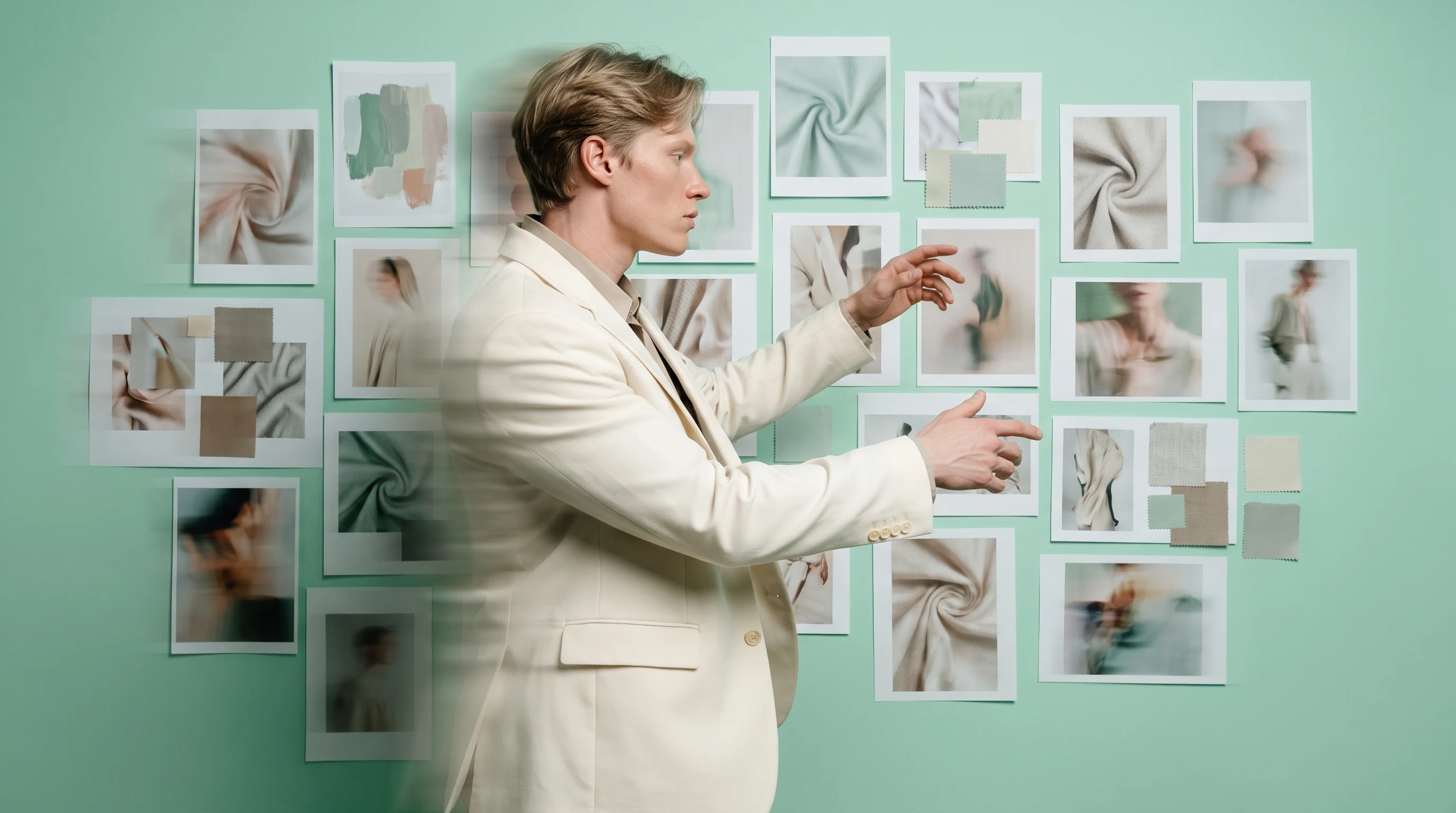
The question is being asked more in 2026 for a reason. AI ad spend is climbing, DTC brands are drowning in channel variants across TikTok, Meta, retail media and lifecycle email, and in-housing pressure has flipped the old agency conversation on its head. Brand teams no longer want a slow quarterly campaign, they want a partner who can ship a hero, twelve variants and a testing plan in the same week. That is the gap an AI creative agency exists to fill.
What an AI Creative Agency Actually Does
The service menu looks familiar on paper, but the delivery model is different. A modern AI creative agency covers most of what a traditional studio does, and adds a few things a traditional studio structurally cannot. Read the full breakdown on our content creation page, or scan the core services below.
- Concept exploration and moodboarding, often four to twelve directions in a day rather than one deck a fortnight later
- Hero product and lifestyle image generation calibrated to brand guidelines
- Video, storyboard and short-form film production for social and commercial use
- Social and vertical ad variants produced at scale across every required aspect ratio
- Landing page, lifecycle and ad copy variants written against tested angles
- Brand and creative strategy, senior art direction on every project
- AI workshops and enablement for in-house marketing teams who want the workflow internally
The through line is that every deliverable is designed to be produced, versioned and re-cut without going back to a shoot. That is why the same team can credibly ship a brand photography set on Tuesday and a fifteen-second film on Friday.
A Day in the Life: One Real Deliverable
Abstract explanations do not help a brand manager decide. So here is a concrete walkthrough of a skincare launch, the kind of brief that lands in our inbox most weeks.
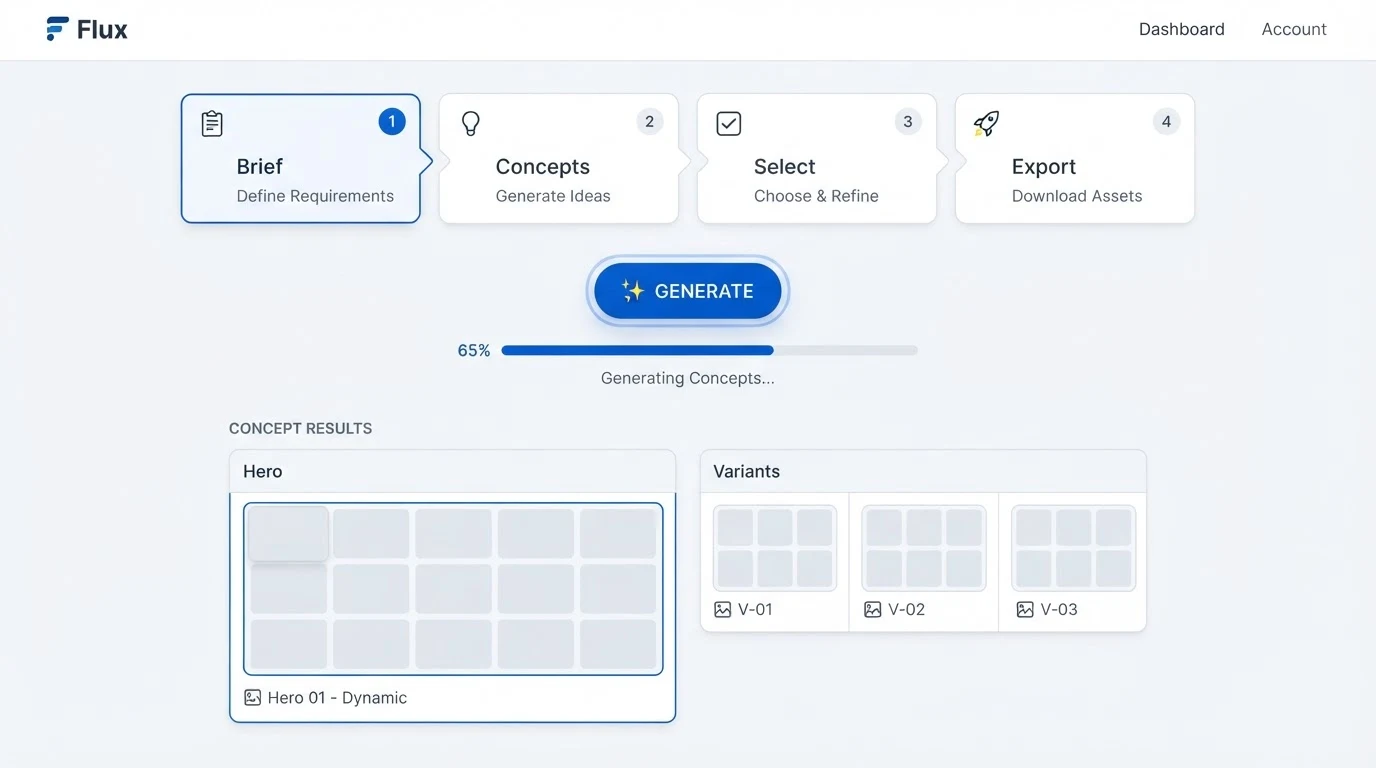
Monday morning the client sends a brief: a new serum, three hero SKUs, launch in three weeks, and they need a hero image, a lifestyle set, a fifteen-second film and roughly twelve social variants. A traditional studio would begin scoping a shoot day. Our first step instead is to build a structured brand profile from the brief, extracting product story, target audience, visual direction, key messages and restrictions into a single document that becomes the reference for every prompt that follows.
By Monday afternoon, four concept grids are back for review, each anchored to a different mood direction. The client picks two by Tuesday morning. Wednesday and Thursday are hero refinement and lifestyle, using the same reference logic to keep the brand world consistent across shots. See a similar workflow written up on our ecommerce photography service page. Friday the film goes into storyboard and generation, and the following Monday the channel variants roll off the same brand-locked master. Total elapsed time: one week, not three.
How It Differs from a Traditional Creative Agency
The differences are structural, not cosmetic. Speed compresses from three weeks to one because there is no shoot day to schedule around. Variant volume climbs roughly tenfold because each channel cut is a re-render, not a re-edit. Cost is quoted per scope after a brief review rather than as a shoot-day rate plus talent, and the testing loop is wired in from the start, so the winning variant informs the next round instead of waiting for the next campaign.
| Dimension | Traditional agency | AI creative agency |
|---|---|---|
| Turnaround | 3 to 6 weeks per campaign | Days to one week per deliverable set |
| Variant volume | 1 hero, a handful of cuts | 1 hero, dozens of channel variants |
| Pricing model | Day rate plus production plus post | Project-based or retainer, quoted per scope |
| Revisions | Reshoot or re-edit | Re-render against the same brand reference |
| Testing loop | Bolted on after launch | Built into the production plan |
None of that removes the need for a creative director. It removes the need for a creative director to spend six weeks waiting on production before they can iterate. For a longer comparison, our piece on AI content studio versus traditional studio walks through the trade-offs deliverable by deliverable.
What an AI Creative Agency Is Not
The category has a reputation problem, and most of it is earned by operators who do not deserve the label. A real AI creative partner is not a prompt farm typing keywords into a public tool, not a fully automated pipeline with no human in the loop, not a stock-image reseller with a new coat of paint, and not a discount option that skips brand rigour. If a pitch leans on cost as the headline benefit, that is the tell.
The correct framing is capability. An AI creative agency exists because it can produce cinematic worlds that traditional production physically cannot reach, at a cadence that matches how modern brands actually run. For a founder-side view of that distinction, read our take on the AI content agency versus freelancer decision.

The Tools and Workflow Under the Hood
Brand teams evaluating agencies increasingly want to know the stack, and any partner who will not name it is hiding something. A typical modern workflow blends several categories of model with a human directing layer sitting on top.
- Image generation: Midjourney, Flux and successor image models for hero and lifestyle work, chosen per deliverable for style fit
- Video and motion: Runway, Sora, Kling and Veo class models for film, ad cuts and animation, feeding into our AI films workflow
- Voice and sound: ElevenLabs for voiceover, custom music beds where the brief needs them
- Copy and structured reasoning: ChatGPT and Claude for scripts, ad copy and structured brand profiles
- Orchestration: internal platforms such as Wireflow that chain the above into a repeatable brief-to-delivery pipeline
- Human layer: art directors, creative directors and producers who own the aesthetic bar and QA every frame
When You Actually Need One (and When You Do Not)
Not every brand needs an AI creative agency yet, and honest advice matters more than a sale. The decision usually comes down to channel volume, in-house capacity and how often the creative refreshes. A useful checklist:
- Are you shipping to more than three channels with different aspect ratios every month? If yes, an agency partnership pays for itself in variant volume alone.
- Is your in-house team already at capacity on strategy and can no longer produce? A partner absorbs the production layer without adding headcount.
- Are you launching more than one product or campaign per quarter? Traditional shoot cadence will not keep up.
- Do you need testing built into creative, not bolted on? That is what this model is designed for.
If the answers are mostly no, a strong freelancer or a lean in-house setup may still be the right call. Our comparison on when to hire an AI content agency goes deeper into the decision.
How to Vet One Before You Hire
The category is young enough that vetting matters more than it does for a traditional studio. Ask these questions in the first call, and pay attention to how quickly and specifically they are answered.
- Who is the named creative director on my account, and what is their background?
- Walk me through one recent deliverable from brief to shipped assets, with the actual timeline
- Which models and platforms do you use, and why those over the alternatives?
- How do you handle IP, licensing and model training data on the outputs I pay for?
- How is pricing structured, and how does scope change mid-project get handled?
- Show me two examples of work you rejected internally and why
Red flags are the mirror image: no named creatives, vague answers about the process, refusal to name the stack, or claims that AI does it all. A confident creative partner will happily walk you through where the humans sit in the pipeline, because that is where the quality actually lives.
Frequently Asked Questions
How much does an AI creative agency cost?
Pricing is quoted per scope after a brief review. Common structures are project-based for one-off launches or monthly retainer for brands that ship continuously across multiple channels. The right structure depends on volume and cadence rather than headline rate.
Who owns the IP of the finished creative?
On a properly run engagement, the client owns the finished deliverables outright, with the agency retaining the right to show work in portfolio unless the contract says otherwise. Ask specifically about model training data and any generative licences that flow through, because policies vary between platforms.
Is the quality really comparable to a traditional shoot?
For the right briefs, yes, and for some briefs the ceiling is higher because worlds and lighting setups that would be impossible to build on a shoot day become achievable. Straight documentary product photography of a physical item you already have on hand may still favour a traditional shoot. The honest answer is deliverable by deliverable, not a blanket claim.
How much human involvement is there really?
On a serious engagement, a lot. A creative director owns the brief, an art director owns the aesthetic, a producer owns the timeline, and prompt and model work sits underneath all three. The AI is the production layer, not the decision layer.
Can an AI creative agency work with our existing brand guidelines?
Yes, and this is where the workflow actually shines. Brand guidelines get encoded into a structured reference profile that every prompt and every render is calibrated against, which is why variant volume goes up without brand drift.
The Short Version
An AI creative agency in 2026 is a full-service creative partner where generative models sit inside the production pipeline and senior humans sit on top of it. The right one gives you shoot-day quality at a weekly cadence, honest pricing quoted per scope, and a clear answer to every question on the vetting list above. If that sounds like the model your brand needs, that is exactly what we built Absolutely AI to deliver.