AI Product Photography for Supplements: The Founder's Guide
Supplement buyers make a trust decision in the first thumbnail they see. Label legibility, capsule count, powder texture, and lifestyle context all signal whether a product reads as credible or cheap. AI product photography has finally reached the point where founders can produce that imagery in an afternoon, but only if you understand what the category demands. This guide from the team at Absolutely AI walks through how to do it properly.
Why supplements are the hardest category for generic AI photo tools
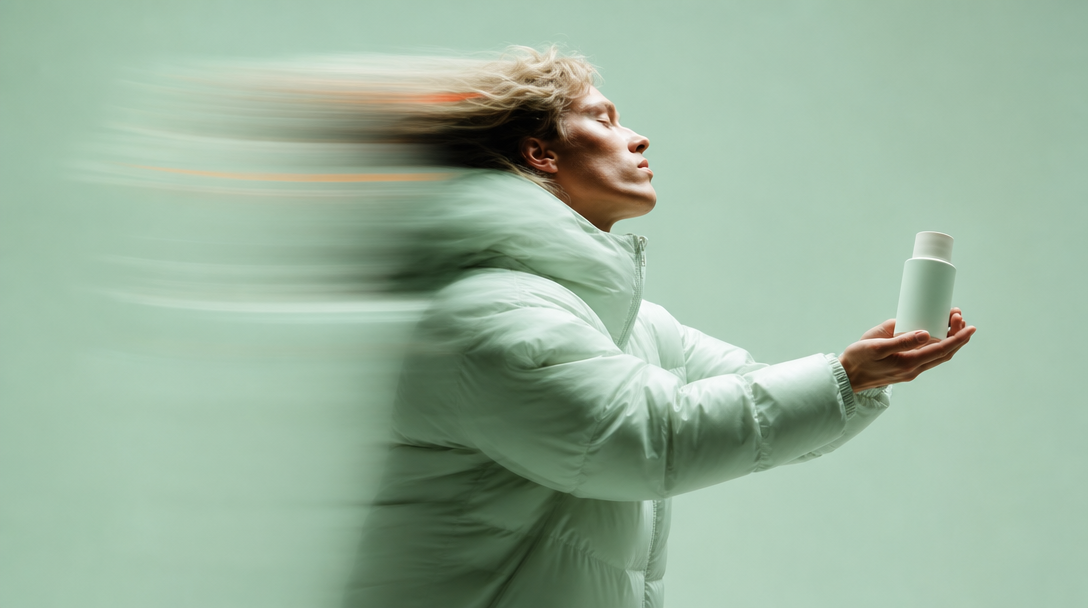
Most AI photo tools were built for fashion, homeware, and beauty, where a small imperfection in a texture or a slight warp on packaging is invisible in the final crop. Supplements do not forgive that. A buyer scanning a listing is reading the ingredient panel, checking the dose, confirming the count, and looking for third-party seals before they add to cart. Any tool that hallucinates text on the front of pack breaks that trust in a single glance. See how specialist AI product photography handles this differently from a generic drag-and-drop template.
The failure modes are consistent across categories inside the supplement space. Capsule bottles get their fill lines redrawn. Gummy jars lose translucency and start looking like solid resin. Powder scoops arrive half-melted. Foil induction seals turn into wrinkled plastic. Ingredient panels on the side of pack become fictional Latin. Barcodes turn into random lines that no scanner will ever read. Any founder producing imagery at scale needs a content pipeline that treats the packshot as sacred and the scene as generative.
The six shot types every supplement listing needs
A launch kit does not mean fifty images. It means six roles filled properly, each one carrying a different job in the funnel. Skip any of them and your conversion suffers, regardless of how good the hero looks. Getting these six right is the foundation of commercial imagery that actually sells.
- Hero pack shot. The clean, front-facing product against a considered backdrop. This is the image that runs on the PDP top slot, the ad creative, and the retailer listing card.
- Hero ingredient still life. The key active, whether that is ashwagandha root, magnesium glycinate crystal, or fresh berries, styled next to the pack so the buyer sees what they are actually consuming.
- Lifestyle in-hand. A real hand holding the bottle, often near a kitchen counter, gym bag, or bedside table. This is the shot that closes wellness buyers.
- Clinical or lab context. A colder, more scientific backdrop that signals rigour. Useful for cognition, longevity, and clinical-positioning brands.
- Routine flatlay. The product surrounded by its ecosystem: water glass, journal, morning light. Sells the ritual, not the ingredient.
- Amazon-compliant white background main image. Pure white, product filling 85% of frame, no props, no text overlays.
How AI product photography actually works for supplements
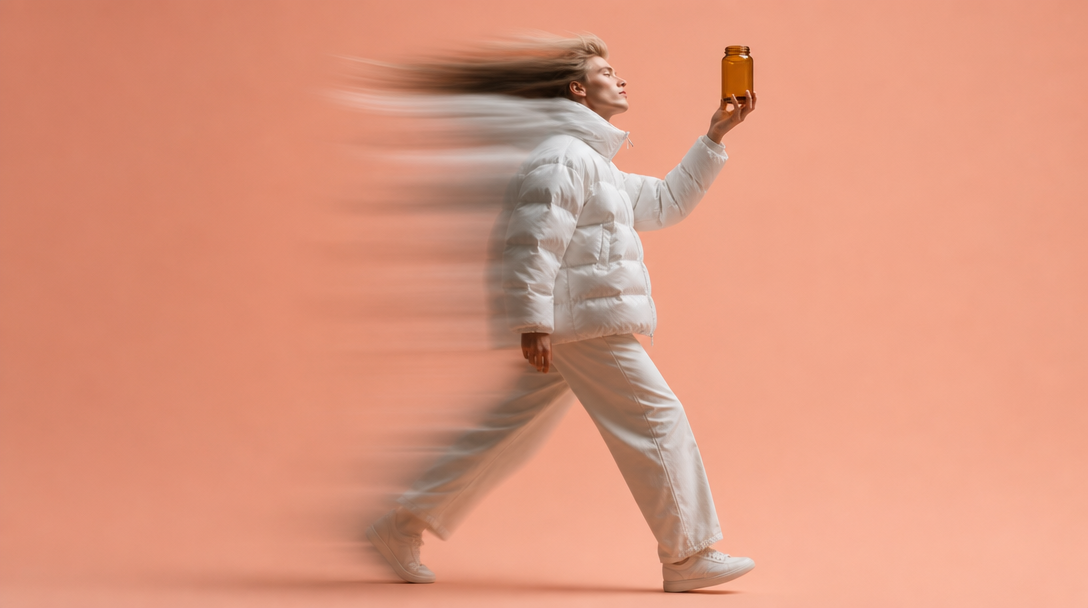
The workflow that produces credible supplement imagery has three moving parts: a reference packshot, a scene prompt, and a preservation strategy that stops the model from redrawing your label. This is what separates a serious AI agency workflow from a hobbyist tool.
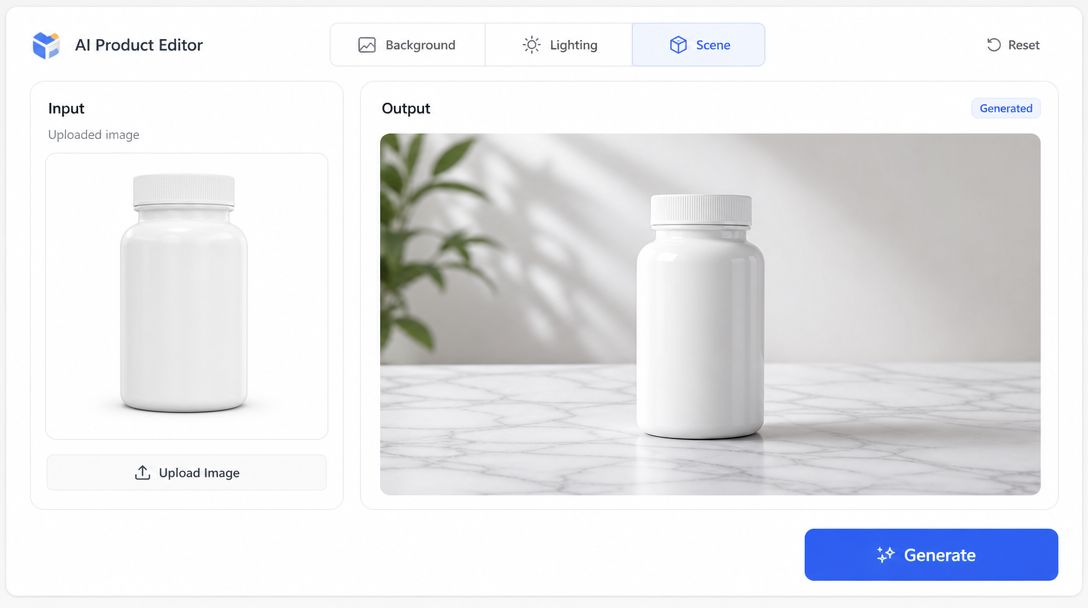
You start with one clean packshot, ideally a phone photo taken against a plain wall in soft daylight. That single asset becomes the anchor. The AI model does not generate the product from scratch. Instead, it re-lights the packshot inside a generated scene, preserving the label, the seal, the cap, and the ingredient panel as pixel-accurate regions. Everything around the product is generative, everything on the product is protected. Well-designed branded systems lean into this split because it keeps the identity intact across every scene.
The generation itself splits into two modes. Background generation replaces the environment behind the untouched packshot, which is the safest option and the one you should use for hero and Amazon shots. Full scene generation redraws the whole frame, including the hand that holds the product or the surface it sits on, and is used for lifestyle and in-hand shots. Modern models like Nano Banana, Seedream, and Flux Kontext are the first frontier models that hold packshot fidelity well enough for supplements when driven with the right reference input.
Choosing your stack
The tooling market splits into three tiers, each with different strengths and different failure modes. There is no single right answer, but there is a wrong answer for founders who are shipping serious volume: picking a consumer app and hoping it holds up at scale. Compare the trade-offs before committing to a stack that will run your motion and still imagery for the year.
| Tier | Examples | Strength | Weakness for supplements |
|---|---|---|---|
| Dedicated packshot tools | CreatorKit, SellHound, DYVO, Designkit, LightX, Pebblely, Claid, Pixelcut | One-click backgrounds, fast, cheap, built for ecommerce | Limited scene control, weaker on complex lifestyle, template-y output |
| Frontier models | Nano Banana, Seedream, Flux Kontext, Midjourney | Cinematic scene control, best-in-class lighting, editorial output | Steeper learning curve, needs prompt discipline to preserve labels |
| Managed creative partner | Absolutely AI and similar studios | Category-tuned prompting, compliance-aware, brand-consistent at scale | Higher unit cost than DIY tools, needs proper brief |
A prompt framework that keeps labels legible
Most founders lose control of their imagery because they describe the product inside the prompt. That is exactly wrong. When the model reads a description of your bottle, it feels licensed to redraw it. Lock the packshot as a reference input and only describe the scene around it. Good design-led prompting treats the product as a fixed variable, not a creative field.
- Lock the packshot. Pass the reference image with maximum fidelity settings. Never prompt the model to draw the product.
- Describe the scene, not the product. Talk about surface, light, background, mood, secondary props. Never mention the ingredient panel, the cap, or the label text.
- Specify lighting temperature and direction. Warm daylight from camera left, soft overhead diffusion, cold clinical fluorescence. Vague lighting produces vague images.
- Name the surface. Brushed travertine, matte white acrylic, oak, brushed stainless. Materials anchor the image in reality.
- Restrict text hallucination. Explicitly instruct the model to add no text, no signage, no packaging behind the product. Blank backdrops are a feature, not a limitation.
Compliance and platform rules you cannot ignore
Supplement imagery lives under more regulatory scrutiny than almost any other ecommerce category, which is why sloppy AI output gets brands into trouble faster here than in fashion or homeware. Any automated production pipeline for this category needs compliance baked in, not bolted on.
Amazon's main image spec is unforgiving: pure white background at RGB 255, product occupying 85% of frame, no props, no logos, no lifestyle context. That image must be generated separately from the hero, and it is the single most common reason listings get suppressed. Beyond Amazon, the TGA in Australia and the FDA in the United States both restrict what supplement imagery can imply. Before-and-after visuals suggesting weight loss, cognitive improvement, or clinical outcomes are effectively banned in most contexts, and AI-generated lifestyle imagery frequently drifts into that territory without the founder realising. Keep clinical claims to text, keep imagery to product and ritual.
From one iPhone packshot to a full launch kit in an afternoon
The workflow that gets a founder from zero to a complete launch kit is surprisingly compact once the tooling is set up. It is the same rough sequence whether you are launching a magnesium capsule, a greens powder, or a gummy multivitamin, and it maps cleanly onto a broader motion and stills pipeline.
- Shoot one clean packshot on your phone against a plain wall in soft daylight.
- Upscale and clean the packshot. Remove dust, straighten the label, correct colour.
- Generate the Amazon-compliant white background variant first, since it is the strictest.
- Generate the hero pack shot on a considered backdrop. This becomes your PDP top slot.
- Generate four scene variants: ingredient still life, clinical, lifestyle in-hand, routine flatlay.
- Extend the strongest scene into motion for TikTok, Reels, and paid social.
When AI is not enough
Being honest about the ceiling is what separates a serious creative partner from a tool vendor. There are still scenarios where AI product photography for supplements is the wrong answer, and pretending otherwise costs founders trust when the output falls apart. When you hit these ceilings, that is when you commission proper production or engage a creative team that can blend both.
- Macro powder-in-scoop shots. The texture and light interaction of loose powder in a scoop is still a stretch for current models. A ten-minute macro shoot on a phone with a clip-on lens beats any prompt.
- Real hero ingredient shots. If your positioning is built on a specific botanical or a genuine clinical ingredient, shoot the real thing. AI-generated ashwagandha or reishi is close but not correct, and category-savvy buyers spot it.
- Athlete or expert talent. If your brand leans on a named athlete, practitioner, or founder, that human belongs on real production. AI likenesses of real people are a legal minefield and a trust risk.
Frequently Asked Questions
Can AI generate the ingredient panel on the back of my bottle?
It can, but it should not. Treat the ingredient panel as a locked region and preserve it from the reference packshot. Any AI-generated Latin on a nutrition label is a compliance risk and a trust risk.
Will AI product photography pass Amazon's main image requirements?
Yes, if you generate the white background variant separately with the correct spec: RGB 255 background, 85% product occupancy, no props, no shadow behind product. Do not repurpose your hero shot as your Amazon main image.
How do I stop the model from redrawing my capsule count?
Lock the packshot as a reference input at maximum fidelity, and never describe the product in the prompt. Only describe the surface, light, and background. When the model has nothing to interpret about the product, it leaves the product alone.
Which frontier models handle supplement packshots best right now?
Nano Banana, Seedream, and Flux Kontext currently offer the strongest packshot preservation in scene generation. Midjourney produces the most cinematic backgrounds but needs more manual compositing to keep labels intact.
Can I generate a person holding my supplement?
Yes. In-hand generation is now reliable enough for social and PDP secondary imagery. Keep the hand generic, avoid recognisable faces, and never imply a medical outcome through pose or context.
Is AI product photography appropriate for a premium or clinical positioning?
Yes, provided the creative direction is disciplined. Clinical positioning demands cold lighting, restrained props, and considered typography. Consumer wellness positioning tolerates warmer, softer scenes. The tooling is the same, the direction is what changes.
How many images do I actually need to launch?
Six roles filled properly beats sixty images shot cheaply. Hero pack shot, ingredient still life, lifestyle in-hand, clinical context, routine flatlay, and Amazon white background. That is your launch kit.
Bringing it together
Supplements are the category that punishes lazy AI imagery hardest and rewards disciplined AI imagery most. The founders who treat the packshot as sacred, the prompt as scene direction, and the compliance layer as non-negotiable are already producing launch kits that would have needed a studio day a year ago. The rest are still fighting with tools that were never built for this category. If you want a creative partner that runs this workflow with category expertise built in, Absolutely AI produces supplement imagery end to end, from single packshot to full launch kit and motion extensions.