Case study 07Government and public road safety2025
Road Safety Advisory Council TasmaniaThe hazard you cannot film
A wallaby in the headlights, on a wet Tasmanian road, at night. The moment the commercial needed and the one shot nobody could safely film.
- Client
- Road Safety Advisory Council Tasmania
- Campaign
- Different Day, Different Drive
- Year
- 2025
- Industry
- Government and public road safety
- Type
- Hybrid AI motion inside a live action TVC
- Our part
- The moving wallaby
01The ask
The client and the ask
The Road Safety Advisory Council advises the Tasmanian Government on road safety policy, public education and advertising. Its work sits under the Towards Zero strategy, which starts from the position that people make mistakes and that the job is to stop those mistakes from killing them.
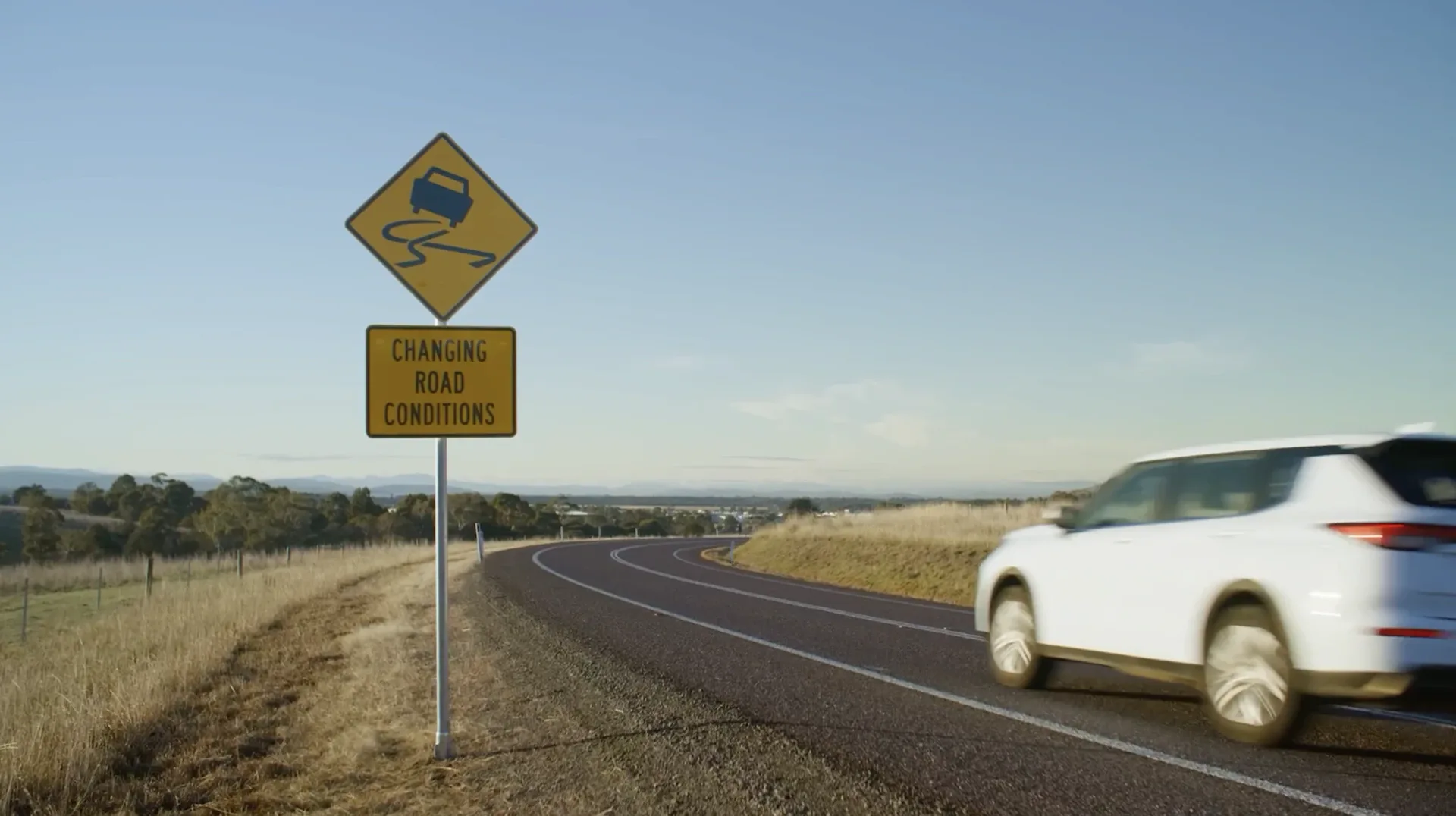
Different Day, Different Drive launched in July 2025. Its argument is that a speed limit is a maximum in good conditions, not a target: the same familiar road can be safe one morning and dangerous the next because of rain, ice, glare, traffic, poor light or wildlife. Wildlife was one example among several, not the whole campaign.
Absolutely AI was engaged through an agency partner for one element of it. The commercial needed a wallaby to appear suddenly in a driver's headlights on a wet road at night, close enough to justify her braking. The road, the car, the weather and the story had already been shot. A live wallaby could not be asked to hit a mark, hold still or repeat the action, and putting one near a moving vehicle at night was not a reasonable thing to attempt.
- 1Generated element inside a live action commercial: the wallaby.
- 4Channels the wider campaign ran across: television, radio, billboards and bus backs.
- 2025Different Day, Different Drive, launched in July.
02The approach
One element, matched to a shot that already existed
- 01
Read the footage first
We received the creative direction and the footage already captured, and worked out what the sequence needed: where the wallaby had to stand, how far from the car, when the braking response lands, and how much time the moment had to tell its story.
This was not an open brief. The generated element had to serve footage that already existed rather than change the idea around it.
- 02
Decide what the wallaby is doing there
The animal had to appear unexpectedly, sit close enough to be dangerous, stay visible inside the headlights and behave like a real wallaby rather than an exaggerated one. It also had to register with a viewer in the fraction of a second the edit allows.
- 03
AI conceptualisation
From the supplied references we built a photorealistic moving wallaby and explored options for movement, body position, direction, speed, placement on the road and distance from the car. Giving the campaign team real alternatives to compare was more useful than defending one attempt.
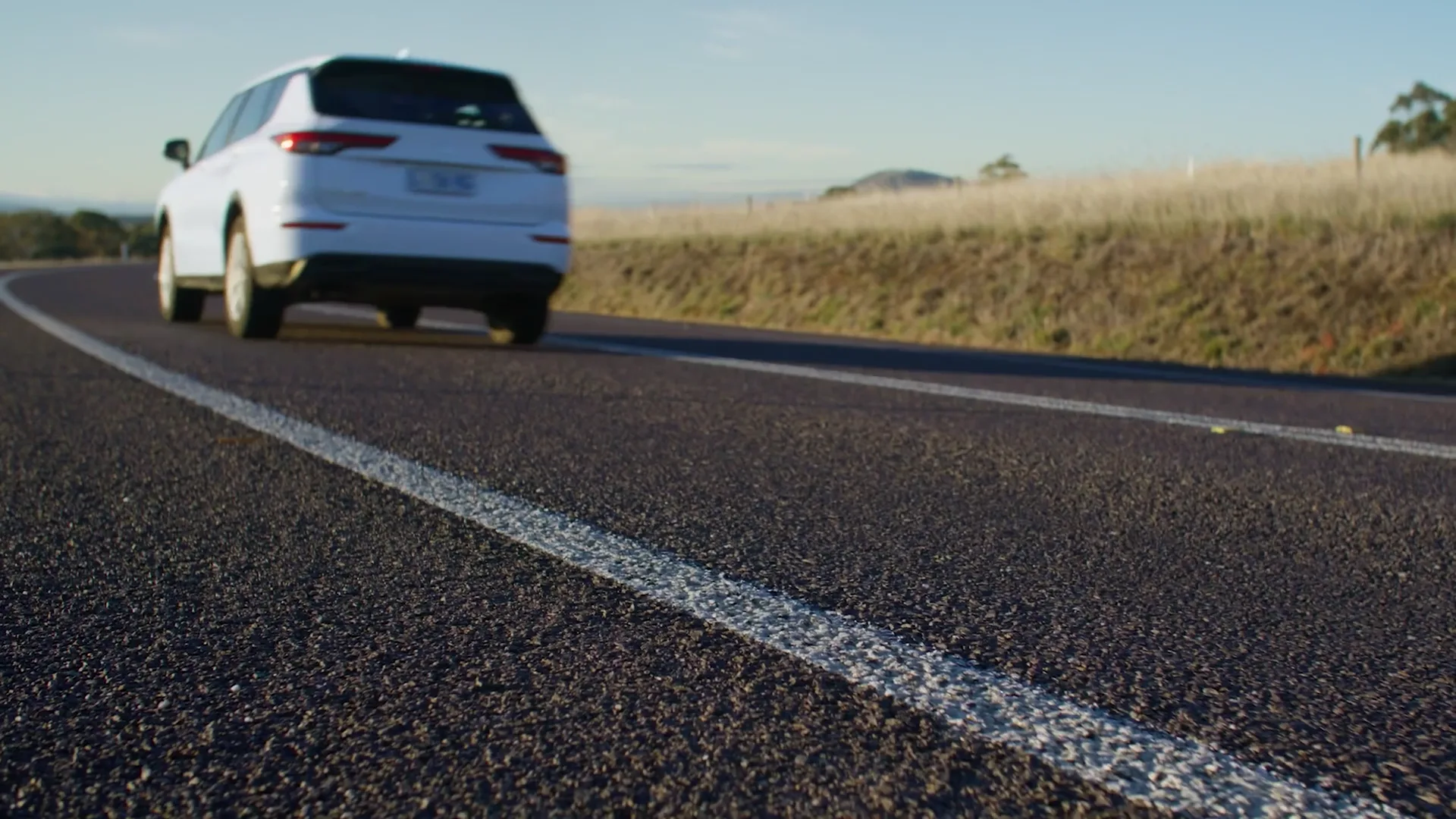
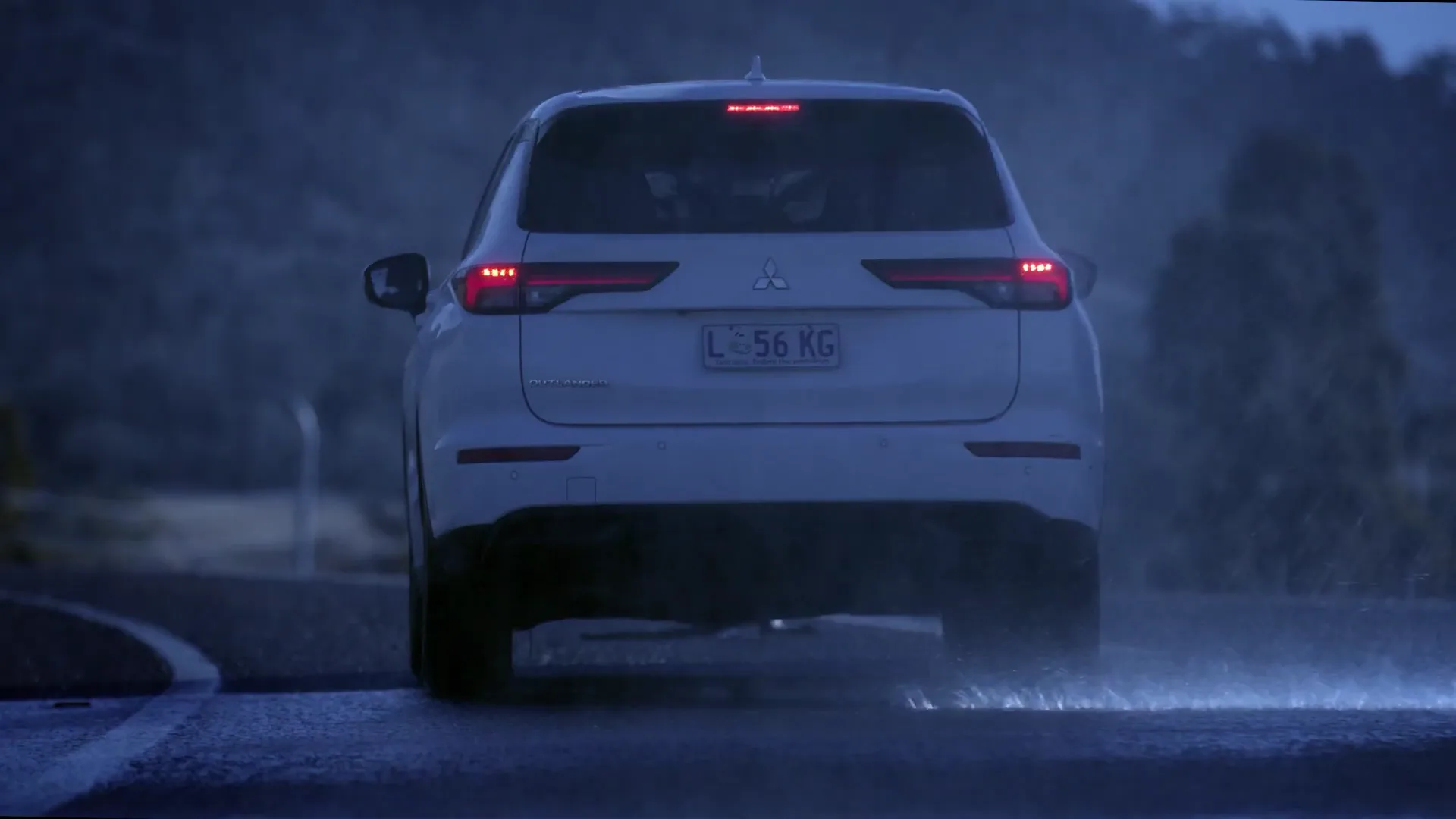
The hard part was never the animal. It was the environment. Headlights had to strike it correctly, rain had to pass in front of and around it, the wet road had to reflect it, and the shadow direction, low light contrast, scale and atmospheric softness all had to match a camera angle that could not be changed. A photorealistic animal still reads as fake if it does not sit inside the weather.
AI motion was less mature in 2025 than it is now, so the result came from directing and refining against a fixed visual target rather than from a single generation.
1Fixed shot the animal had to fit, with no room to move the camera.
- 04
Refine, then hand it back
Options went back and forth until the preferred treatment held up on all of those at once. The approved element was then handed to the wider campaign team, who kept responsibility for the concept, the filming, the edit, the sound, the finishing and the rollout.
03Results
What the Council got
A photorealistic moving wallaby that sits inside the rain, the darkness and the headlights of a shot that was already in the can, and a driver's braking reaction that now has a visible cause.
The wider campaign ran statewide across television, radio, billboards and bus backs, and the commercial was prepared for digital use as well. Absolutely AI's contribution is the wallaby sequence, not the campaign.
The production benefit is the plain one. No live animal was placed on a wet road at night beside a moving vehicle, lights and a crew, and the campaign still got the moment it needed. Control over where the hazard appeared, how it moved and how it was framed came as part of that.
04Where it goes next
For the shots that should not be staged
The same method suits any public education work built around an event that is unsafe, unpredictable or impractical to film: animals on roads, near misses, sudden weather, blind spots, objects falling into traffic, crash scenarios.
Capture the real environment and the real people, identify the one element that cannot be captured, define exactly how it moves and interacts with the scene, then build it to match. The craft of the wider production stays intact.
- 1Element generated, inside a filmed commercial.
- 4Channels the campaign ran across.
- 2025Different Day, Different Drive.