Case study 03Tourism, hospitality and regional accommodation2026
Discovery ParksThe face of 90 holiday parks
Discovery Parks had a new mascot and no repeatable way to keep making content with him. We built the toolkit, the workflow and the guardrails, then trained the internal team to run all three.
- Client
- Discovery Parks, part of G'day Group
- Project
- Bruce the Bark Manager
- Network
- More than 90 parks and resorts
- Year
- 2026
- Type
- AI toolkit, guardrails and team training
- Output
- A repeatable production workflow, run in house
01The ask
The client and the ask
Discovery Parks is one of Australia's largest holiday park operators, with more than 90 parks and resorts and a place in the wider G'day Group. It competes with NRMA Parks and Resorts and BIG4, and its properties are deliberately unalike: a stay in Western Australia is a different holiday from Darwin, Kings Canyon or the New South Wales coast.
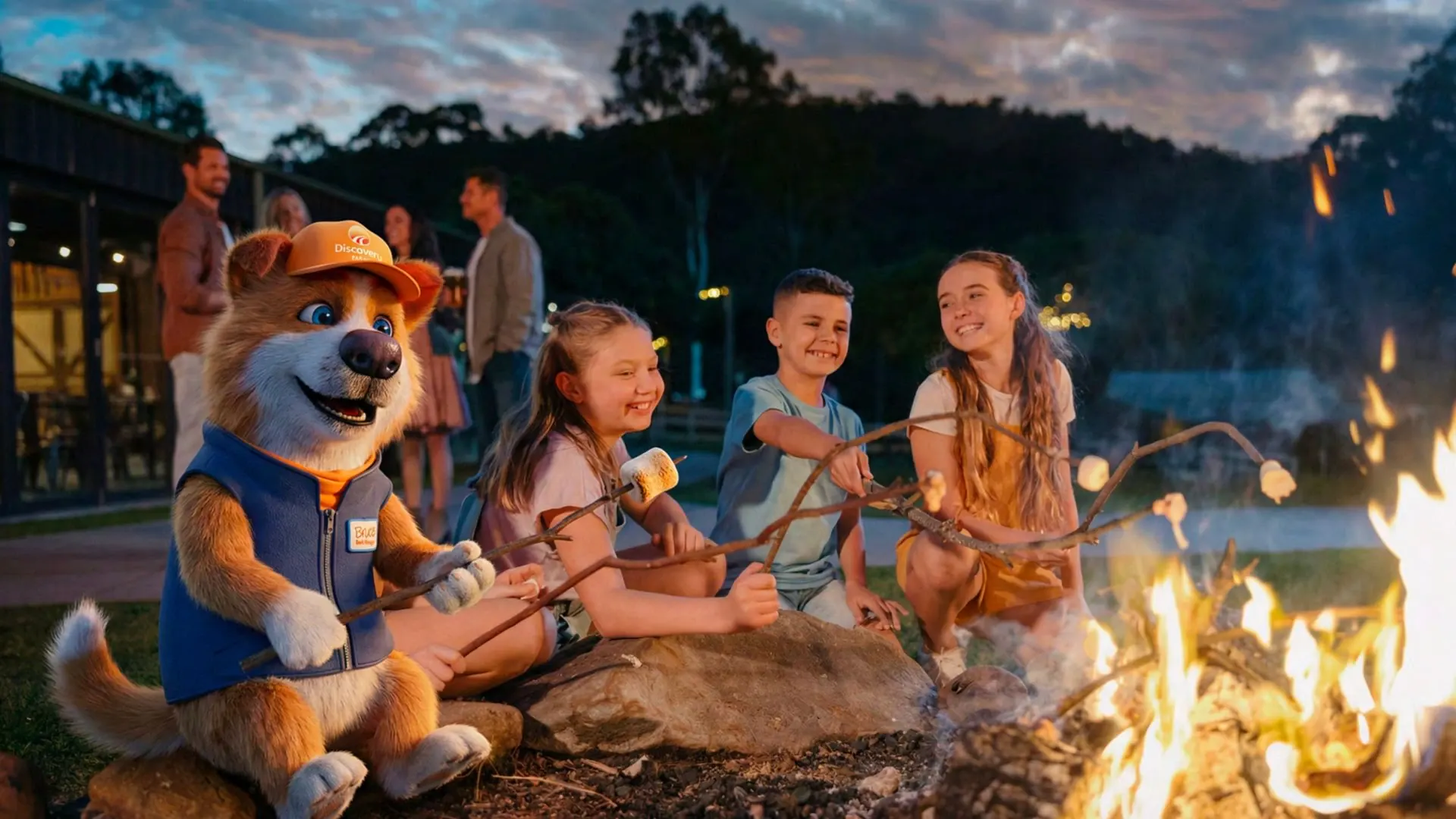
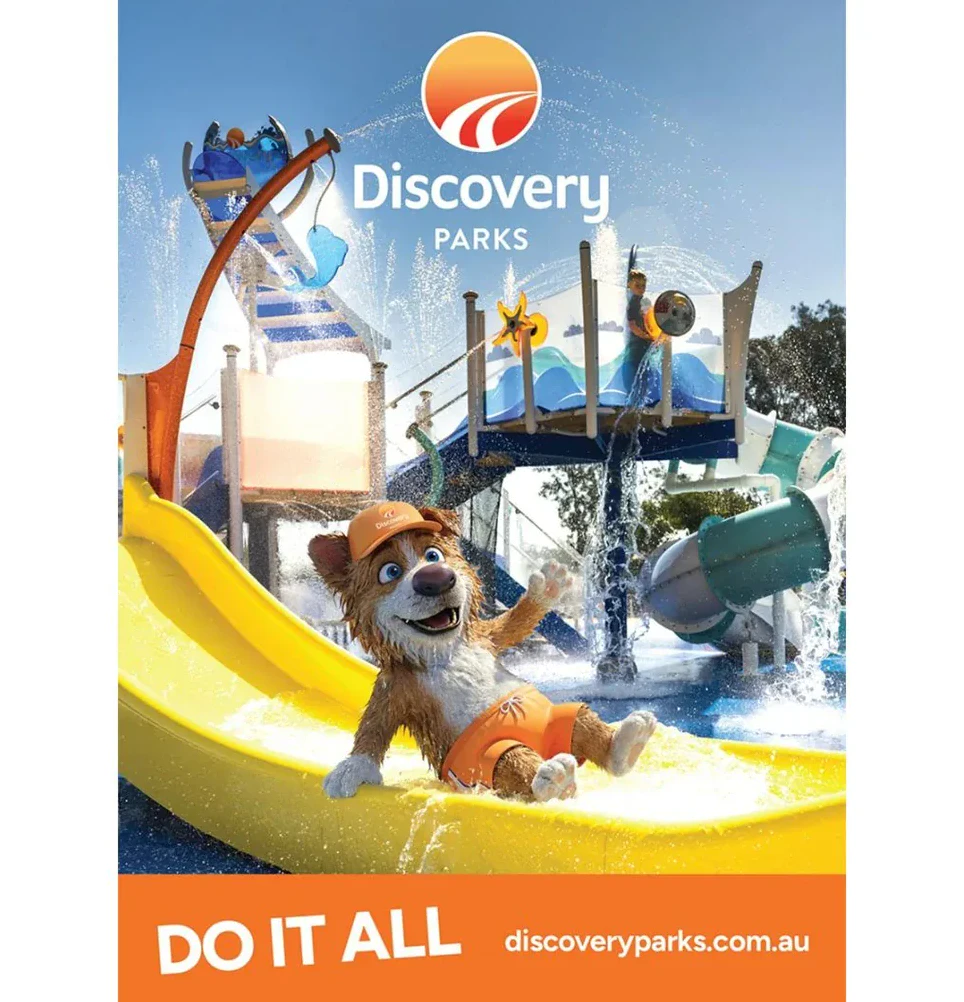
Bruce came first. Discovery Parks and its creative partners built him as a fully realised three dimensional character, a red Border Collie appointed the brand's first Official Bark Manager, a former stray who found a home in the parks. His job was to stand in front of a very varied network and carry the Do It All promise. The choice of a dog was not decoration: Discovery Parks welcomed more than 70,000 dogs across its network in 2025.
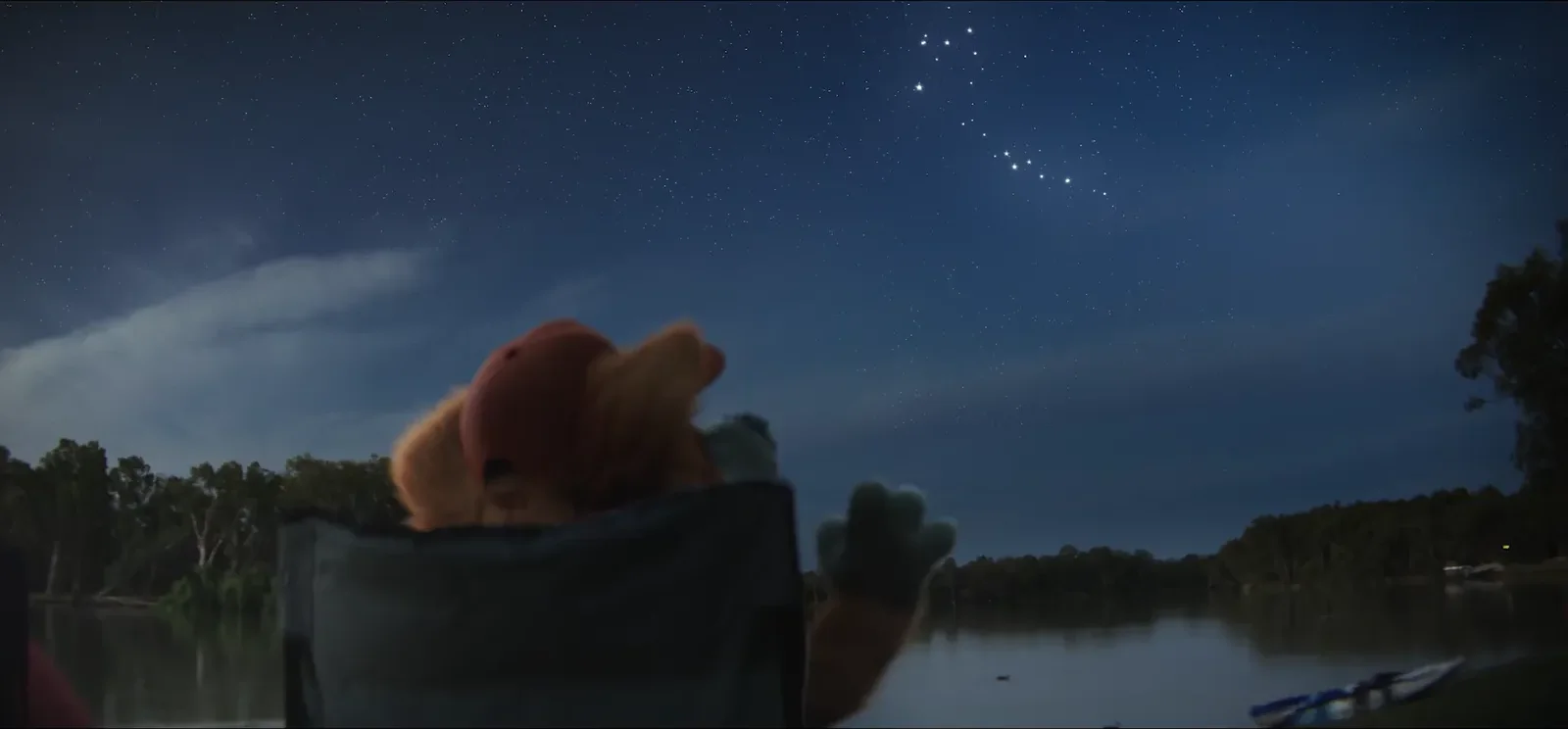
The ask arrived after the character did. Once a mascot exists, the real cost is using him. Every new pose, park, season and campaign would ordinarily mean going back to specialist production. Discovery Parks wanted Bruce on television, social, digital, out of home and across its in-park experiences, and wanted its own marketing team able to make that content without Bruce drifting along the way.
- 90+Parks and resorts one character has to represent.
- 5Channels he runs across: television, social, digital, out of home and in park.
- 70,000+Dogs welcomed across the network in 2025, which is why the mascot is one.
02The approach
Four steps to a character the team could run
- 01
Learn the network, not just the brand
We started with the breadth of the network, the Do It All platform and the guests Bruce had to reach: parents making the booking, children who notice the dog, grey nomads, pet owners and domestic travellers.
That range set the brief. A character pitched only at children would have lost the people paying for the holiday.
- 02
Sit in on the character decisions
We took part in the early conversations about how Bruce should look, sound and behave. What a breed communicates. Whether he should feel playful, capable or authoritative. How tall he stands next to a person on camera.
Discovery Parks and its creative partners kept responsibility for the final character strategy, design and three dimensional build. We were there to pressure test the choices.
- 03
AI conceptualisation
This is the step people ask about. Bruce existed as an approved render. The work was turning that fixed asset into a repeatable way of making new content: fresh poses and expressions, different parks and seasons, motion, and his own voice applied consistently.
We assessed how far the approved design could be extended before it stopped being Bruce, built the visual and motion workflows around that limit, and set a process for applying his voice so radio and video sounded like the same character. Every output was judged against the approved design, not against how good the frame looked on its own.
What came out of it was not a set of assets. It was a production process Discovery Parks could run itself, which is a more useful thing to own.
5Channels the workflow had to serve, from a television commercial to an in-park screen.
- 04
Write the guardrails, then train the team
Handing a marketing team generative tools without rules is how a brand character quietly stops being one. We agreed the non-negotiables with Discovery Parks: signature clothing and accessories, proportions, coat and face, voice and personality, and the environments and behaviours Bruce is allowed in.
Then we trained the team to work inside them, including how to recognise an unusable output and fix it. The goal was internal control, so nobody has to call an external producer to put Bruce in a new park.
03Results
What Discovery Parks got
An AI content toolkit for activating Bruce, visual and motion workflows, a process for applying his voice, brand and usage guardrails, and an internal team trained to use all of it. Bruce now appears across television, social, digital, out of home and in-park experiences.
The commercial point is control. Discovery Parks can put its character into a new park, a new season or a new campaign without rebuilding him each time, and can test an idea internally before committing to it. For a national business running more than 90 destinations with local, seasonal and brand campaigns all in flight, that changes what is worth making.
For us it settled a different question: that this approach holds up inside a multi-agency production model, alongside a creative agency, a character studio and a sound team.
04Where it goes next
A character, not a campaign
Bruce is a long-term platform now. New park launches, local destination campaigns, seasonal travel, pet-friendly stays, in-park communications and audio all sit on the same foundation rather than starting from a blank page, subject to Discovery Parks' strategy and agreed asset rights.
The model travels. It suits any brand that already owns a character and has no scalable way to keep using it, which is more brands than expect to be on that list.
- 90+Parks one character represents.
- 5Channels, from television to in park.
- 2026Bruce, appointed.